
Last updated November 15, 2026
 Sweep & inspection
 Caps & crowns
 Flue relining
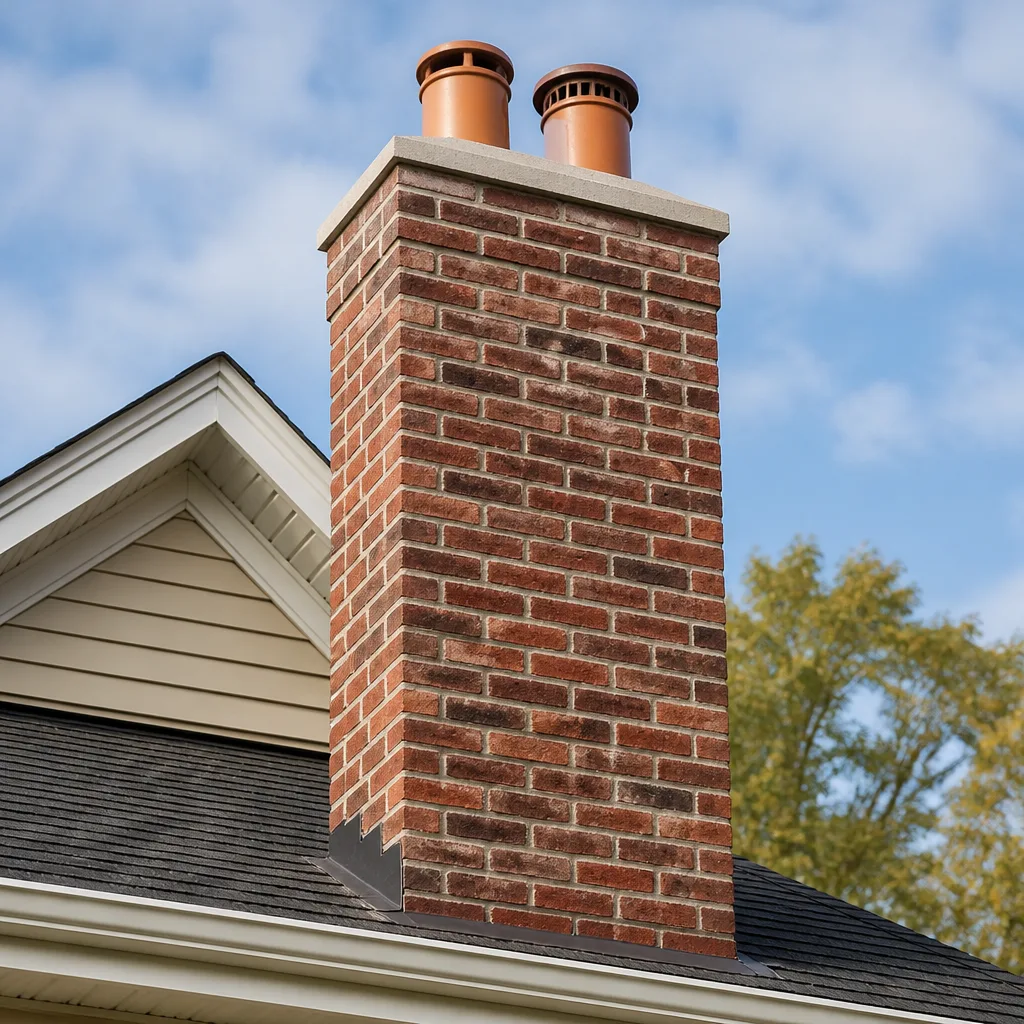 Masonry repair
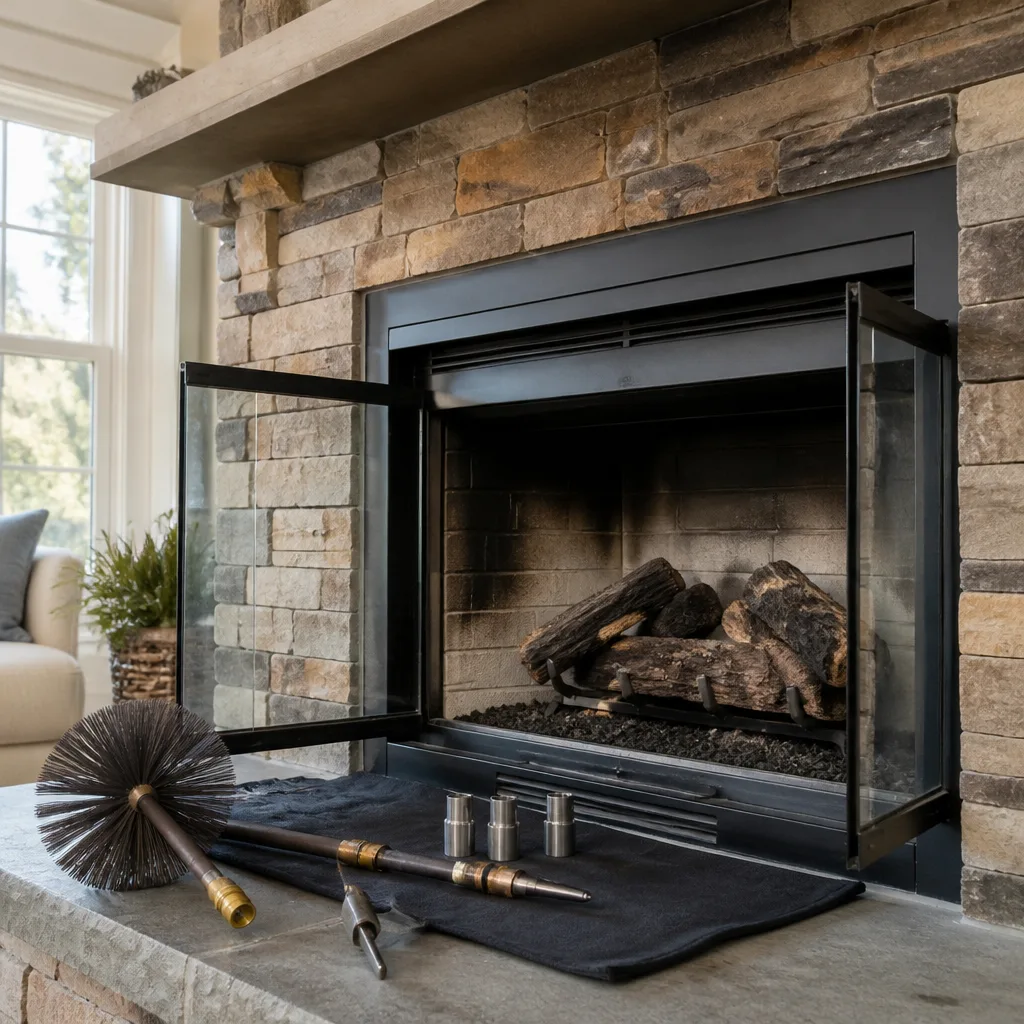 Gas fireplace service
Level 1 sweep and inspection to the NFPA 211 annual standard - flue, crown, cap, and flashing checked and photographed
Chimney sweep logs do not sweep chimneys. They loosen some creosote - which then falls where a brush and vacuum still have to collect it.
DIY vs Professional Chimney Cleaning: The Visalia Homeowner’s Decision Guide
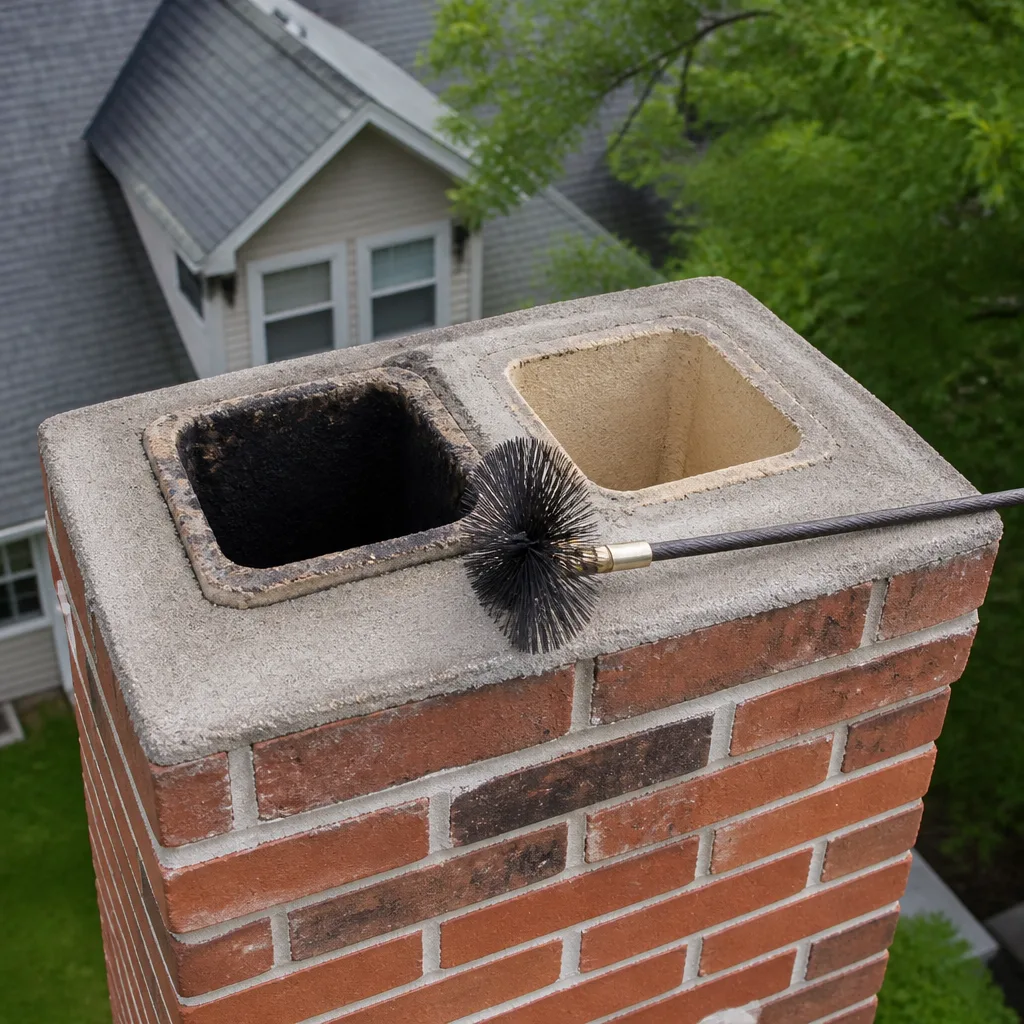
The chimney brush kits sold at big-box stores are built for one job: knocking loose soot and soft, flaky creosote off the flue walls. That’s real work, and a careful homeowner can sometimes do it. But if your flue has moved past that stage into hardened or glazed creosote, dragging a brush through it doesn’t clean the chimney. It redistributes the hazard, coating the flue in a fresh layer of fuel and leaving the dangerous deposits right where they were. This guide is about drawing that line precisely: what DIY can safely handle in a Visalia home, what it can’t, and how to tell the difference before you climb a ladder.
Quick Answer
DIY chimney cleaning is reasonable only for light, Stage 1 creosote removal in a flue that has been professionally inspected recently and confirmed to be sound. Anything beyond soft, flaky deposits, any flue that hasn’t been inspected, and any older masonry or prefab system in Visalia’s housing stock should go to a chimney specialist with rotary equipment, HEPA containment, and a camera. The decision should hinge on what’s actually inside your flue, not on what a brush kit costs.
Styles & brands we work with
- Sweep & inspection
- Caps & crowns
- Flue relining
- Masonry repair
- Gas fireplace service
Table of Contents
- What DIY Sweeping Can and Cannot Remove
- The Equipment Gap: Consumer Kits vs. Professional Setups
- Why Visalia’s Older Housing Stock Raises the Stakes
- Roof Access, Tile Roofs, and the Fall Risk Nobody Plans For
- The Insurance and Liability Question
- A Framework for Deciding: What Should Actually Drive Your Choice
- Creosote Stages Explained
- Common Mistakes to Avoid
What DIY Sweeping Can and Cannot Remove
Creosote forms in three recognizable stages, and the stage determines whether a brush will help or hurt. Stage 1 is the soft, flaky, soot-and-ash deposit you can often see as a thin dark dusting on the flue walls. It brushes off fairly easily. Stage 2 is denser and harder, sometimes shiny, sometimes crusted, and it clings to masonry and metal with real grip. Stage 3 is glazed creosote: a hard, glassy, tar-like shell that has essentially baked onto the flue interior. Stage 3 is the fuel load that turns a small ignition into a chimney fire, and no consumer brush kit will remove it.
Here’s the practical breakdown of what a homeowner with a standard brush kit can and cannot accomplish:
- Can remove: loose soot, ash dust, and light Stage 1 flaky deposits in a straight, accessible flue.
- Can sometimes loosen but not fully clear: early Stage 2 crust in a flue with no offsets or smoke chamber complexity.
- Cannot remove: hardened Stage 2 deposits in smoke chambers, offsets, and damper areas where a brush can’t reach at the right angle.
- Cannot remove: Stage 3 glazed creosote, which typically requires rotary mechanical systems, sometimes paired with chemical treatment to soften the glaze before removal.
- Cannot remove: creosote bonded to damaged mortar joints or pitted masonry, which needs resurfacing rather than brushing.
The trap is that Stage 1 and Stage 2 can look similar from the firebox. Without a camera inspection, a homeowner may believe they’ve cleaned the flue when they’ve only stripped the top layer off a much harder deposit. That’s why professional chimney sweep work begins with assessment, not with a brush.
The Equipment Gap: Consumer Kits vs. Professional Setups
The difference between a hardware-store kit and a professional setup isn’t brand loyalty. It’s containment, reach, and visibility. A consumer kit gives you a brush, some flexible rods, and maybe a drop cloth. A professional setup is designed to keep the entire job inside the flue and out of your living room, and to reveal what a brush alone can’t show.
The three categories that matter most:
- HEPA vacuum containment. Professional sweeps run a HEPA-filtered vacuum at the firebox throughout the job, capturing fine soot before it drifts into the room. Without that, DIY sweeping sends a visible cloud of particulate into the air of your home, and that residue settles into upholstery, ducts, and lungs.
- Rotary mechanical systems. Where a hand brush pushes, a rotary system spins. That rotational action is what breaks up hardened Stage 2 and glazed Stage 3 deposits, and it’s why a professional can clear a flue that a homeowner’s brush just polishes.
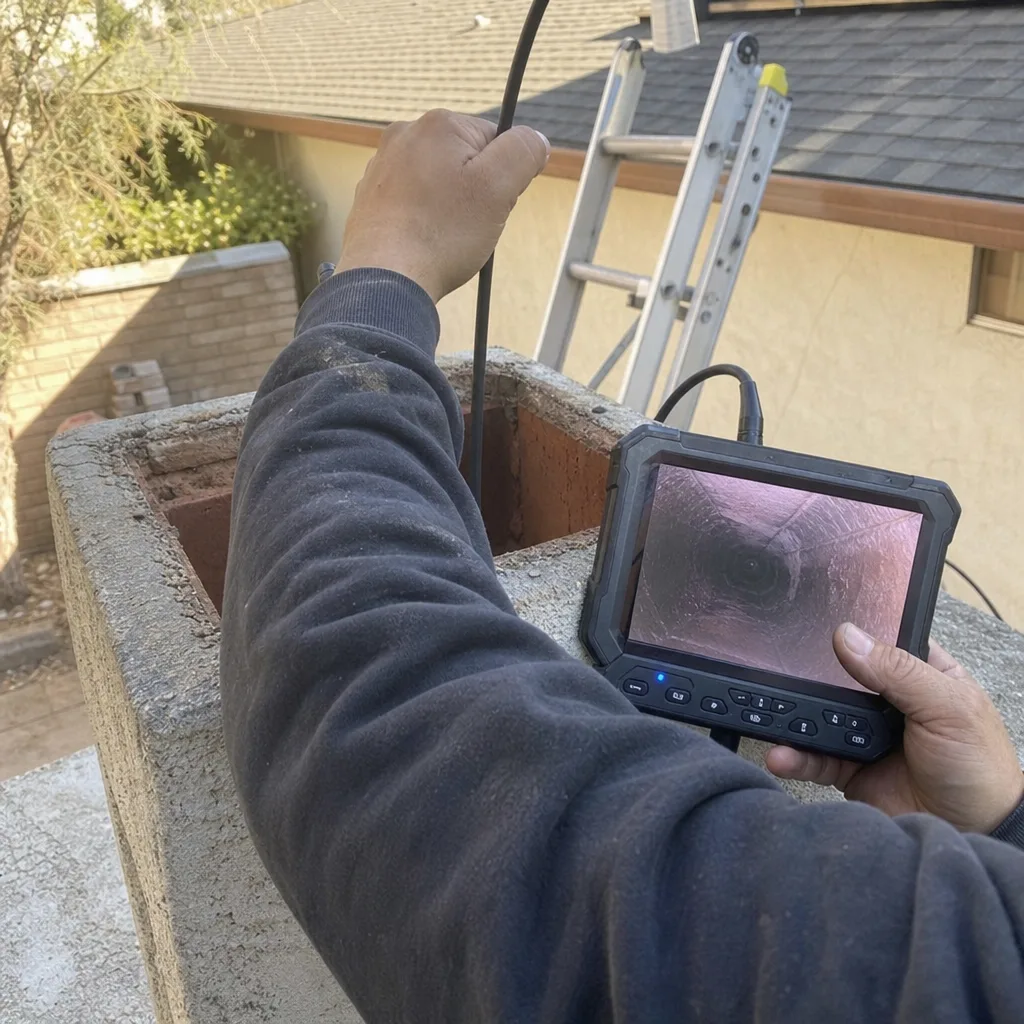
- Inspection cameras. The camera is the piece most homeowners never see, and it’s the one that decides everything. It shows the smoke chamber, the damper, the flue liner, and any offset or crack that a flashlight from below will miss. Without it, you don’t know what stage of creosote you’re facing or whether the flue is even structurally sound enough to brush safely.
Professional-grade components from brands like DuraFlex and Olympia Chimney extend this logic to repair. When a flue needs relining or resurfacing, those are the materials a chimney-exclusive specialist works with, and they’re part of why the sweep-to-repair arc stays under one roof. That’s the heart of our approach: sweep, inspect, and repair handled as one system by one company.
Why Visalia’s Older Housing Stock Raises the Stakes
Visalia has a wide range of home ages, and that range matters when you’re deciding whether to clean your own chimney. Older masonry fireplaces and early prefabricated systems were built to standards that have since changed, and some of those systems carry hazards a homeowner can’t see from the hearth.
Three specifics to know about before you touch a brush:
- Asbestos rope gaskets in pre-1980 fireplaces. Many fireplaces built before 1980 used rope gaskets around the firebox and damper that can contain asbestos. Disturbing them with a brush or a scraper can release fibers into the air of your home. This is a job for a trained professional who knows how to identify and handle them safely, not a weekend project.
- Unmarked prefab systems with proprietary liner requirements. A prefabricated fireplace often has a liner rated for that specific system and nothing else. If the liner is damaged and you swap in a generic replacement or brush past a compromised section, you can create a code problem and a fire risk at the same time. Correct repair means matching the system’s requirements, which is why professional access to proper components matters.
- Roof access on tile roofs. A large share of Visalia homes have tile roofs, and tile is unforgiving. Walking on it wrong cracks tiles, breaks seals, and can create leaks that show up months later. Professional sweeps use roof protection and know where to step. A homeowner on a ladder in sneakers usually doesn’t.
None of this means every Visalia chimney requires professional work every year. It means the decision depends on knowing what your specific system is made of, which is exactly what an inspection establishes.
Roof Access, Tile Roofs, and the Fall Risk Nobody Plans For
A chimney cleaning often starts with a decision most homeowners underestimate: how to get to the top of the flue. Some chimneys can be swept from below with the right rods, but many can’t, and top-down access is standard for a reason. It’s also the step where DIY turns genuinely dangerous.
The risks are concrete:
- Ladders that aren’t tied off or footed can slide on composite shingles or tile, especially when the angle is steep.
- Tile roofs crack under point loads and don’t always show it immediately. A cracked tile becomes a leak the next time it rains.
- Chimney crowns and caps aren’t designed to be stepped on, and a cap failure opens the flue to rain, animals, and debris.
- Working at height alone, without a spotter or fall protection, eliminates the margin for a slip.
This is a safety caveat worth stating plainly: chimney work on a roof is height work, and height work belongs to people who do it routinely with the right equipment. If your only path to the flue is up a ladder onto a tile roof, that alone is a strong reason to book a professional sweep. We work from the roof safely, and we inspect the cap and crown while we’re there, which is how small problems get caught before they become repairs.
The Insurance and Liability Question
Here’s an angle most DIY guides skip: what happens after a chimney fire, when a claim is filed and an adjuster starts asking questions. Whether a DIY cleaning counts as documented “maintenance” in the eyes of a California homeowner’s insurance adjuster is a real consideration, and the answer depends on what records exist.
Insurers generally look for evidence that the chimney was maintained on a reasonable schedule, and that maintenance was performed correctly. A professional sweep provides that record: an inspection report, a service date, and findings documented with photos. A homeowner with a brush and a weekend has none of that. If a chimney fire damages the structure, the absence of maintenance records can complicate the claim, and a finding that the flue was inadequately cleaned doesn’t help.
This isn’t about scaring anyone into a service. It’s about acknowledging that a chimney is a safety system tied to your home’s insurance posture, and that the paper trail matters as much as the cleaning. When we inspect, we align the inspection with NFPA 211 levels, which cover safety, structure, and appliance compatibility. That documented assessment is the kind of record an adjuster can actually use. Call (888) 861-2541 to schedule an inspection and start building that record. We answer 24/7. Fast dispatch from 7am to 7pm, Sunday through Friday.
A Framework for Deciding: What Should Actually Drive Your Choice
Cost is the wrong input for this decision. A brush kit costs less than a professional sweep, but that’s a false comparison because the two aren’t doing the same job. What should drive the choice is what’s actually happening inside your flue. Work through these questions honestly:
- When was your last professional inspection? If it’s been more than a year, or you can’t remember, DIY is premature. You don’t know what stage of creosote or what structural condition you’re dealing with.
- Do you know your flue’s construction? Masonry, prefab, wood insert, gas appliance, and unmarked legacy systems each have different cleaning and repair requirements. If you can’t state what yours is, get it assessed first.
- Do you know your creosote stage? Soft and flaky (Stage 1) is one situation. Hardened or glazed (Stage 2 or 3) is another, and the second requires rotary or chemical methods a kit can’t deliver.
- Can you access the flue safely? If the answer involves a ladder onto a tile roof, treat it as a no.
- Is the flue undamaged? Cracks, missing mortar, or a compromised liner mean brushing is the wrong first step. Repair comes first.
- Do you need a record? If you want documentation for insurance or a future home sale, a professional sweep provides it and a DIY cleaning doesn’t.
Homeowners who can answer all six confidently and whose flue is confirmed to be Stage 1 and sound may reasonably maintain it themselves between professional inspections. Everyone else is better served by a specialist. Related reading on the scope of professional work is available in our guide to chimney repair if you suspect damage rather than simple buildup.
Creosote Stages Explained
Understanding creosote stages is the single most useful piece of knowledge for this decision, so it’s worth stating cleanly. Creosote is a byproduct of incomplete combustion, and how it deposits determines how it must be removed.
- Stage 1: Soot and soft, flaky deposits, often a thin dark dusting. Removable by brush. The only stage a homeowner might reasonably handle.
- Stage 2: Denser, harder crust that clings to masonry and metal. Hand brushing often loosens the surface but leaves the bonded layer. Rotary systems are usually needed.
- Stage 3: Glazed, glassy, tar-like creosote baked onto the flue. It’s the most flammable form and the hardest to remove, typically requiring rotary mechanical cleaning, sometimes with chemical softening first.
Two things drive which stage you’ll find. The first is how the fire is burned: hot, well-seasoned fires produce less creosote than smoldering, damp, or green wood. The second is how often the flue is cleaned. In Visalia, where burning season is short but real, a flue that goes several seasons without attention can build hardened deposits faster than a homeowner expects. That’s why an annual inspection is the anchor point and cleaning follows from what the inspection finds.
Common Mistakes to Avoid
- Assuming a brush pass means “clean.” A brush strips the loose layer and can leave Stage 2 deposits glossy and intact. If the flue feels slick or crusted after brushing, it wasn’t clean.
- Cleaning without inspecting first. Brushing a flue with a cracked liner or damaged mortar can spread debris into gaps and make a small problem worse. Inspection should always come first.
- Overlooking the smoke chamber and damper. These are the areas most likely to hide hardened creosote, and they’re the areas a straight brush from below usually misses.
- Disturbing old gaskets in a pre-1980 fireplace. Some of these gaskets may contain asbestos, and brushing or scraping them can release fibers. Have the system identified professionally before you touch it.
- Walking tile roofs without protection. Cracked tiles and hidden leaks are a common and avoidable result of casual roof access.
- Treating a prefab flue like a masonry one. Prefabricated systems have proprietary liner requirements, and the wrong cleaning or repair damages the system’s rating.
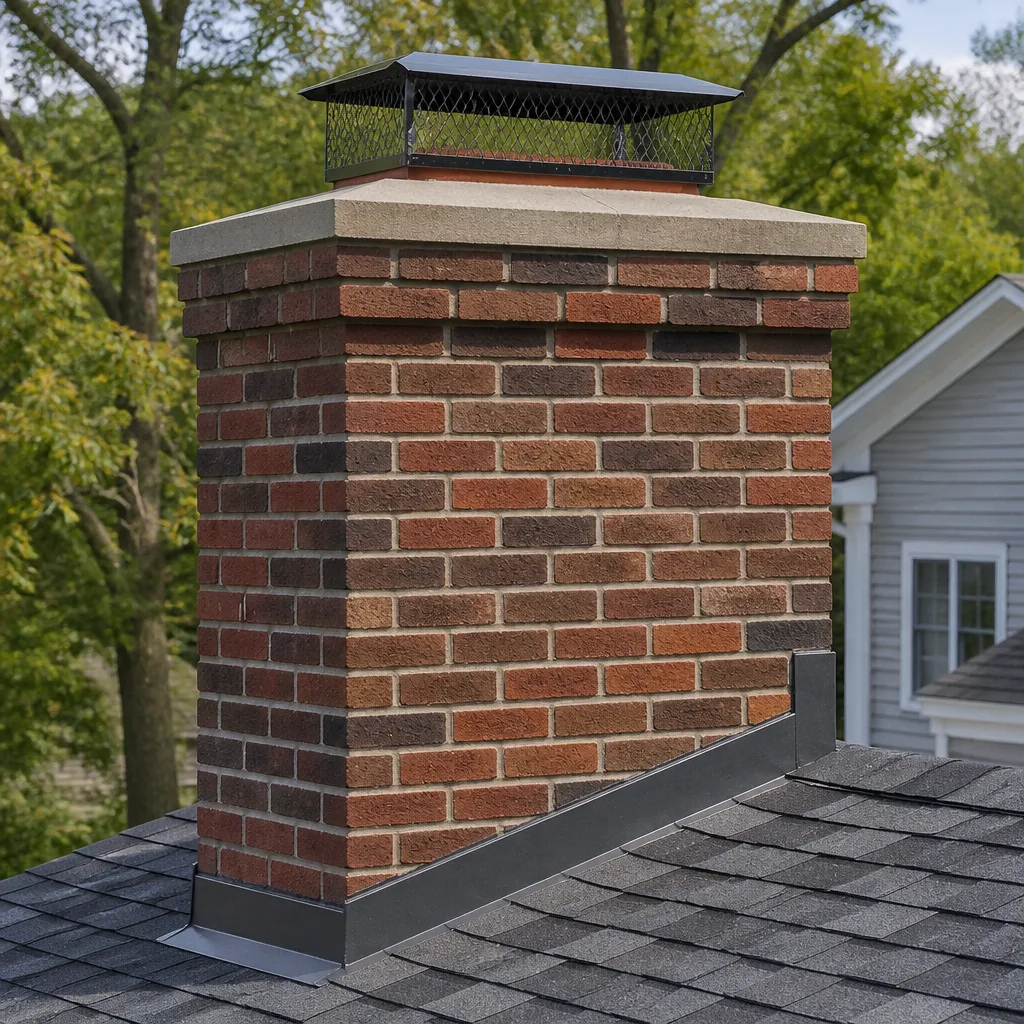
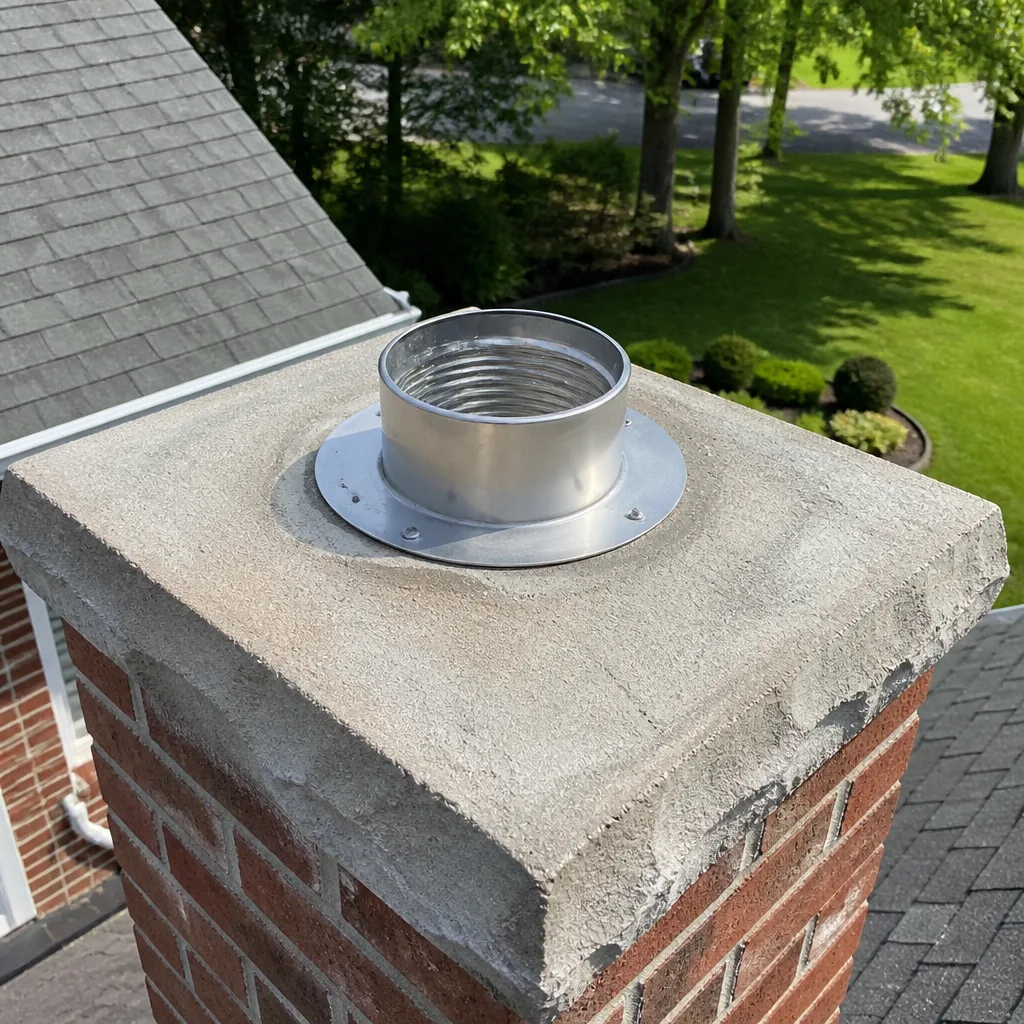
- Skipping the cap and crown check. Rain, animals, and debris enter through a failed cap, and the resulting moisture damage is far costlier than the check. A proper cap and venting component, chosen correctly from a line like Gelco or Olympia Chimney, prevents that intrusion.
See the difference
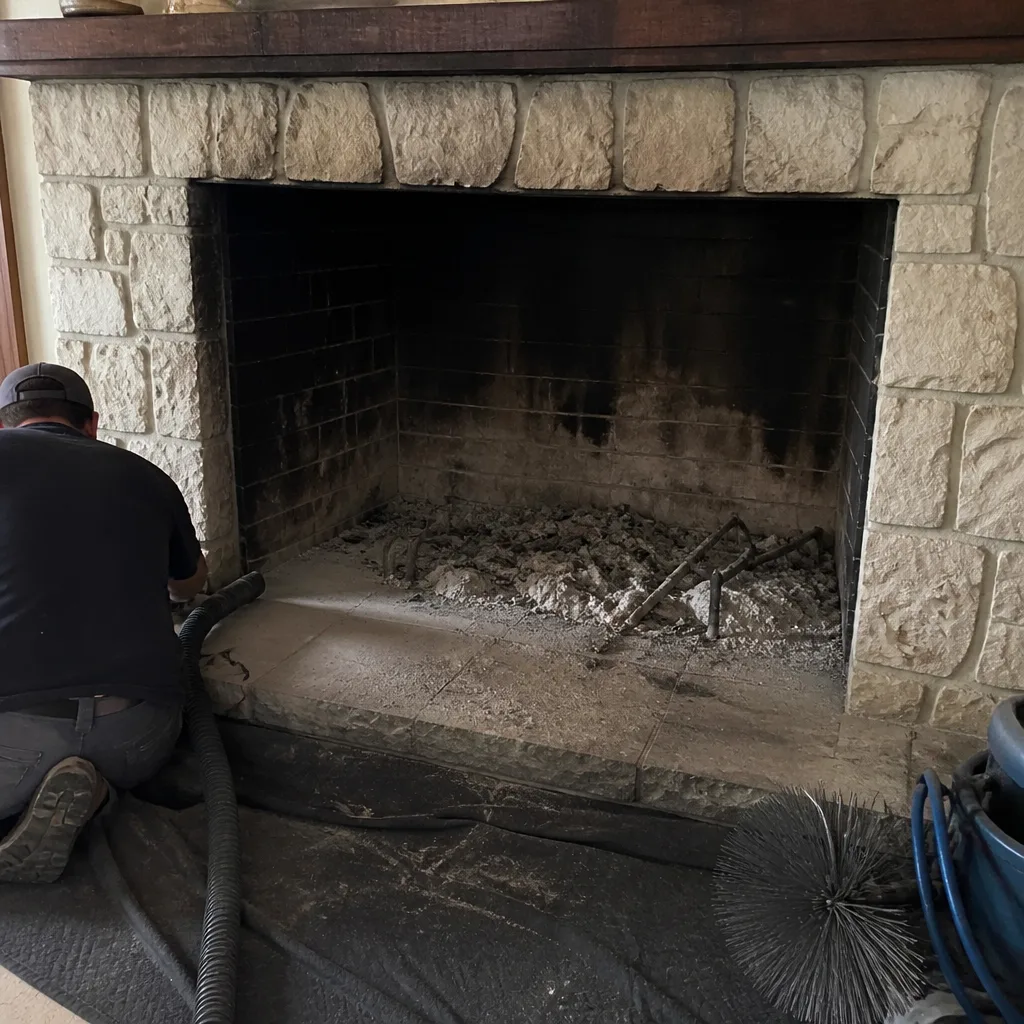 Before
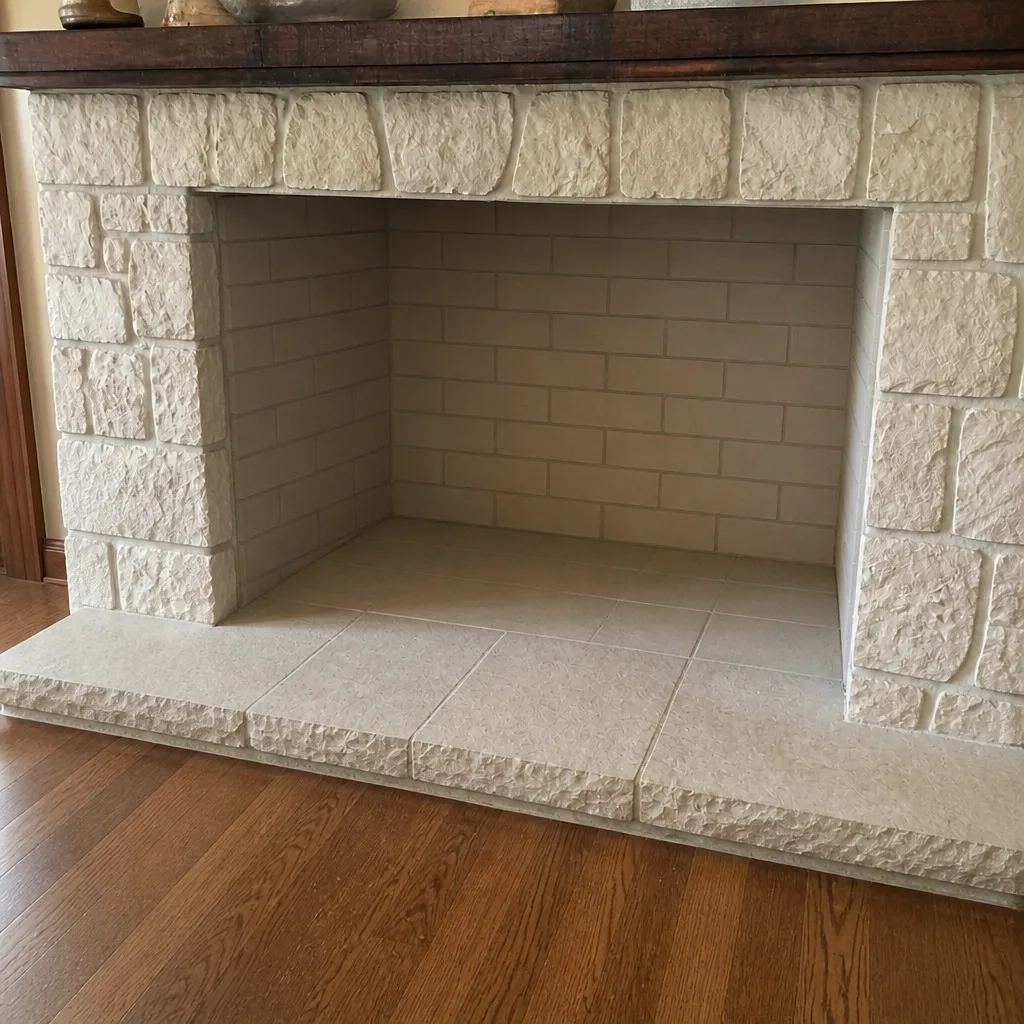 After
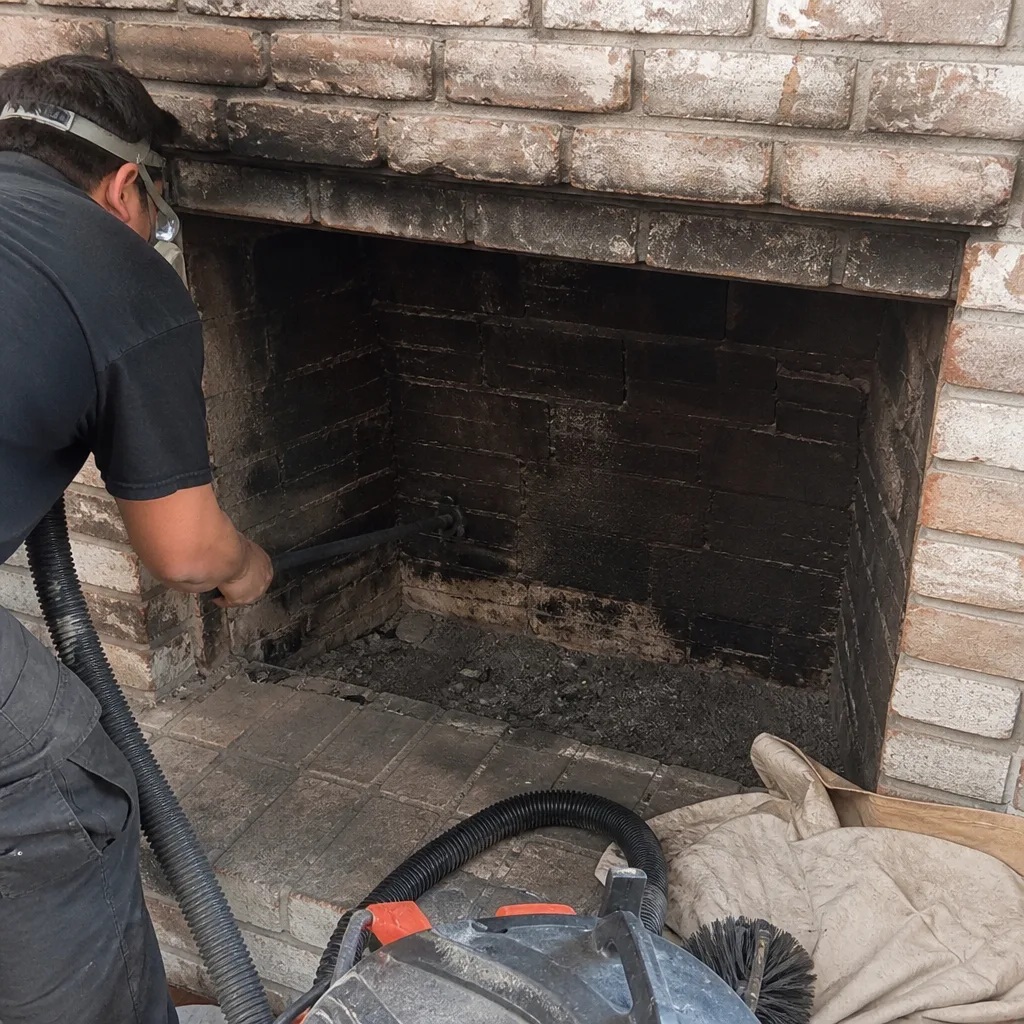 Before
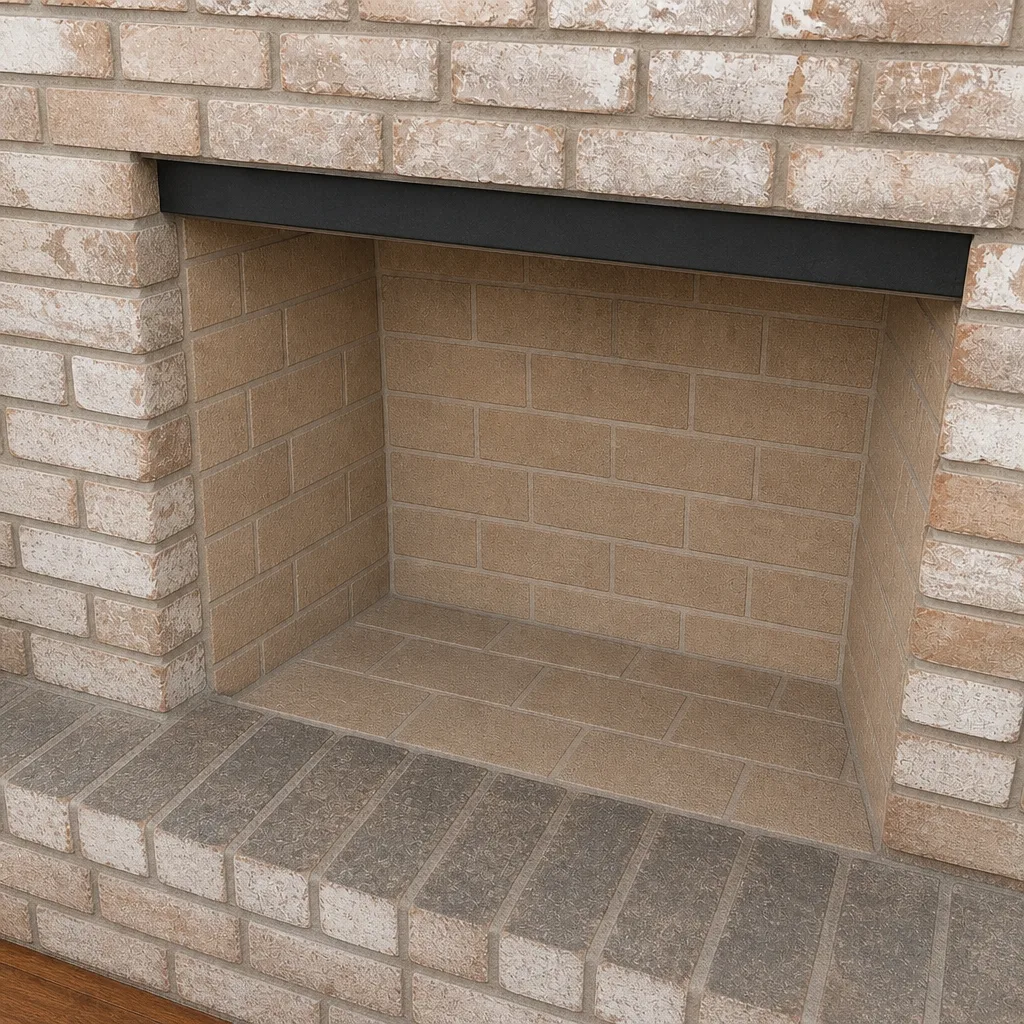 After
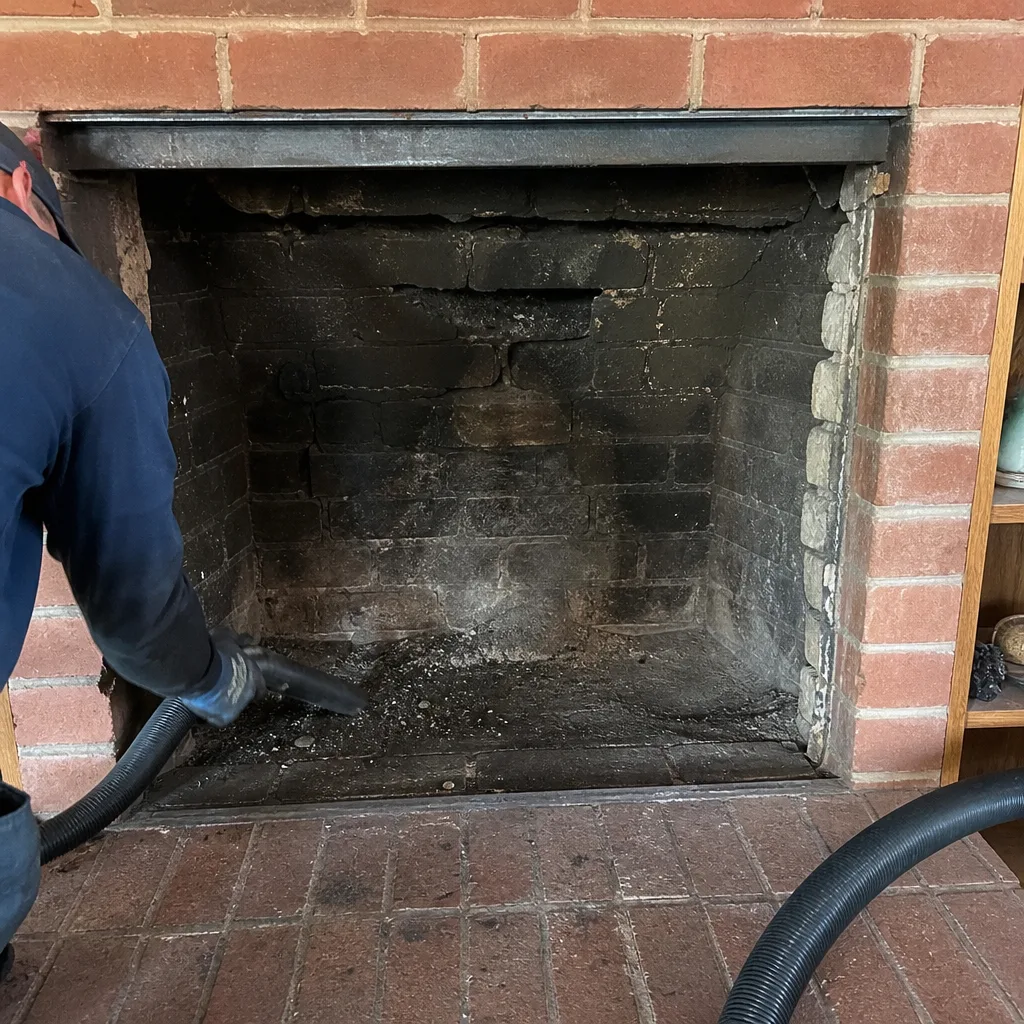 Before
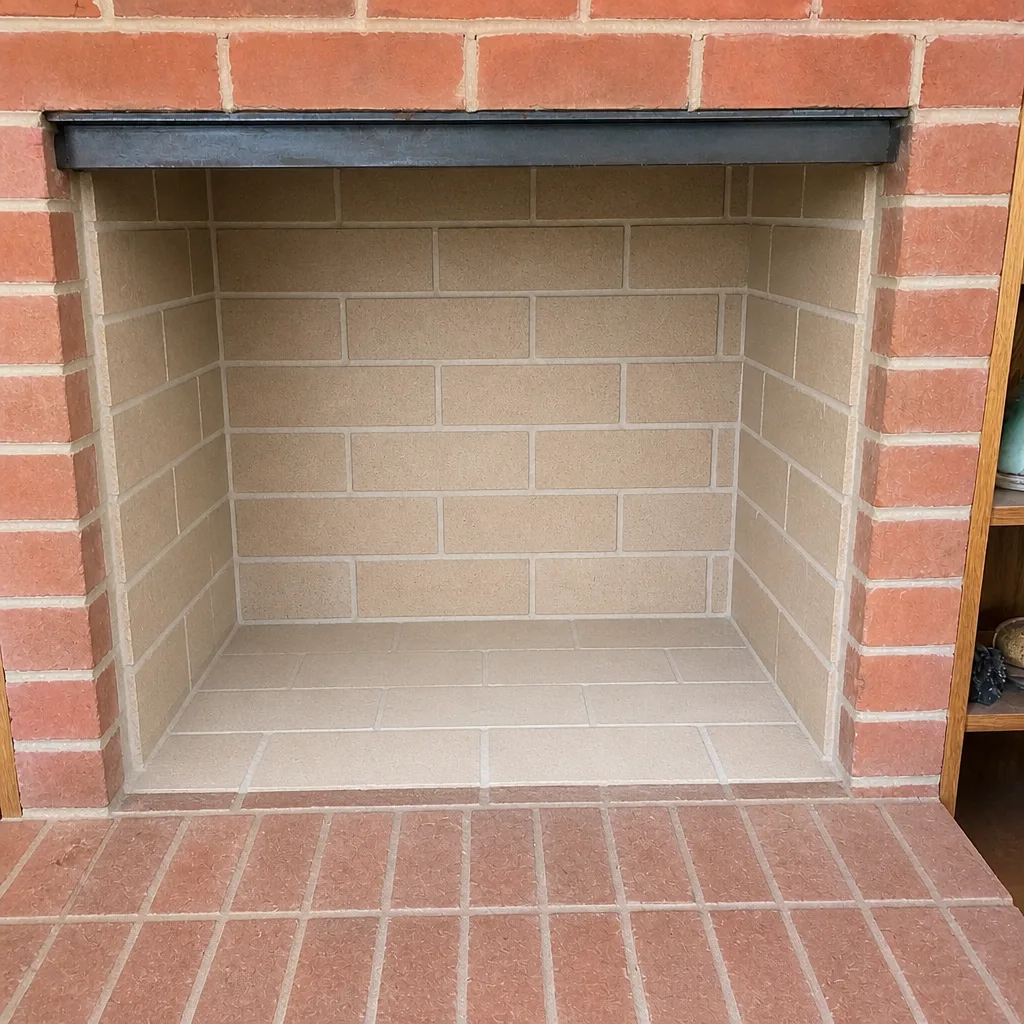 After
When to Call a Professional
Call a professional whenever the flue’s condition is unknown, whenever deposits are anything harder than soft and flaky, and whenever roof access is involved. Call if the fireplace was built before 1980, if the system is a prefab you can’t identify, or if there’s any sign of a damaged liner, cracked mortar, or moisture intrusion. Call if you need maintenance documented for insurance. And call if you’ve simply never had the chimney inspected, because that’s the starting point for every safe decision. It’s not a judgment on your ability. It’s recognizing that a chimney is a safety system and that the tools to assess it belong with a specialist. Our technicians have up to 14 years of experience, and we’re happy to look and tell you honestly whether work can wait. If you’re searching for Visalia chimney help, Chimney Sweep Visalia offers free estimates in Visalia. Call (888) 861-2541. We answer 24/7. Fast dispatch from 7am to 7pm, Sunday through Friday.
Frequently Asked Questions
DIY cleaning with a consumer kit handles loose soot and Stage 1 creosote in a straight, sound flue, while professional cleaning adds HEPA containment, rotary mechanical systems for hardened deposits, and camera inspection that determines what’s actually there. The line is stage and structure, not effort. If you don’t know your flue’s stage or condition, professional assessment is the right starting point. Call (888) 861-2541 for an exact quote. Estimates are free.
Yes, if a recent professional inspection confirmed the flue is sound and the deposits are Stage 1 only. Light soot and flaky creosote in an undamaged, accessible flue can be maintained by a careful homeowner between inspections. What you can’t safely do is make that determination yourself without a camera look. When in doubt, have it inspected before you brush.
Stage 2 and Stage 3 creosote are the dangerous ones because hardened and glazed deposits hold a heavy fuel load and are the most likely to sustain a chimney fire. Stage 3 glazed creosote is the most flammable form. Any flue with visible crusting, shine, or a slick feel should be assessed before any further burning, and the deposits need rotary or chemical removal a brush kit can’t provide.
It’s unlikely to carry the same weight as a documented professional service. Insurers generally look for evidence that maintenance was performed correctly and on a reasonable schedule, and a professional sweep provides a service record, inspection findings, and photos. A DIY cleaning leaves no such record, which can complicate a chimney fire claim. An inspection report is the strongest documentation you can hold.
The biggest risks are asbestos rope gaskets in pre-1980 fireplaces, unmarked prefab systems with proprietary liner requirements, and roof access on tile roofs. Disturbing old gaskets can release fibers, damaging a prefab liner creates a code and fire risk, and tile roofs crack under careless foot traffic. Each of these is a reason to have a specialist assess the system first.
A chimney should be swept when inspection shows buildup, and inspected at least annually, which is the practical anchor point for most Visalia wood-burning homes. Heavy use, damp or green wood, and several seasons without attention accelerate deposits. The honest answer is that the inspection schedule stays fixed while the cleaning schedule follows what the inspection finds. Call (888) 861-2541 to schedule an assessment. Estimates are free.
The Bottom Line
DIY chimney cleaning isn’t inherently reckless. Stage 1, soft, flaky creosote in a recently inspected, structurally sound flue is within reach of a careful homeowner, and we won’t pretend otherwise. But the moment deposits are hardened or glazed, the flue is damaged or unmarked, the system was built before 1980, or the only access is up a ladder onto a tile roof, the job belongs to a specialist with rotary equipment, HEPA containment, and a camera. Cost shouldn’t decide it, and confidence can’t substitute for knowledge. Start with what’s in your flue, then choose accordingly. Chimney Sweep Visalia handles sweep, inspect, and repair as one system, with professional-grade materials from lines like DuraFlex and HeatShield. Call (888) 861-2541 for a free estimate. We answer 24/7. Fast dispatch from 7am to 7pm, Sunday through Friday.
Written by the team at Chimney Sweep Visalia.