
Last updated November 15, 2026
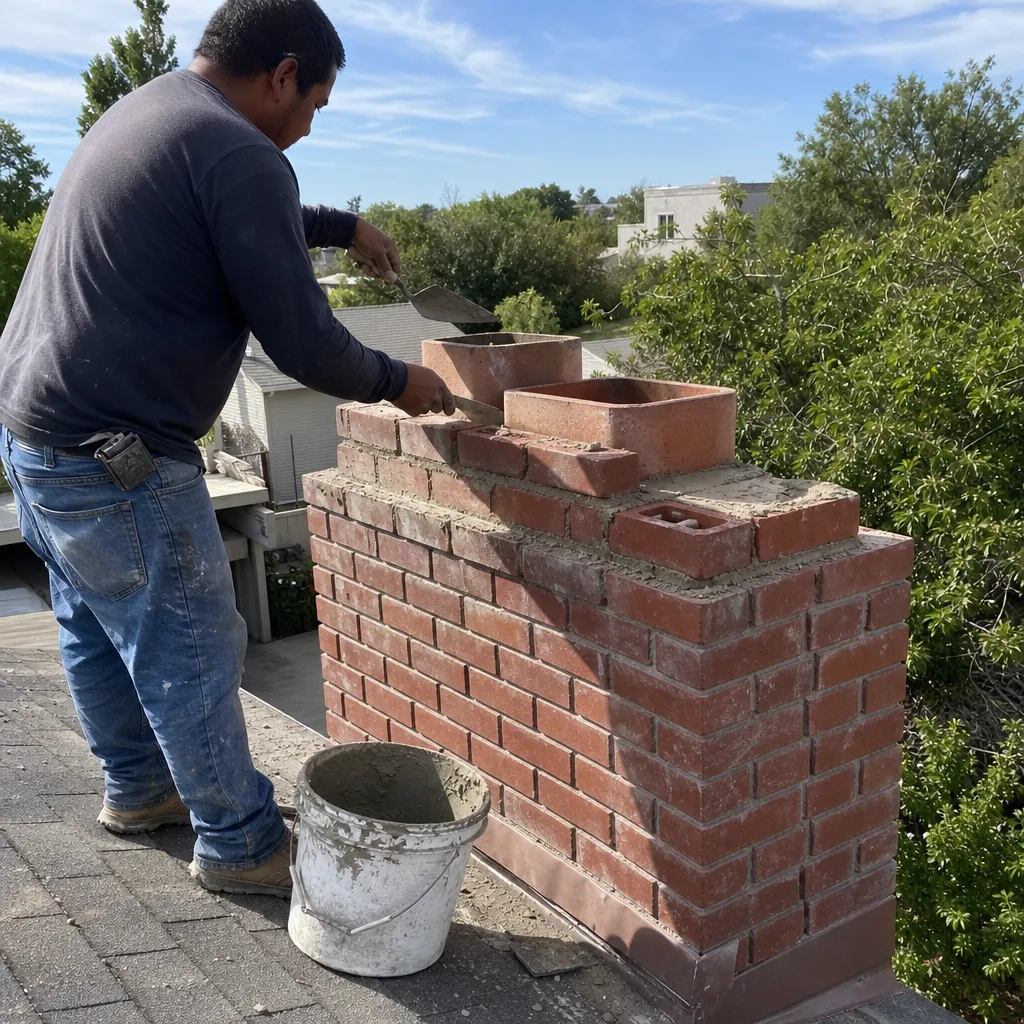
 Sweep & inspection
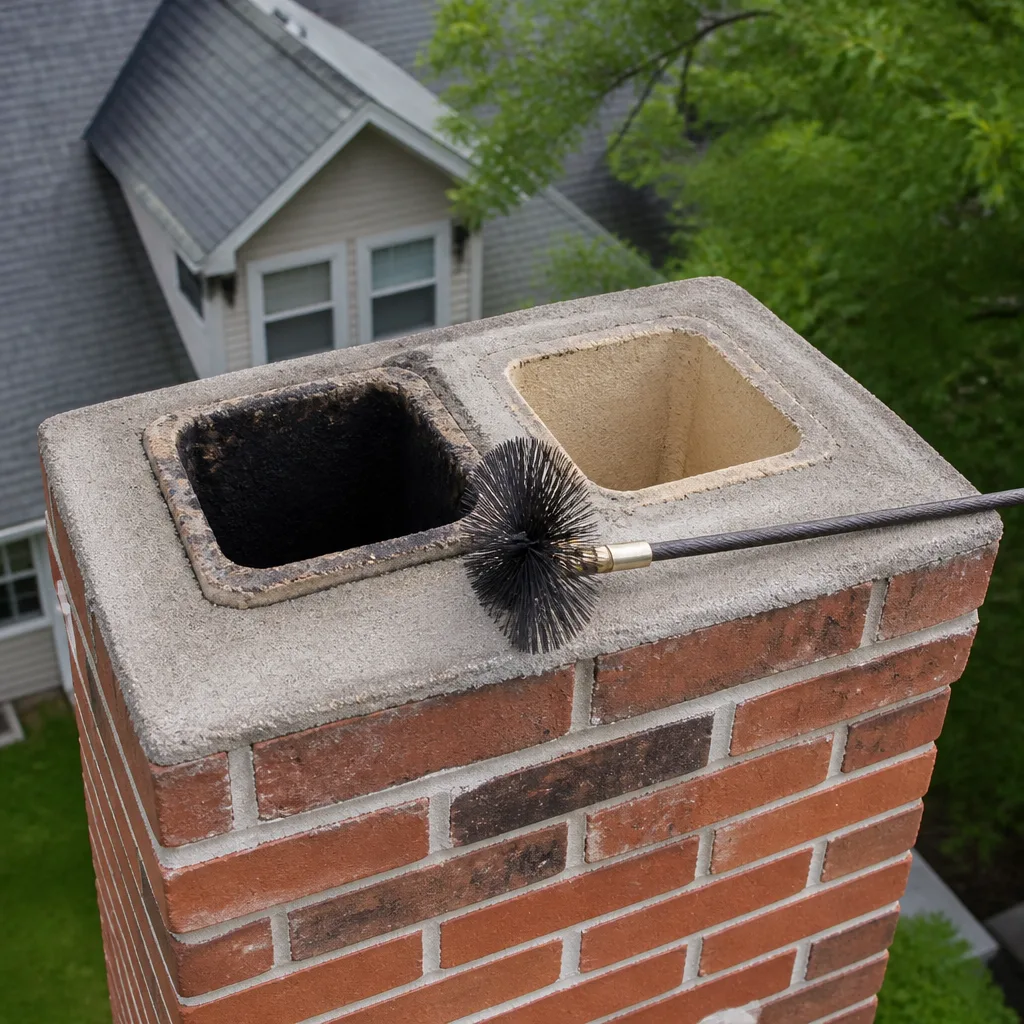
 Caps & crowns
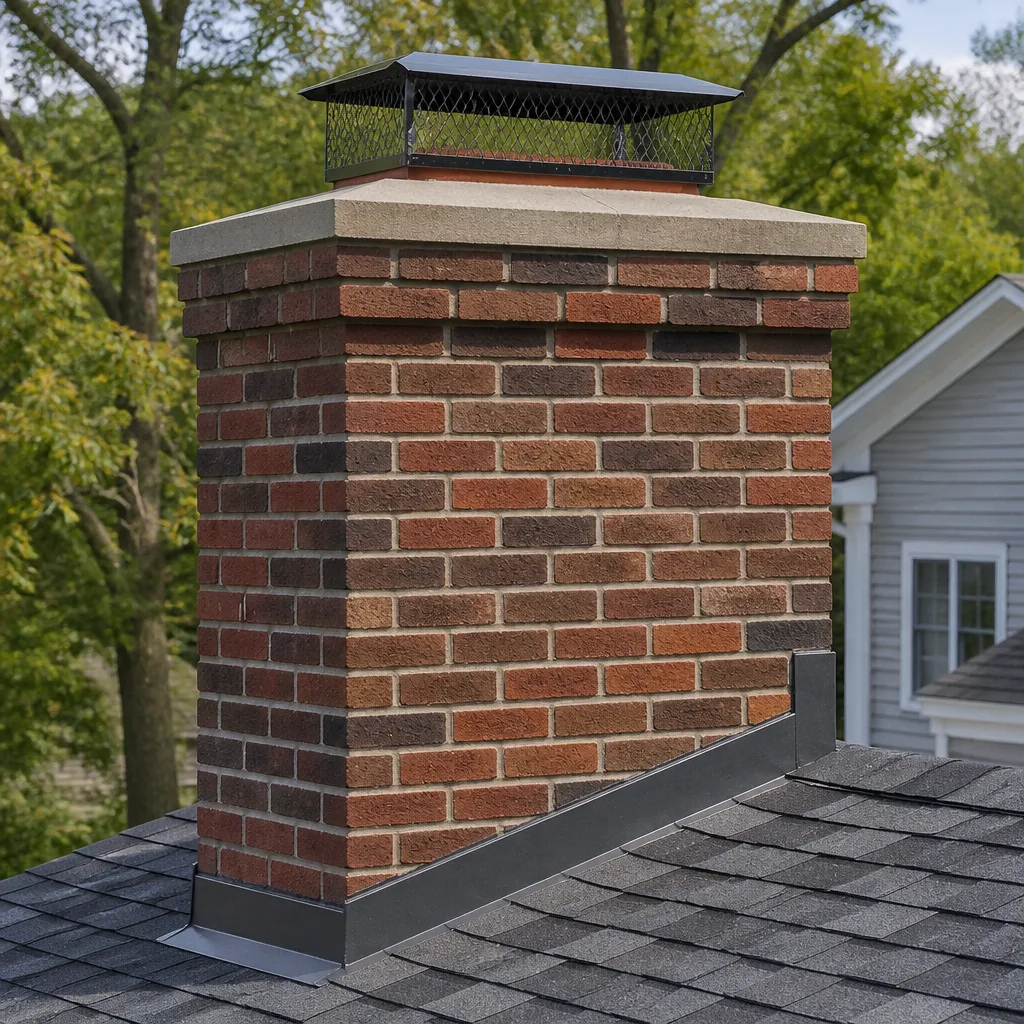
 Flue relining
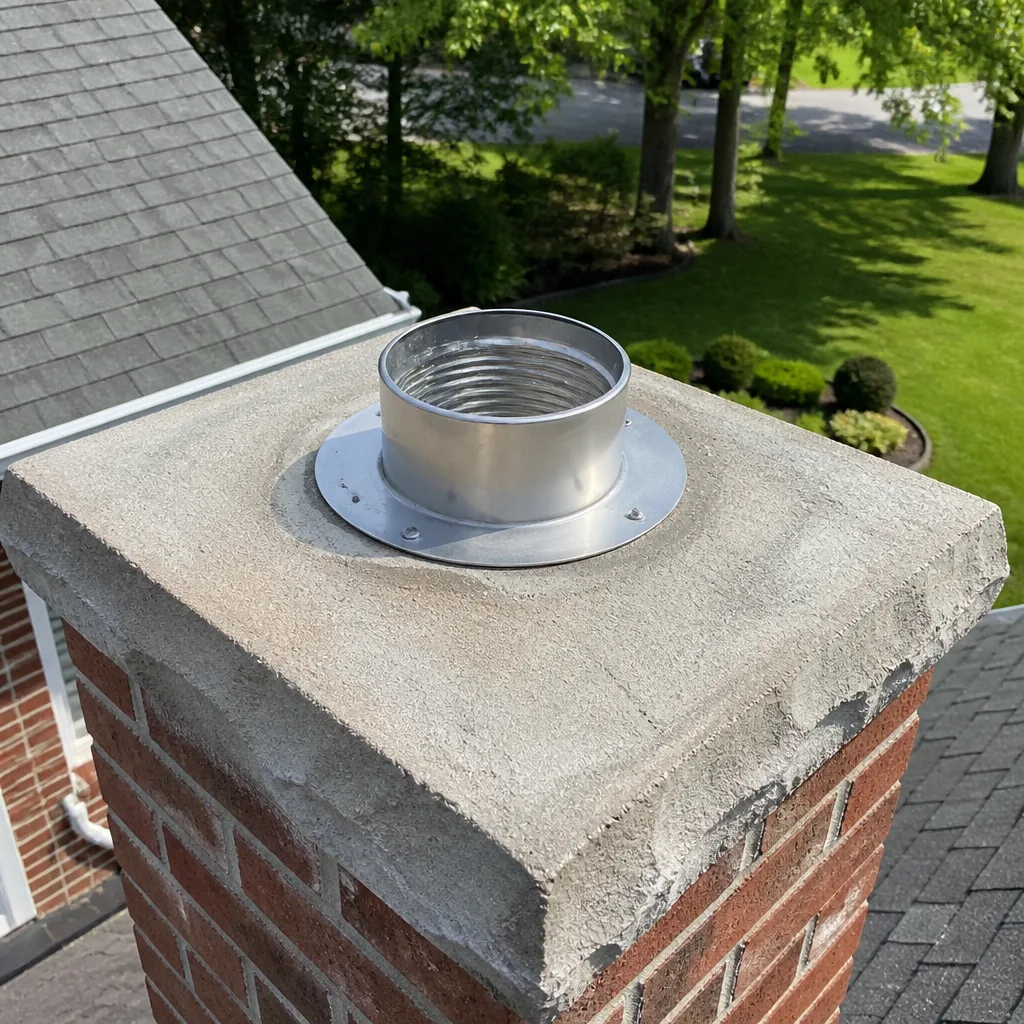
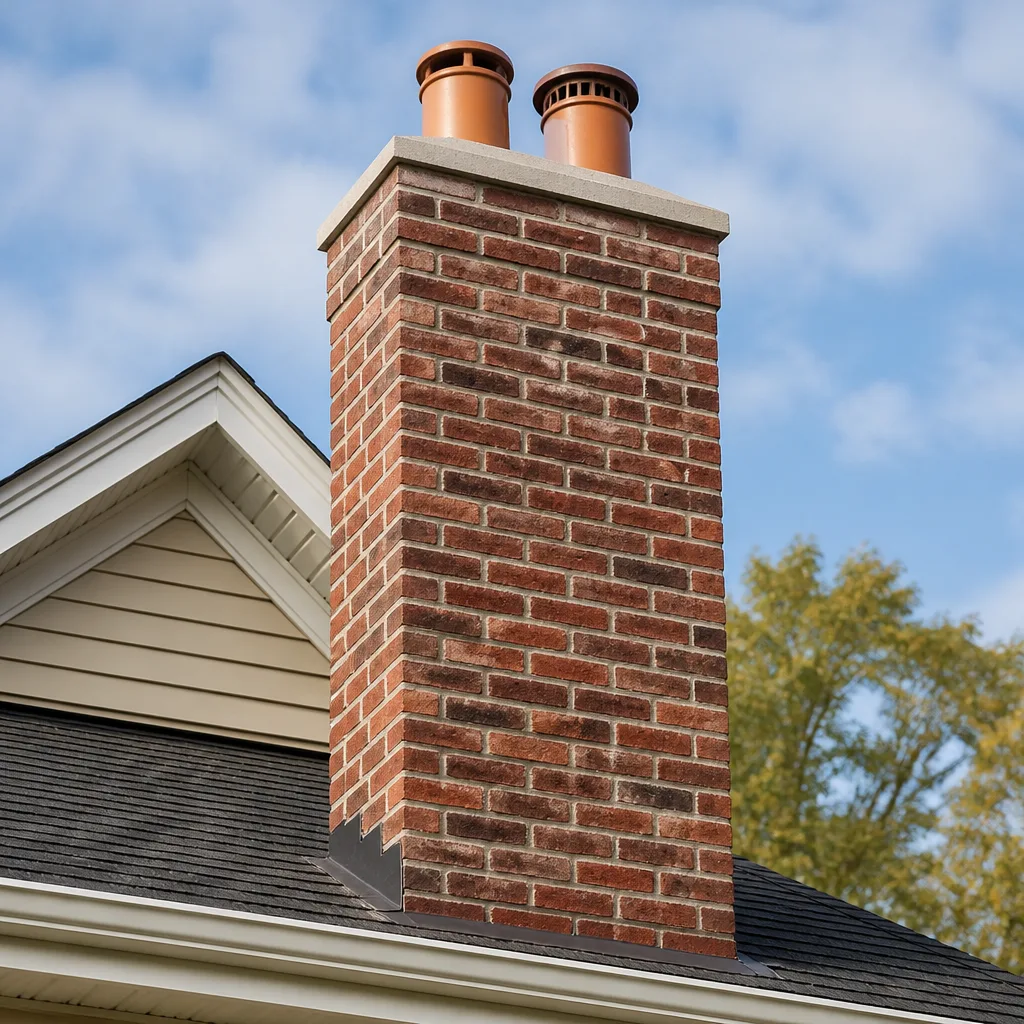 Masonry repair
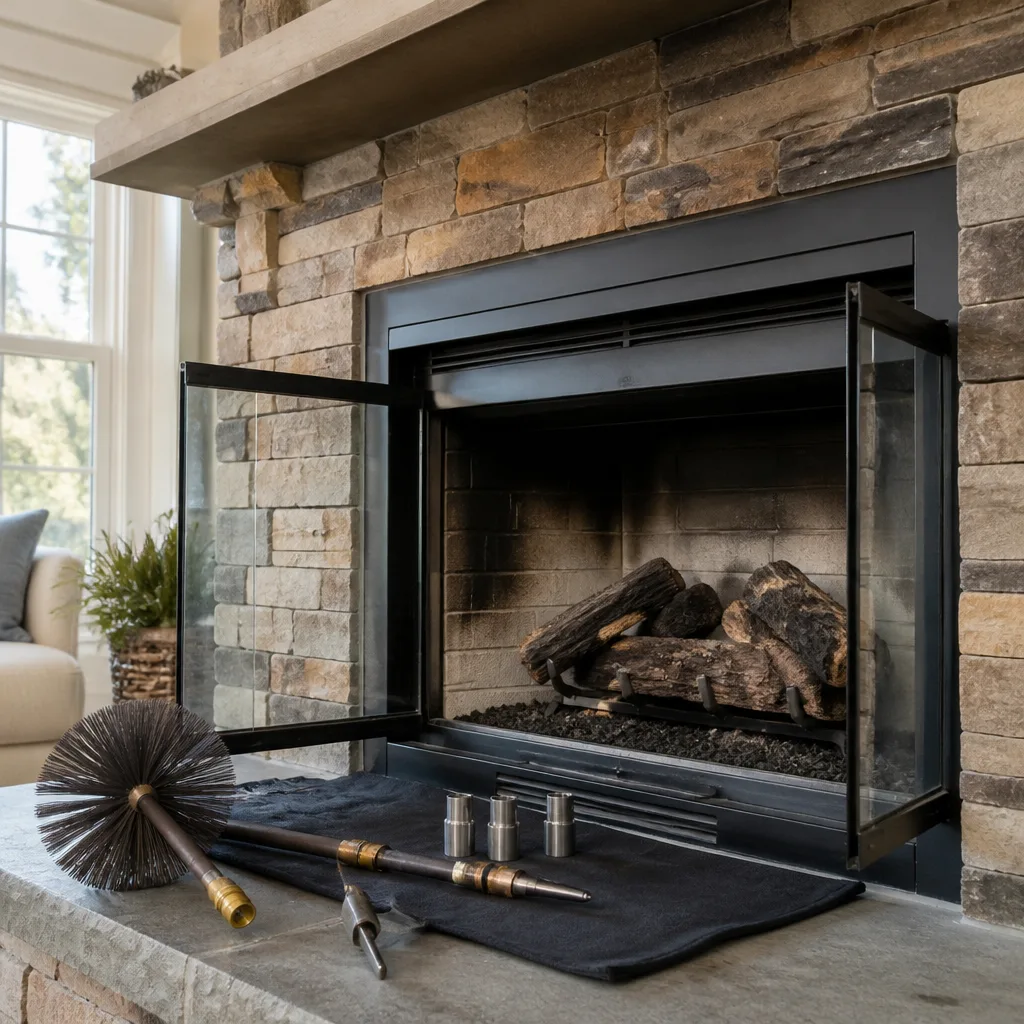 Gas fireplace service
Level 1 sweep and inspection to the NFPA 211 annual standard - flue, crown, cap, and flashing checked and photographed
Chimney sweep logs do not sweep chimneys. They loosen some creosote - which then falls where a brush and vacuum still have to collect it.
The Complete Guide to Chimney Cleaning in Visalia
Most chimney fires don’t start during a roaring December fire. They ignite in October, the first time a neglected flue reaches operating temperature after sitting idle all summer collecting dust, bird debris, and dried creosote from last season. Here in the San Joaquin Valley, that idle season is long and dusty, which changes how a chimney fouls compared to what national guides describe. This guide maps the full cleaning process to actual Visalia conditions: how our agricultural dust accelerates creosote layering, what the three creosote stages mean for method and price, the difference between inspection levels, and the documentation a reputable company should hand you before it drives away.
Quick Answer
Chimney cleaning in Visalia means removing soot, creosote, and debris from the flue and firebox, then inspecting the system for damage and appliance compatibility. A professional job uses rotary equipment, HEPA-rated vacuums, and a camera or visual inspection matched to NFPA 211 levels, and it ends with a written report you keep. Most wood-burning chimneys here need sweeping once a year, and Visalia’s summer dust load makes a pre-season sweep in early fall the practical choice.
Styles & brands we work with
- Sweep & inspection
- Caps & crowns
- Flue relining
- Masonry repair
- Gas fireplace service
Table of Contents
- Why Visalia Chimneys Get Dirty Differently
- The Three Stages of Creosote and What Each Means for Cleaning
- Level 1 vs Level 2 Inspections: What Visalia Homeowners Actually Need
- The Tools a Real Chimney Sweep Uses (And What a Brush-Only Job Misses)
- What a Professional Chimney Cleaning Looks Like, Step by Step
- The Paperwork You Should Get Before the Sweep Leaves
- What Chimney Cleaning Costs in Visalia
- Common Mistakes to Avoid
Why Visalia Chimneys Get Dirty Differently
Visalia sits in the heart of the San Joaquin Valley, surrounded by orchards, dairies, and row crops. That agricultural setting is good for the economy and hard on chimneys. Between harvest cycles and the dry summer months, fine particulate settles on roofs, and some of it finds its way into open flues and fireboxes. A chimney that sits unused from spring through fall collects a layer of that dust before it ever sees a log.
That matters because creosote – the tar-like residue left by wood smoke – bonds more readily to a dirty flue surface. Dust gives the smoke something to cling to. The result is that a Visalia chimney can build up residue faster than the same chimney in a wetter, cleaner-air climate, even when the homeowner burns the same amount of wood.
Then there’s the burning season itself. Visalia winters are mild, which means many households burn intermittently: a fire on a cool evening, none for a week, then a cold snap and daily fires. Intermittent burning is harder on a flue than steady burning. Each cold start produces a burst of incomplete combustion, and incomplete combustion is what lays down creosote. A chimney that alternates between hot and cold cycles accumulates more residue than one burned steadily.
Older masonry homes in and around downtown Visalia add a third factor. Their flues were built for a different era of wood and appliance, and the interior surfaces are often rougher than a modern liner. Rough flue walls trap more residue and are harder to brush clean. That’s one reason a proper Visalia chimney sweep evaluates the flue surface itself, not just the amount of soot coming down.
- Dry-season dust load: fine agricultural and soil particulate settles in open flues all summer.
- Intermittent burning: mild winters mean more cold starts, and cold starts produce more creosote.
- Rougher older flues: vintage masonry interiors trap residue that smooth modern liners shed.
- Long idle periods: nests, cobwebs, and leaf debris build up between burning seasons.
The Three Stages of Creosote and What Each Means for Cleaning
Creosote isn’t one substance. It forms in three recognizable stages, and each stage calls for a different cleaning method and a different price range. Knowing the stages helps you understand what a technician is telling you and why one chimney takes a quick brush-down while another needs a rotary system and chemical treatment.
Stage 1: Sooty and Brushable
Stage 1 creosote is a light, flaky, soot-like deposit. It looks like black powder and comes off with a standard chimney brush. This is the normal condition of a chimney that’s swept on schedule and burned with decent wood. Cleaning at this stage is straightforward and least expensive.
Stage 2: Flaky, Crusty, and Stubborn
Stage 2 creosote is denser. It forms in flakes or crusts and clings to the flue walls. A stiff brush removes some of it, but patches remain, and those patches are the fuel that feeds a chimney fire. Stage 2 usually calls for a rotary system – a spinning brush head driven by a drill or motor – that scrapes the flue walls under controlled pressure. Sometimes a chemical remover loosens the deposit first.
Stage 3: Glazed and Dangerous
Stage 3 creosote is the hard, shiny, tar-like glaze that forms when deposits are repeatedly reheated without being removed. It can look almost like black glass. A brush slides over it. Stage 3 requires chemical treatment to break down the glaze, followed by rotary mechanical removal. It’s the most time-consuming and costly cleaning, and it’s the condition most closely associated with chimney fires. If a sweep finds Stage 3 and tells you it needs more than a standard cleaning, that’s accurate, not an upsell.
- Stage 1: sooty, brushable – standard sweep.
- Stage 2: flaky, crusty – rotary brush plus possible chemical pre-treatment.
- Stage 3: glazed, tar-like – chemical glaze removal plus rotary mechanical cleaning.
Which stage a Visalia chimney reaches depends on how it’s been burned and how long it’s gone unswept. In our experience, a chimney that missed a couple of seasons here often lands at Stage 2 by the time it’s looked at.
Level 1 vs Level 2 Inspections: What Visalia Homeowners Actually Need
Chimney inspections follow a standard set of levels under NFPA 211, the national code that governs chimneys, fireplaces, and venting. The level you need depends on what’s changing in your home, not on how the sweep feels that day. Here’s how the levels break down in plain terms.
Level 1 Inspection
A Level 1 inspection covers the readily accessible parts of the chimney and appliance: the firebox, damper, visible flue, and whatever is reachable from the roof and the firebox opening without tools that damage the structure. It’s the inspection that comes with an annual sweep, and it’s appropriate when the appliance and fuel haven’t changed and there’s no known problem. Most Visalia homeowners having a routine cleaning need a Level 1.
Level 2 Inspection
A Level 2 inspection is more thorough. It uses a camera to look at the interior of the flue, and it examines accessible portions of the chimney in attics, crawl spaces, and other concealed areas. You need a Level 2 when:
- You’re buying or selling a home and want the chimney evaluated before closing.
- You’ve changed the fuel type or replaced the appliance, such as switching from wood to a gas insert.
- You’ve had a chimney fire, even a small one, or an earthquake or other event that could have damaged the structure.
- You’re making a significant change to the system, like relining or adding a new flue connection.
- There’s an ongoing performance problem – smoke spillage, poor draft, or a persistent odor – that a visual look didn’t explain.
A camera inspection isn’t a sales tool. It’s how a technician sees the parts of the flue you can’t, and it’s the difference between guessing about a crack and knowing. When we recommend liner or masonry work, it’s because the camera showed a condition that warrants it, and we’re glad to share that footage so you can see the same thing we did.
The Tools a Real Chimney Sweep Uses (And What a Brush-Only Job Misses)
The gap between a professional sweep and a quick brush-down comes down to equipment. A brush and a shop vac will move some soot, but it won’t handle Stage 2 or Stage 3 deposits, and it won’t keep the dust out of your living room. Here’s what a proper Visalia cleaning actually involves.
- Rotary cleaning systems: motor-driven spinning brush heads that scrape flue walls under controlled pressure, effective on crusted and glazed deposits a hand brush leaves behind.
- HEPA-rated vacuums: capture fine soot and dust at the source so it doesn’t drift into your home. Standard shop vacuums push fine particulate back into the air.
- Chemical creosote removers: products formulated to soften glazed deposits so they can be mechanically removed. Anti-Creo-Soot is one type used for this purpose.
- Video inspection cameras: let the technician see the full interior of the flue and record what’s found.
- Chimney brushes sized to the flue: a properly fitted brush contacts the walls; an undersized one skims past the buildup.
- Drop cloths and containment: keep the work area clean and the dust contained.
What a brush-only sweep misses is significant: glazed deposits, cracks that only a camera finds, and the fine dust that a shop vac fails to contain. That last one matters in a Visalia home with the windows closed and the HVAC running.
The components that go on afterward matter too. Caps, covers, and venting parts from lines like Olympia Chimney and Gelco are chosen to fit the flue and keep rain and animals out. A poorly fitted cap is one of the more common causes of moisture intrusion and bird nests we see.
What a Professional Chimney Cleaning Looks Like, Step by Step
A thorough cleaning follows a sequence, and knowing it helps you judge whether the job you’re getting is complete. Here’s the general flow of a professional chimney cleaning in Visalia.
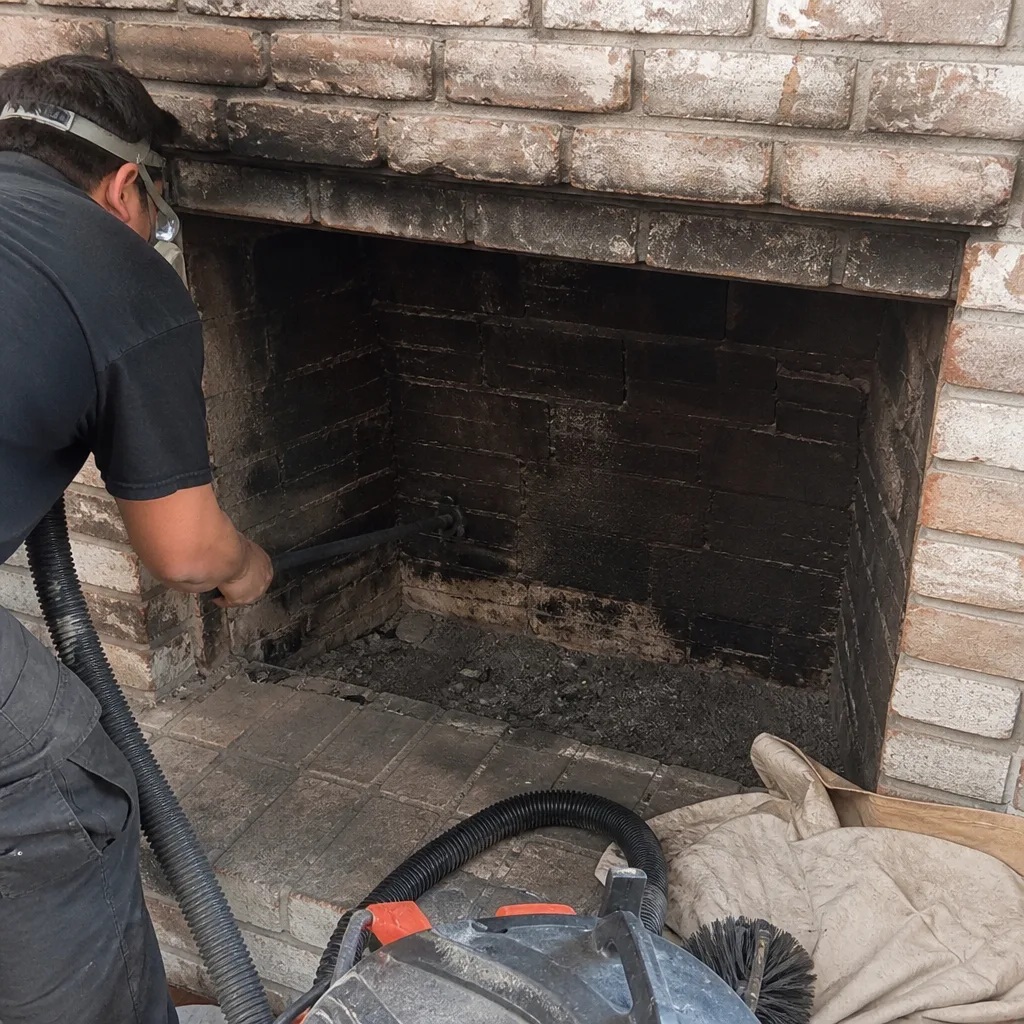
- Set up and protect. Drop cloths go down around the hearth, and the vacuum is staged before any work begins.
- Inspect before cleaning. The technician looks at the firebox, damper, and flue before sweeping, so nothing gets missed or damaged.
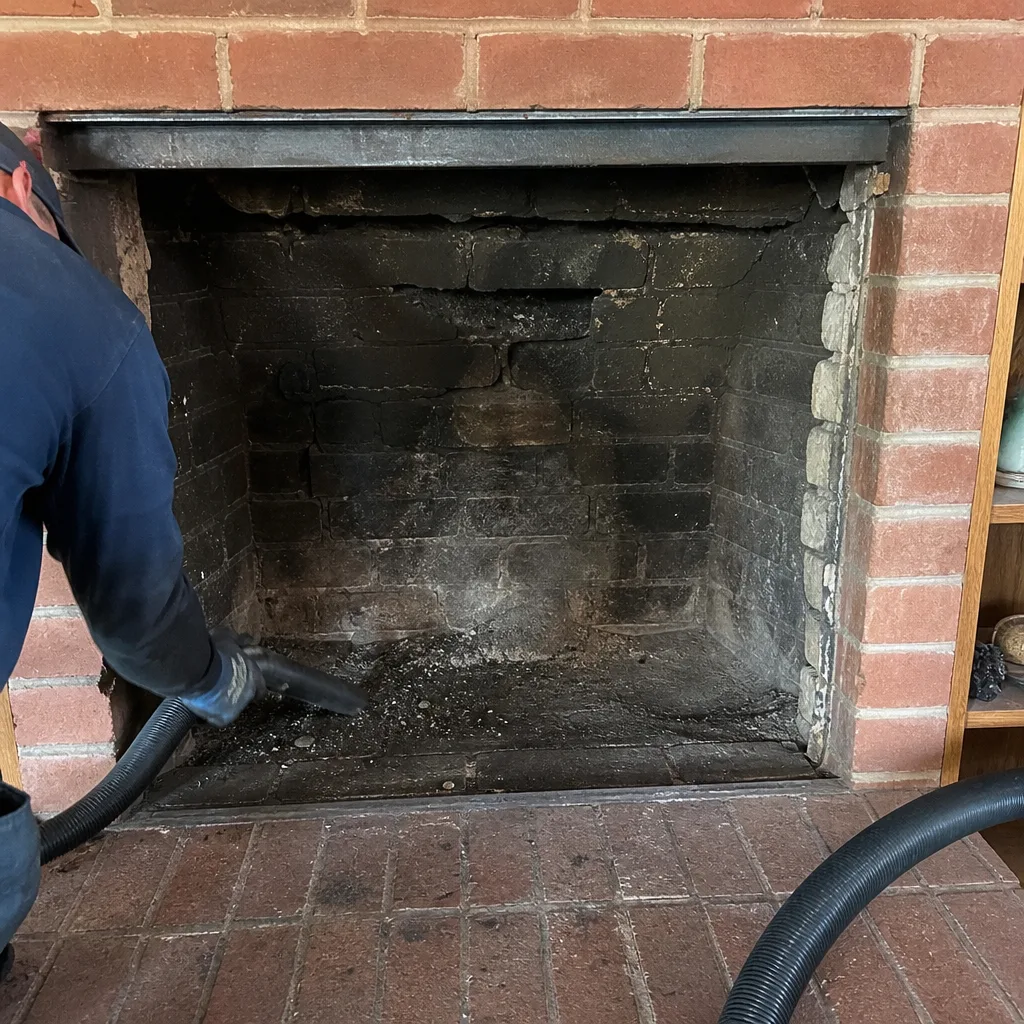
- Sweep the flue. Brushes – hand or rotary, depending on the deposit stage – work from the top down or bottom up as the configuration allows, with the vacuum running to contain dust.
- Remove the debris. Soot and creosote are collected and removed from the firebox and smoke shelf.
- Address stubborn deposits. Stage 2 or Stage 3 creosote gets chemical treatment and rotary work as needed.
- Inspect the full system. After cleaning, the technician checks the flue, cap, crown, and exterior for cracks, gaps, or damage the cleaning revealed.
- Document and report. Findings are recorded, and you get a written report with photos or video where relevant.
The cleaning reveals problems the soot was hiding. A crack in a flue tile or a failed crown doesn’t show up until the residue is gone, which is why the inspection and the sweep happen together. If the report recommends chimney repair, the technician should be able to show you exactly what prompted it.
The Paperwork You Should Get Before the Sweep Leaves
A reputable chimney company documents its work. Before the technician leaves, you should have a record of what was done and what was found. If you don’t get it, ask. This is the part of the job that protects you later, whether you’re filing an insurance claim, selling the house, or simply tracking the condition of the system over time.
- A written report of the cleaning – what was swept, what condition the flue was in, and the creosote stage found.
- Photos or video of the flue interior, especially if any damage was identified.
- The inspection level performed and what it covered under NFPA 211.
- Any recommended repairs, with the evidence behind each recommendation.
- The date of service and a note on when the next sweep is due.
Keep the report with your home records. When you sell a Visalia home, a documented chimney history is a small thing that reassures a buyer, and it’s the kind of record an insurer may ask for after a claim.
What Chimney Cleaning Costs in Visalia
Chimney cleaning pricing depends on the creosote stage, the flue configuration, and whether an inspection beyond Level 1 is needed. Here’s a general breakdown of how the work tiers out. These are typical ranges, and the written estimate you receive sets the final price.
- Standard sweep, Stage 1 deposits: the base cleaning for a chimney that’s been maintained on schedule.
- Rotary cleaning, Stage 2 deposits: higher than a standard sweep because of the equipment and time involved.
- Glaze removal, Stage 3 deposits: the most involved cleaning, with chemical treatment plus mechanical removal.
- Level 2 inspection: camera work and access to concealed areas add to the cost of a routine visit.
- Repairs identified during cleaning: priced separately based on the specific issue, and never performed without your approval.
What you can control is the stage your chimney reaches. A chimney swept annually stays at Stage 1, which keeps the cleaning simple and the cost at the low end. A chimney that goes several seasons without attention climbs toward Stage 2 or 3, and the cleaning gets more involved and more expensive. Call (888) 861-2541 for an exact quote – estimates are free.
Common Mistakes to Avoid
- Waiting until the first cold snap. Scheduling a sweep in October means you’re competing with everyone else in Visalia who did the same, and a needed repair can’t be done before the first fire. Get it done in early fall.
- Assuming a gas insert doesn’t need attention. Gas appliances vent differently than wood, but they still need inspection for venting and carbon monoxide safety. A gas insert isn’t a pass on annual checks.
- Hiring a general handyman for a chimney job. Chimney work is its own trade. A generalist may miss the creosote stage, the flue condition, or the venting details that keep the system safe.
- Treating a brush-down as a full inspection. A brush moves soot. It doesn’t find a cracked flue tile. The camera inspection is what reveals the problems that matter.
- Ignoring an odor after cleaning. A persistent smoky smell after a sweep can point to a venting or draft problem, not leftover soot. It’s worth a follow-up look.
- Burning unseasoned wood to save money. Wet wood produces more creosote, so it costs you more in cleaning and risk than it saves. Burn seasoned wood and keep the flue cleaner.
- Skipping the annual sweep because the chimney “looks fine” from below. Most of the flue is invisible from the firebox. The deposits that matter form where you can’t see them.
See the difference
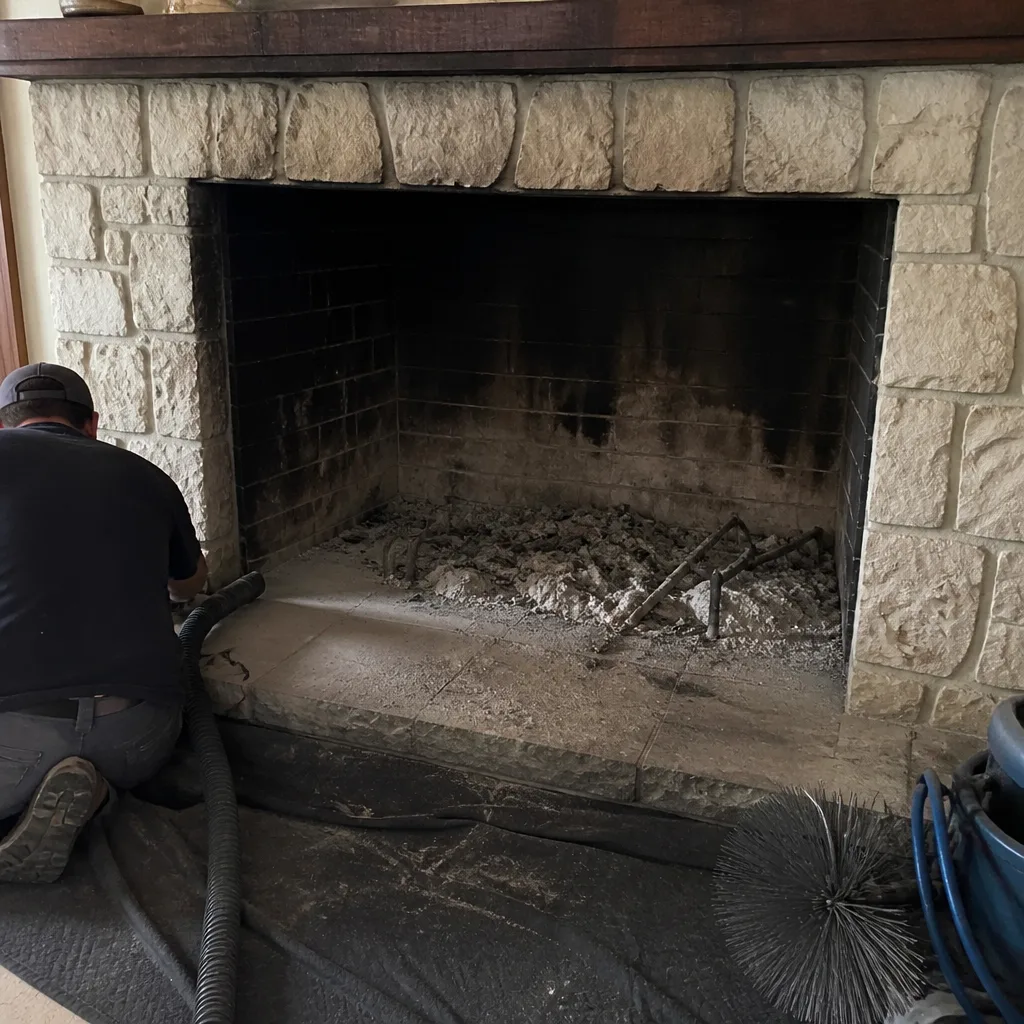 Before
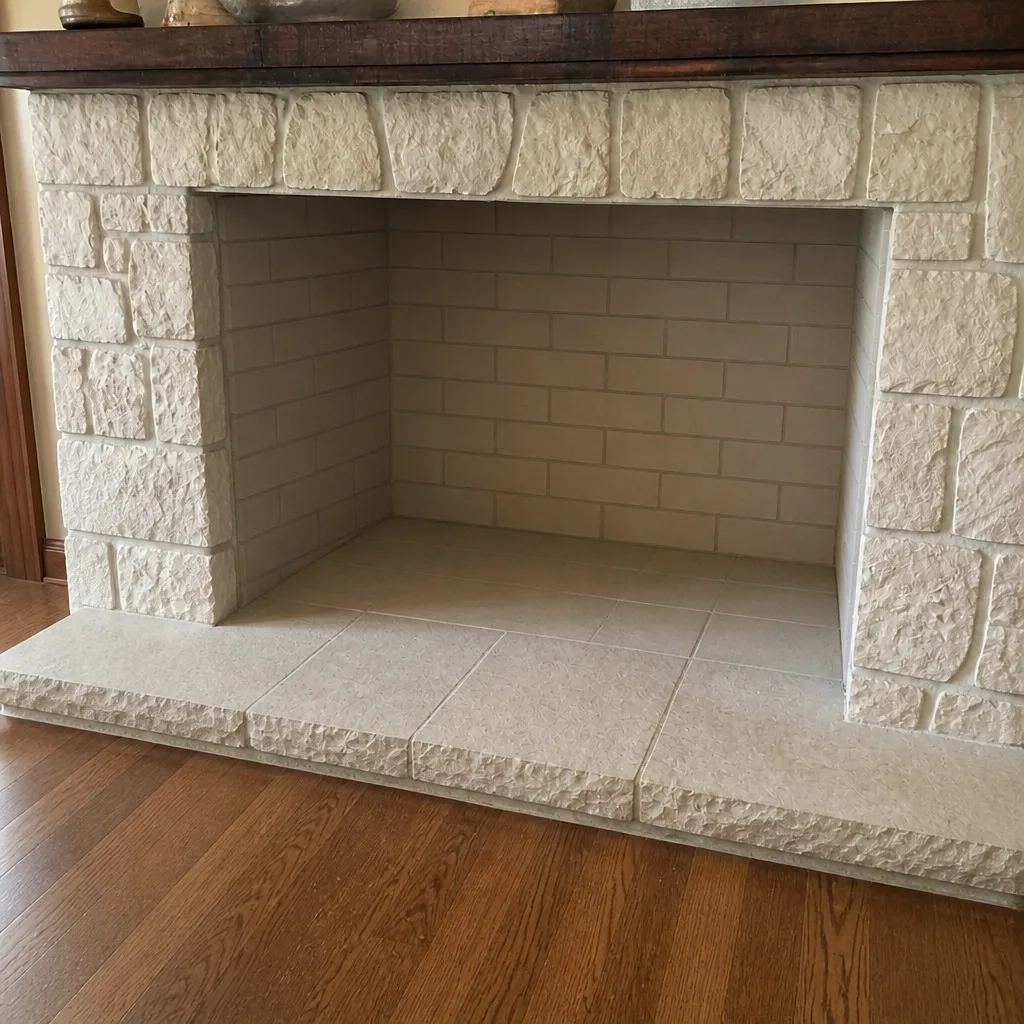 After
 Before
 After
 Before
 After
When to Call a Professional
Some chimney work is a professional job without question. If you’ve had a chimney fire, noticed smoke spilling into the room, smelled a strong creosote odor, seen cracked or missing flue tiles, or moved into a Visalia home with unknown chimney history, call a specialist. Any chimney that hasn’t been swept in a year or more is due regardless of whether it looks dirty. Gas appliance venting, liner questions, and any structural damage found on the exterior also belong with a trained technician, not a generalist. Homeowners across Visalia call us because the whole system gets handled by one company: sweep, inspect, and repair. Chimney Sweep Visalia offers free estimates in Visalia – call (888) 861-2541.
Frequently Asked Questions
Chimney cleaning in Visalia is priced by the job, and the main driver is the creosote stage found during the inspection. A standard Stage 1 sweep costs less than a rotary cleaning for Stage 2 deposits or glaze removal for Stage 3, and a Level 2 camera inspection adds to a routine visit. The written estimate sets the final price. Call (888) 861-2541 for an exact quote – estimates are free.
Once a year is the standard for a wood-burning chimney, and Visalia’s dry-season dust and intermittent burning make an annual pre-season sweep the practical rule. A chimney burned heavily, or burned with unseasoned wood, may need attention sooner. Call (888) 861-2541 to book a sweep and find out what condition your flue is in.
You need a Level 2 inspection when the situation calls for it: buying or selling a home, changing the fuel type or appliance, after a chimney fire, or when there’s a performance problem a visual check didn’t explain. A routine annual sweep with an unchanged setup usually calls for Level 1 instead. Call (888) 861-2541 and we’ll tell you which level fits your situation.
Creosote builds up and moves from brushable Stage 1 toward crusted Stage 2 and glazed Stage 3, and the glazed stage is the fuel that feeds a chimney fire. Skipping also hides developing problems like cracked flue tiles, which affect both safety and venting. Call (888) 861-2541 to schedule a sweep before the buildup climbs.
Yes. Occasional burning still leaves creosote, and in Visalia the intermittent pattern means more cold starts, which produce more incomplete combustion and more residue. The chimney also collects dust and debris while idle. Call (888) 861-2541 for an assessment even if you burn lightly.
Yes. Gas appliances vent differently than wood, but they still need inspection for venting condition and carbon monoxide safety. We inspect gas inserts and the venting system, and we check components like caps and venting parts against the appliance’s requirements. Call (888) 861-2541 to schedule.
The Bottom Line
Chimney cleaning in Visalia isn’t a generic service. The Valley’s dust, mild but intermittent burning season, and older masonry homes push chimneys toward creosote faster than national guides account for. The three creosote stages determine the cleaning method and the price, and the right inspection level depends on what’s changing in your home. A professional job uses rotary equipment, HEPA containment, and a camera inspection, and it ends with documentation you keep. Sweep, inspect, and repair belong with one chimney-only specialist, not a generalist. Chimney Sweep Visalia handles the full system – our technicians have up to 14 years of experience, and we use professional-grade materials from DuraFlex, HeatShield, Famco, and Copperfield.
When you’re ready to book a cleaning or get an honest assessment of what your chimney actually needs, call (888) 861-2541. We answer 24/7. Fast dispatch from 7am to 7pm, Sunday through Friday. Estimates are free, and nothing gets recommended that we can’t show you on camera.
Written by the team at Chimney Sweep Visalia.