
Last updated November 15, 2026
 Sweep & inspection
 Caps & crowns
 Flue relining
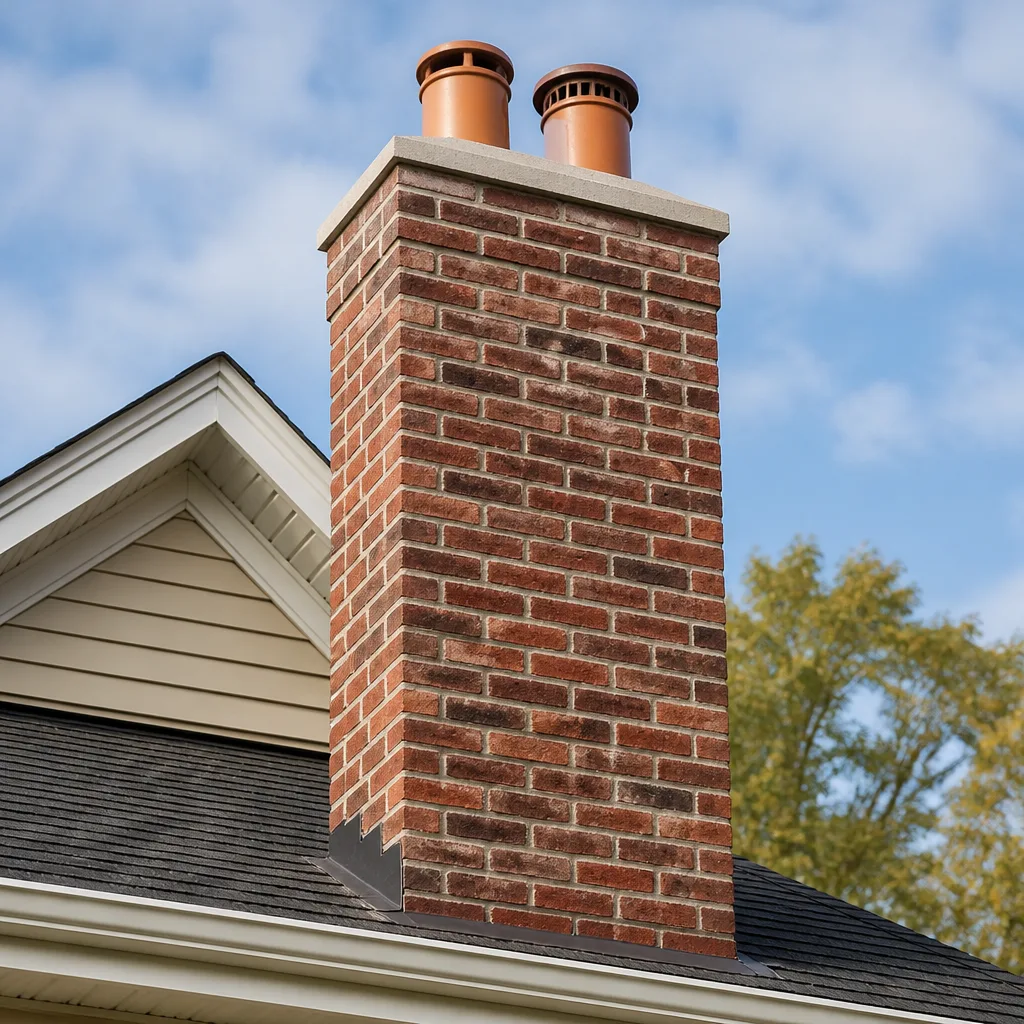 Masonry repair
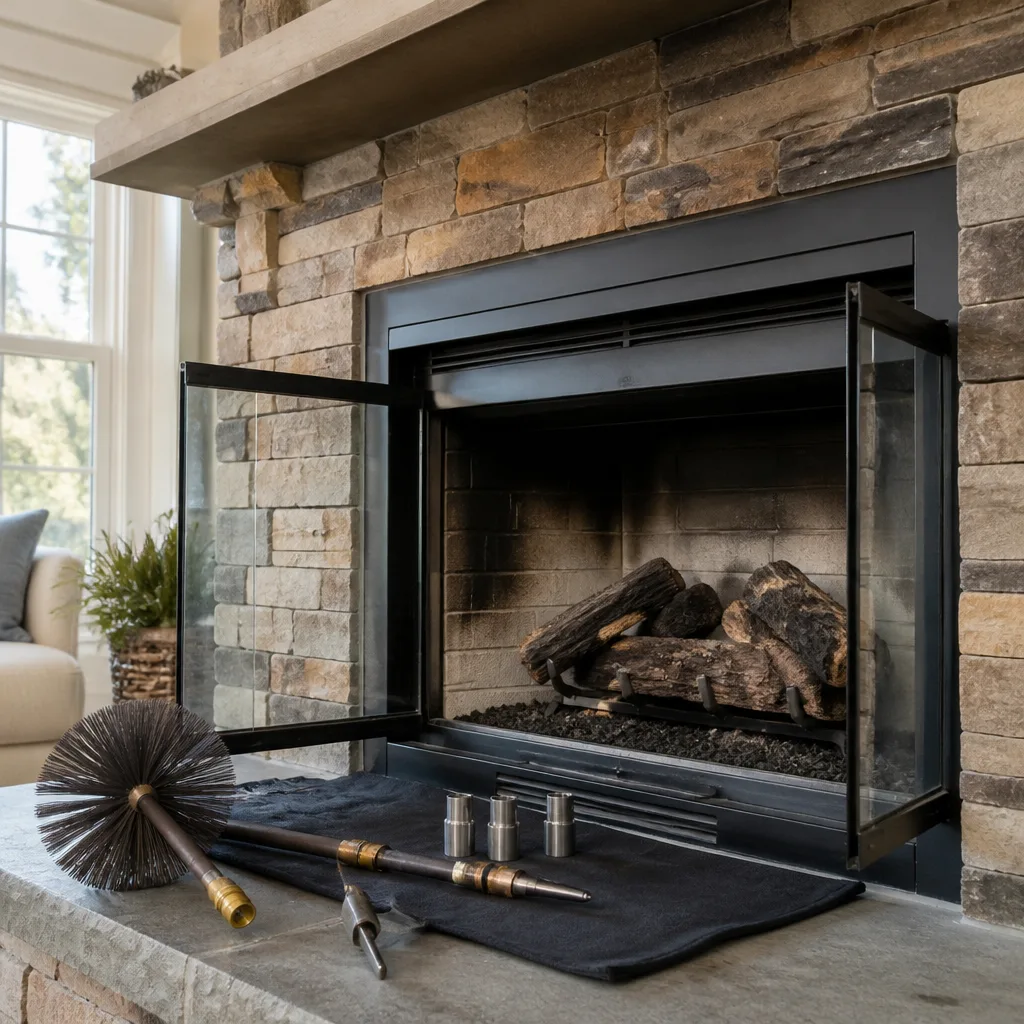 Gas fireplace service
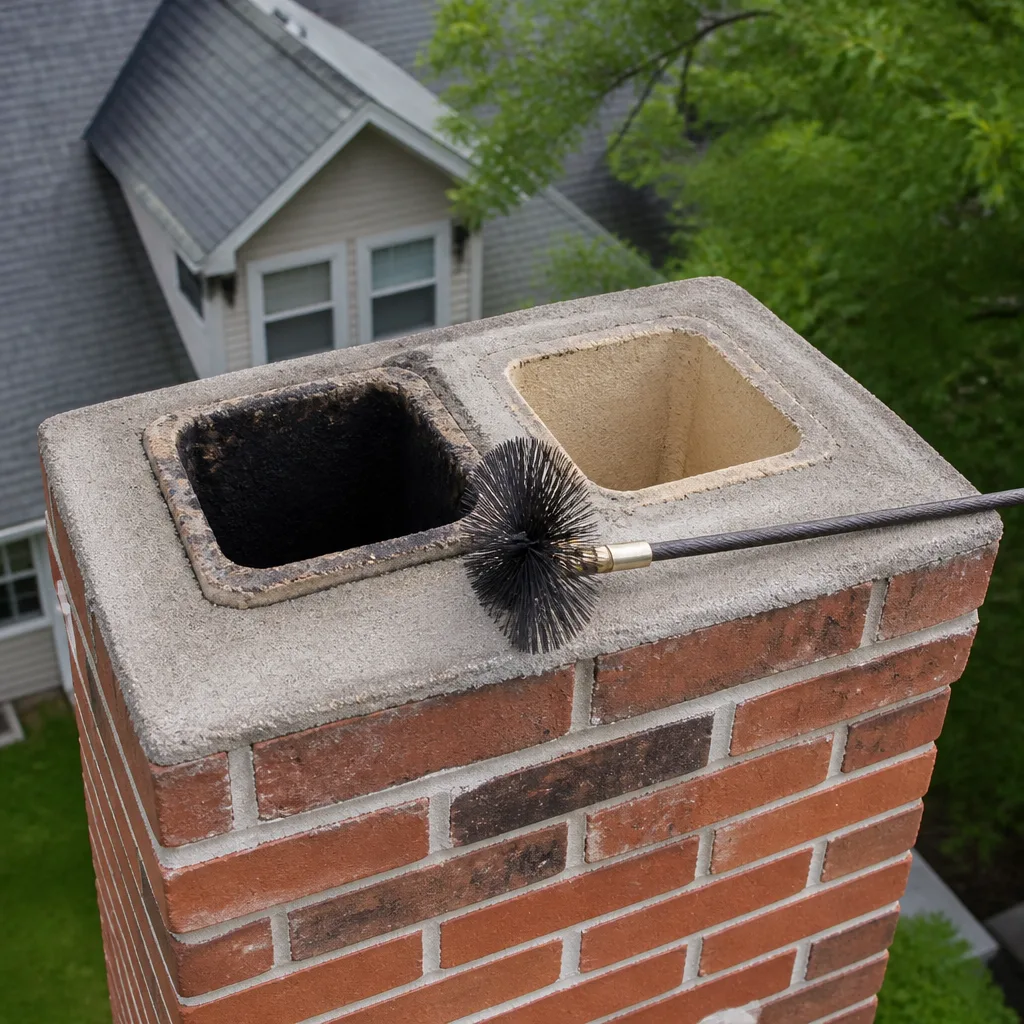
Level 1 sweep and inspection to the NFPA 211 annual standard - flue, crown, cap, and flashing checked and photographed
Chimney sweep logs do not sweep chimneys. They loosen some creosote - which then falls where a brush and vacuum still have to collect it.
Choosing the Right Chimney Cleaning Brand: A Buyer’s Guide for Visalia
Two chimney companies can quote the same sweep at nearly the same price and deliver completely different results, because one uses professional-grade products from suppliers like Rutland, HeatShield, or Olympia Chimney, and the other reaches for off-brand materials that aren’t rated for the temperatures a flue actually sees. Most homeowners never think to ask what goes into the job. They ask about price and scheduling, then hope for the best. That’s the gap this guide closes. You’ll learn the product categories that matter, the brands that set the professional standard in each one, how to read a quote for material quality, and the exact questions to ask a chimney contractor in Visalia before you book.
Quick Answer
The right chimney cleaning “brand” isn’t a single product, it’s a supply chain. A credible chimney company uses recognized, listed materials for each task: professional creosote removers for cleaning, HeatShield or Smoktite for smoke chamber and flue repair, and UL 1777-listed stainless liner systems from makers like Olympia Chimney or DuraFlex for relining. In Visalia, ask any contractor which products they’ll use on your specific chimney and why, and treat a vague answer as a reason to keep looking.
Styles & brands we work with
- Sweep & inspection
- Caps & crowns
- Flue relining
- Masonry repair
- Gas fireplace service
Table of Contents
- Why Materials Matter as Much as Technique
- The Four Product Categories in Chimney Service
- Rutland Products: What They Cover and Where They Stop
- HeatShield and Smoktite: Matching the Mortar to the Repair
- Stainless Liner Systems: 304 vs. 316 and UL 1777
- How to Ask a Visalia Contractor About Products
- Warranty Implications of Listed vs. Unlisted Materials
- Common Mistakes to Avoid
Why Materials Matter as Much as Technique
A chimney is a high-temperature, corrosive environment, and the products used inside it have to survive conditions that would destroy ordinary building materials. Creosote glazes onto flue walls and burns hot when it ignites. Condensation from gas appliances turns acidic. Masonry expands and contracts through hot and cold seasons. The technician’s skill decides how well a job is executed, but the materials decide how long that work holds up.
That distinction matters in Visalia, where summers run long and hot and winter brings cool, damp evenings when fireplaces actually get used. A crown coating that isn’t rated for thermal movement can crack within a season. A liner alloy that isn’t matched to the fuel type can corrode from the inside out. The homeowner often doesn’t find out until the next inspection, or until a problem shows up somewhere more expensive.
There’s a second reason materials deserve attention: insurance. Many carriers ask about chimney condition and expect documented, code-compliant work. A repair done with unlisted, unrated materials may not satisfy that expectation. When a specialist like Chimney Sweep Visalia sources from a curated set of professional suppliers, it’s not a marketing flourish. It’s what makes the work defensible, verifiable, and durable.
So before asking “how much,” ask “with what.” That single shift in how you shop for chimney service will separate the specialists from the generalists faster than any other question.
The Four Product Categories in Chimney Service
Chimney work involves four broad material categories, and quality varies enormously within each. Understanding what each one does helps you follow a contractor’s explanation and spot when a shortcut is being proposed.
- Creosote removers and cleaning compounds. These are chemical treatments used during or after a sweep to break down glazed creosote deposits that a brush alone can’t fully remove. Stage-three glazed creosote is the dangerous kind, and it doesn’t surrender to mechanical brushing.
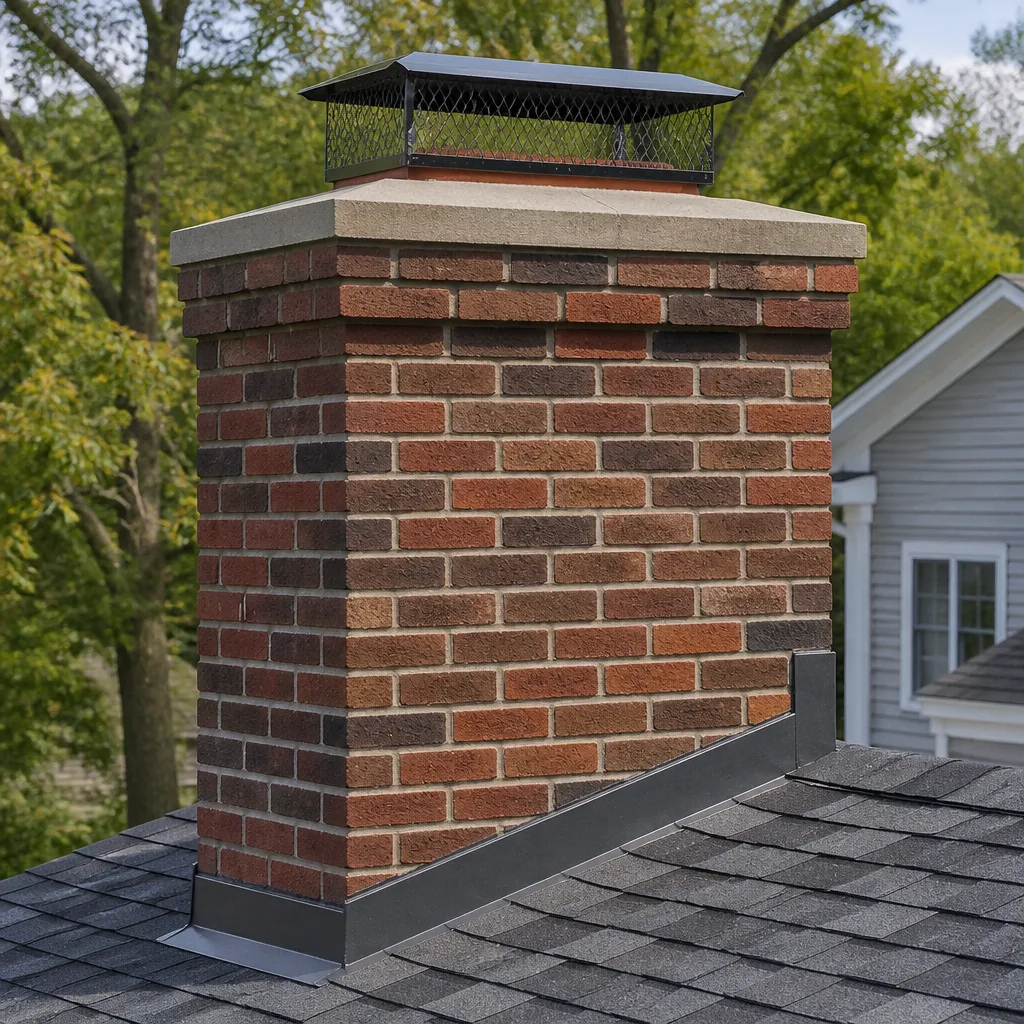
- Crown coatings and sealants. The crown is the concrete cap at the top of the chimney that sheds water away from the masonry. A proper crown coating is flexible, adhesive, and rated for exterior exposure, which is why cheap masonry paint fails where a purpose-made product holds.
- Smoke chamber and flue repair mortars. The smoke chamber, the tapered area above the damper, is where turbulence and heat concentrate. Repair mortars in this category are applied as a resurfacing layer to smooth and seal deteriorated surfaces.
- Stainless liner systems. When a clay tile flue is cracked, deteriorated, or incompatible with the appliance, a stainless liner is installed inside it. These are engineered systems with specific alloys, thicknesses, and listing standards, not generic metal tube.
Each category has brands that professionals recognize and brands sold mainly on price. A chimney-only company stocks relationships with the former, which is why the products that show up in your chimney tell you a lot about who sent them.
Rutland Products: What They Cover and Where They Stop
Rutland is one of the most widely recognized names in chimney maintenance consumables, and it’s a reasonable benchmark for what professional-grade cleaning and sealing products look like. Its creosote removers, brush treatments, and related maintenance products are common in the kits of chimney professionals because they’re formulated for the conditions found in real flues.
Where Rutland fits best:
- Creosote treatment during and after a sweep, including chemical products designed to loosen stubborn deposits.
- General flue maintenance and cleaning accessories that professionals use as part of a routine sweep.
- Products intended for periodic homeowner-safe maintenance between professional visits.
Where Rutland is not the right specification:
- Structural flue repair. Resurfacing a deteriorated smoke chamber or relining a flue requires products formulated for permanent installation, not maintenance chemistry. That’s where HeatShield and Smoktite come in.
- Crown reconstruction. While Rutland makes sealing products, a failing crown may need a repair coating engineered for structural adhesion, or full reconstruction.
- Liner systems. Stainless liners are a completely different category, and no maintenance brand substitutes for a listed liner from Olympia Chimney or an equivalent manufacturer.
In our experience, a good company reaches for different products for different repairs. Rutland-type products handle cleaning and maintenance chemistry well. They’re not a substitute for a permanent repair material, and a contractor who blurs that line is telling you something about how carefully they work.
HeatShield and Smoktite: Matching the Mortar to the Repair
HeatShield is a professional-grade resurfacing system for damaged flue interiors and smoke chambers. It’s applied as a mortar-like coating that adheres to deteriorated masonry surfaces and restores a smooth, sealed flue. Smoktite is a related family of repair mortars used in smoke chamber and flue resurfacing. Both are permanent-installation products, which is what separates them from cleaning compounds.
Choosing between them, or between them and full relining, depends on the condition of the flue:
- Light deterioration, smooth surfaces intact. A resurfacing application can restore the sealed surface and extend the useful life of the flue.
- Moderate spalling or cracking in the smoke chamber. Smoktite or HeatShield resurfacing may be appropriate after a camera inspection confirms the structural integrity of the surrounding masonry.
- Deterioration through to the surrounding structure, or large cracks in the tile. A stainless liner is usually the right answer, because resurfacing can’t rebuild a failed flue wall.
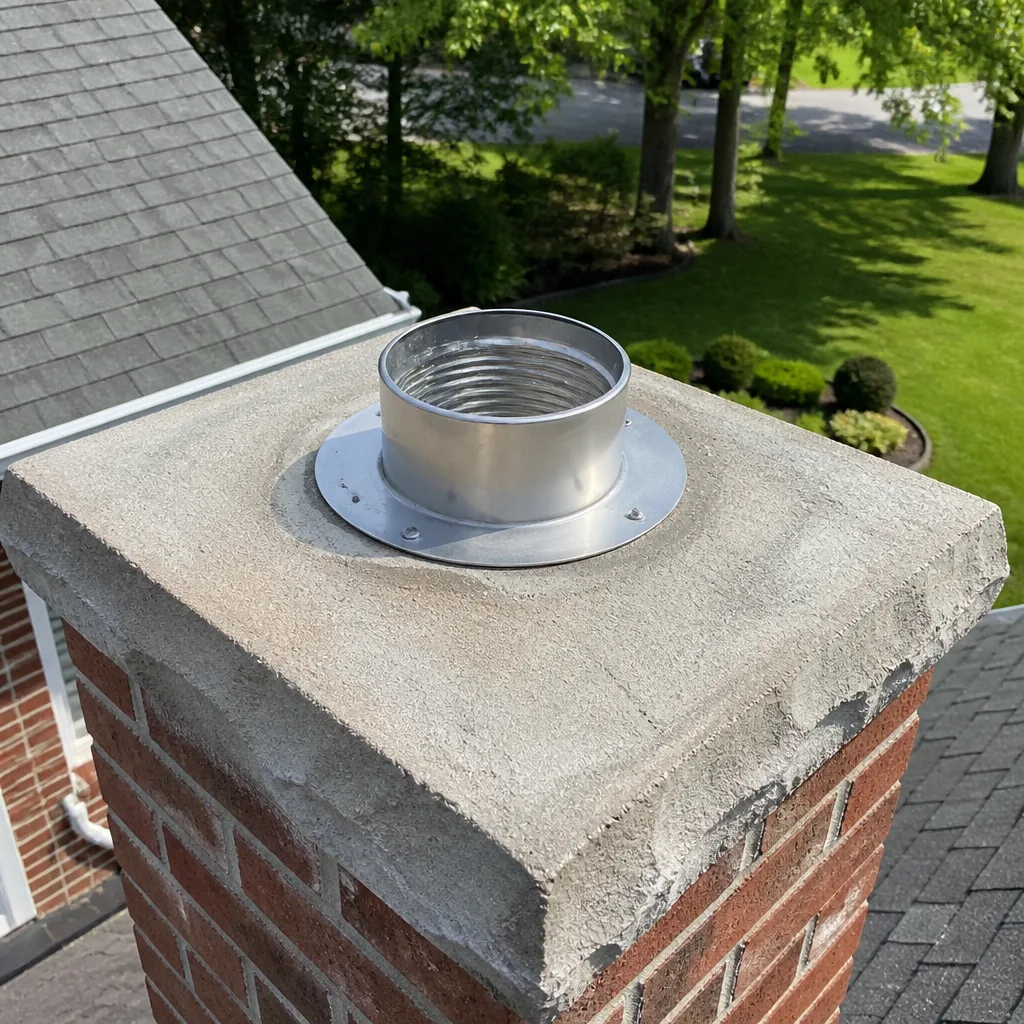
- Gas appliance service. Gas appliances produce condensation that can attack masonry, and a properly sized stainless liner is often the right solution rather than a coating.
The point isn’t to make you a material scientist. It’s that the specific repair product should match the specific defect, and the only honest way to know which one is right is to look at the flue with a camera and show you what the camera saw. That’s also the reason chimney repair in Visalia involves an inspection before any resurfacing is specified. Anything else is guesswork.
Stainless Liner Systems: 304 vs. 316 and UL 1777
Stainless liner systems are where material quality matters most, and where the gap between a listed system and a generic tube is widest. Two alloy grades dominate the category, and the choice between them follows the fuel type and the moisture it produces.
- 304 stainless. A general-purpose alloy suitable for many wood-burning applications where conditions are relatively dry and the flue is properly sized for the appliance.
- 316 stainless. A molybdenum-bearing alloy with higher corrosion resistance, typically specified for gas appliances, oil, and situations where condensation is more aggressive.
Liner systems from makers like Olympia Chimney and DuraFlex are UL 1777-listed, which means the manufacturer has submitted the product for third-party testing and demonstrates ongoing compliance. That listing matters in three ways: it confirms the material performs as rated for the temperatures and conditions it will see, it supports the manufacturer’s warranty, and it supports the code compliance of the installation.
- Confirm the listing. Ask whether the liner system is UL 1777-listed. A professional should be able to name the manufacturer and the listing.
- Confirm the alloy for your fuel. Wood-burning in a dry chimney often calls for 304; gas appliances generally call for 316 for corrosion resistance.
- Confirm the installer. A liner is only as good as its installation. Insulation, proper termination, correct sizing, and correct connections all affect how the system performs.
DuraFlex is a flexible liner system that adapts to the shape of an existing flue, which is useful in older masonry chimneys where a rigid liner won’t fit. In a valley town with a lot of older masonry homes, a flexible system is often the practical choice. What you don’t want is an unlisted liner of unknown alloy, because that’s the point where a repair stops being a repair.
How to Ask a Visalia Contractor About Products
The single most useful thing you can do when hiring in Visalia is ask a specific question and listen to the shape of the answer. Product questions are unusual enough that contractors who take materials seriously light up, and contractors who don’t get uncomfortable. Here’s how to work through it.
- Ask what products they’ll use on your specific job, not in general. “What do you plan to use to seal the smoke chamber?” is a fair question with a specific answer. “Whatever’s on the truck” is not.
- Ask whether the liner system is UL 1777-listed and which alloy it uses. You don’t need to know what those terms mean in depth. You need to know whether the person quoting you does.
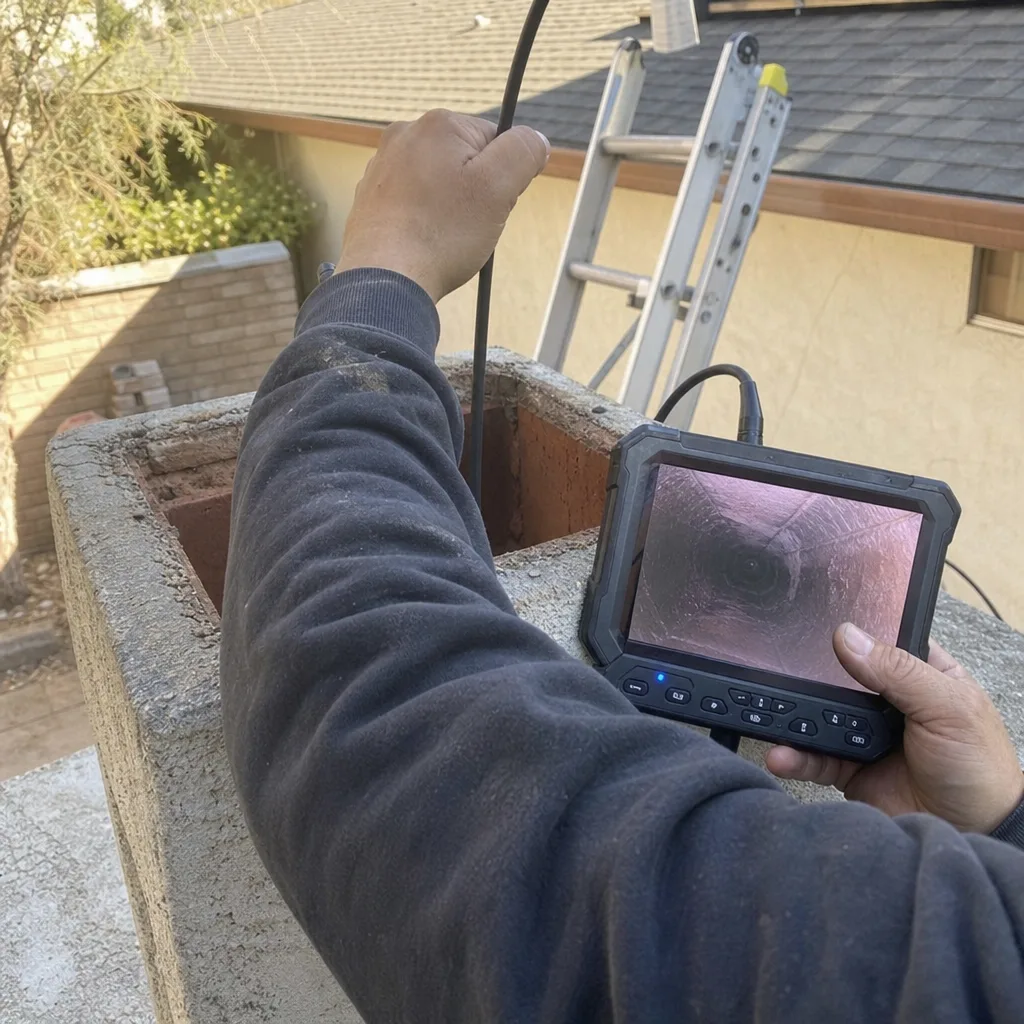
- Ask whether they’ll show you the camera inspection. Any recommendation for liner or mortar work should be based on what a camera actually saw. If a contractor says “it probably needs a liner” without showing you the inside of the flue, that’s a red flag.
- Ask what happens if the inspection finds nothing wrong. A specialist is comfortable telling you that the chimney just needs a sweep and a cap. A sales-driven operation almost never does.
- Ask for the manufacturer name, not just the product category. “A stainless liner” could mean anything. “A 316 stainless liner from a UL-listed manufacturer” is a specific, checkable claim.
Run through those questions in a single call. A chimney-only specialist will answer all five with specifics and may even bring up factors you hadn’t thought about. A generalist often deflects, or answers in language so vague that you can’t tell whether there’s a real product plan or not. That’s your credibility signal.
Warranty Implications of Listed vs. Unlisted Materials
Manufacturer warranties on chimney products are conditional. They generally require the product to be installed in accordance with the manufacturer’s instructions, by a qualified installer, in a compatible application. Those conditions are supposed to protect both the manufacturer and you, and they only function when the product involved is actually what the manufacturer says it is.
Here’s what that means in practice:
- Liner warranties typically require correct alloy, correct application, and correct installation. If a 304 liner is installed in a high-condensation gas application, the warranty may not cover corrosion failures because the alloy wasn’t correct for the use.
- Crown coating and resurfacing warranties often require surface preparation and application per the manufacturer’s specification. A coating that fails because the surface wasn’t prepped isn’t the manufacturer’s problem.
- Unlisted materials typically carry no meaningful manufacturer warranty. If the product wasn’t third-party tested and there’s no listing behind it, there’s often nothing to warranty, and no basis for a claim.
Verifying installation comes down to documentation. A good installer will keep the manufacturer’s product information, the inspection findings, and the installation details together so that if something goes wrong in five years, you have the paper trail to file a claim. In Visalia, where a large share of homes are older and carry masonry chimneys that may have been serviced by several different outfits over the years, that documentation is worth asking for on the front end.
When a specialist works with brands like HeatShield for resurfacing and a UL-listed liner manufacturer for relining, they’re preserving the warranty path. When a company uses unlisted materials, they may be saving a few dollars on the front end and handing you the cost of a full redo on the back end.
Common Mistakes to Avoid
- Choosing on price alone. Two quotes that look comparable can differ enormously on the materials behind them. Ask what’s included, not just what it costs. Cheapest is often a signal about the material, not the work.
- Accepting a recommendation without a camera inspection. Liner and mortar work should be based on what a camera actually saw in your flue. A recommendation made without one is a guess, and often an expensive one.
- Assuming “stainless” means the right stainless. 304 and 316 are different alloys for different fuels. A general contractor who doesn’t know the difference shouldn’t be specifying a liner in your home.
- Skipping the crown and cap. Small details like a proper crown and a fitted cap prevent the moisture and animal intrusion that lead to much larger repairs. Overlooking them is how a small job becomes a big one.
- Letting a generalist do repair work. Cleaning is one thing; resurfacing a smoke chamber with HeatShield or installing a UL-listed liner is a different skill set. Homeowners who use a handyman for a flue repair often end up calling a specialist anyway, at a higher total cost.
- Not asking about the warranty. If the company can’t name the manufacturer of the liner or the coating, you’ll struggle to make a warranty claim later. Ask up front who makes the product and what the installation requirements are.
- Postponing an inspection because the sweep “looked fine.” A sweep clears the flue; an inspection evaluates the whole system. The two are not the same service, and in a town with a lot of older masonry homes like Visalia, the inspection is where most real problems get caught before they become costly.
See the difference
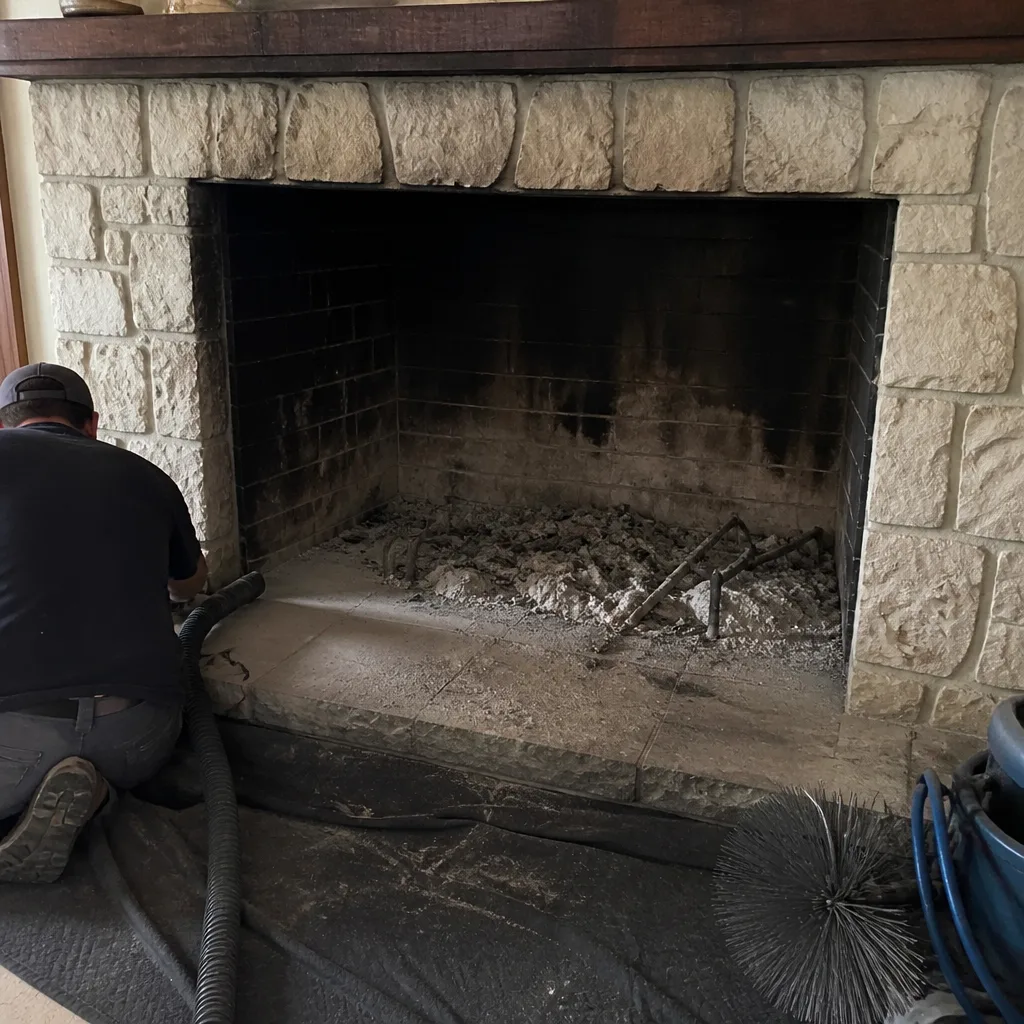 Before
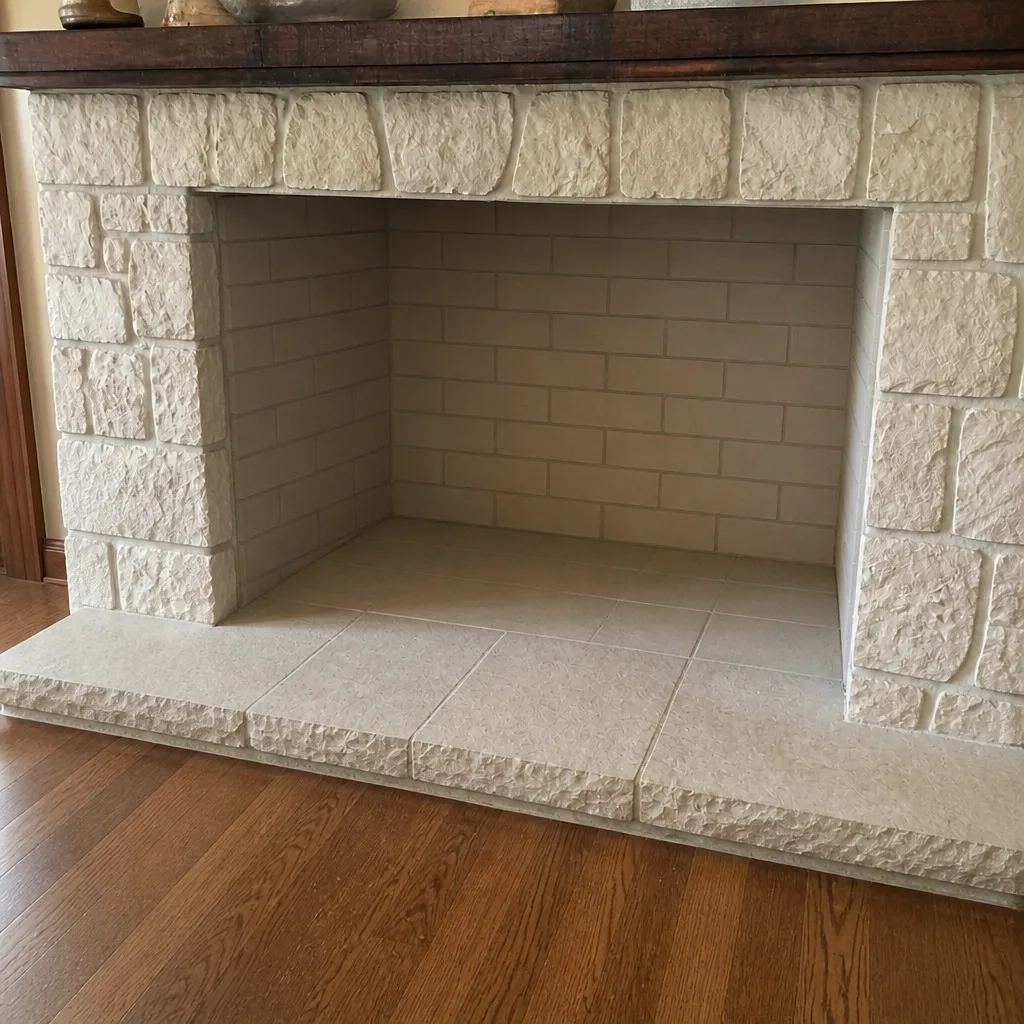 After
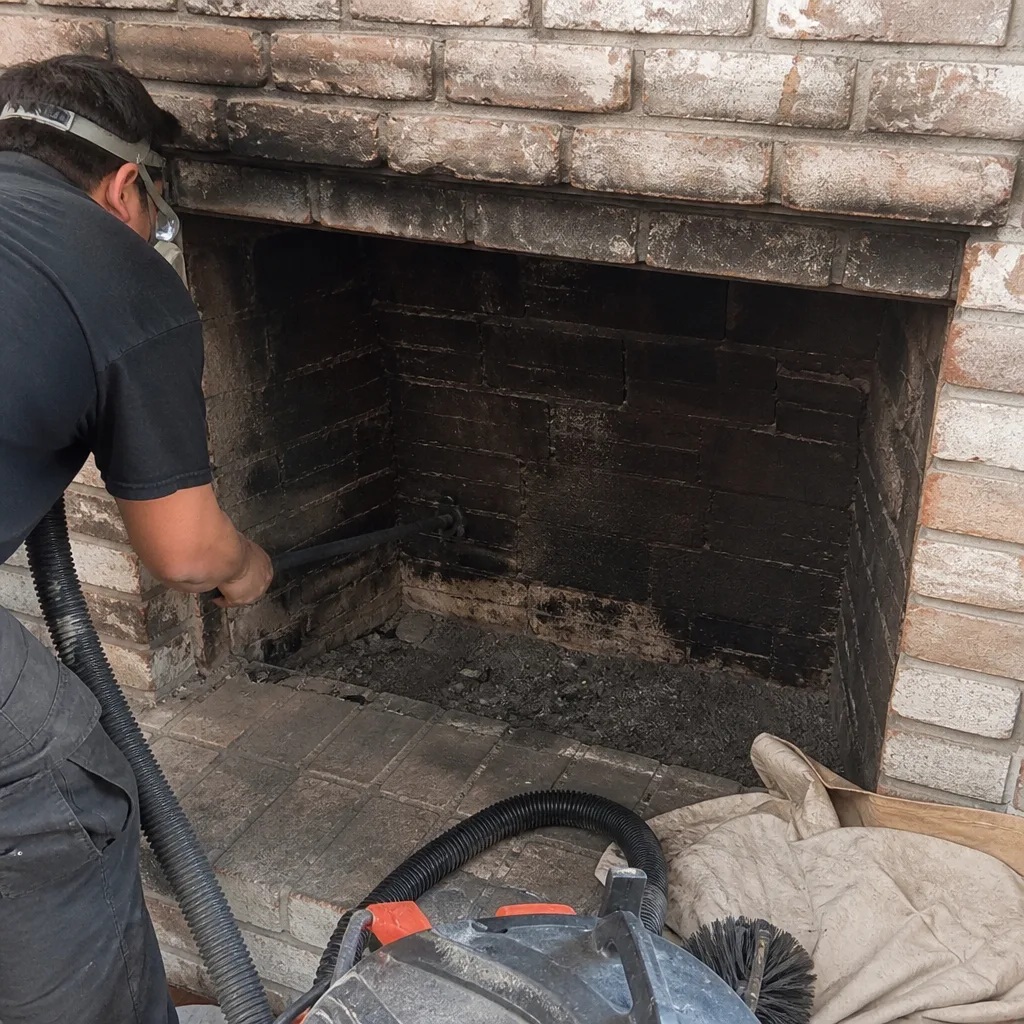 Before
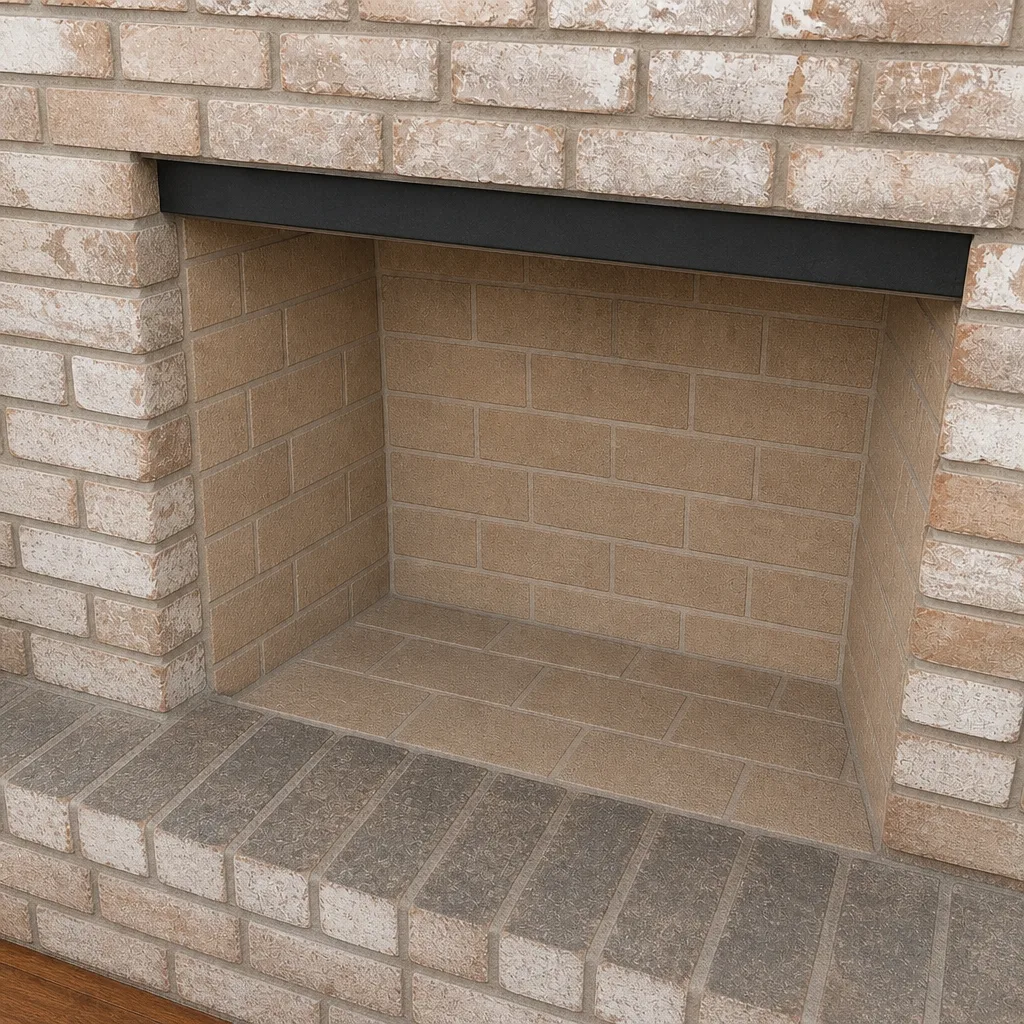 After
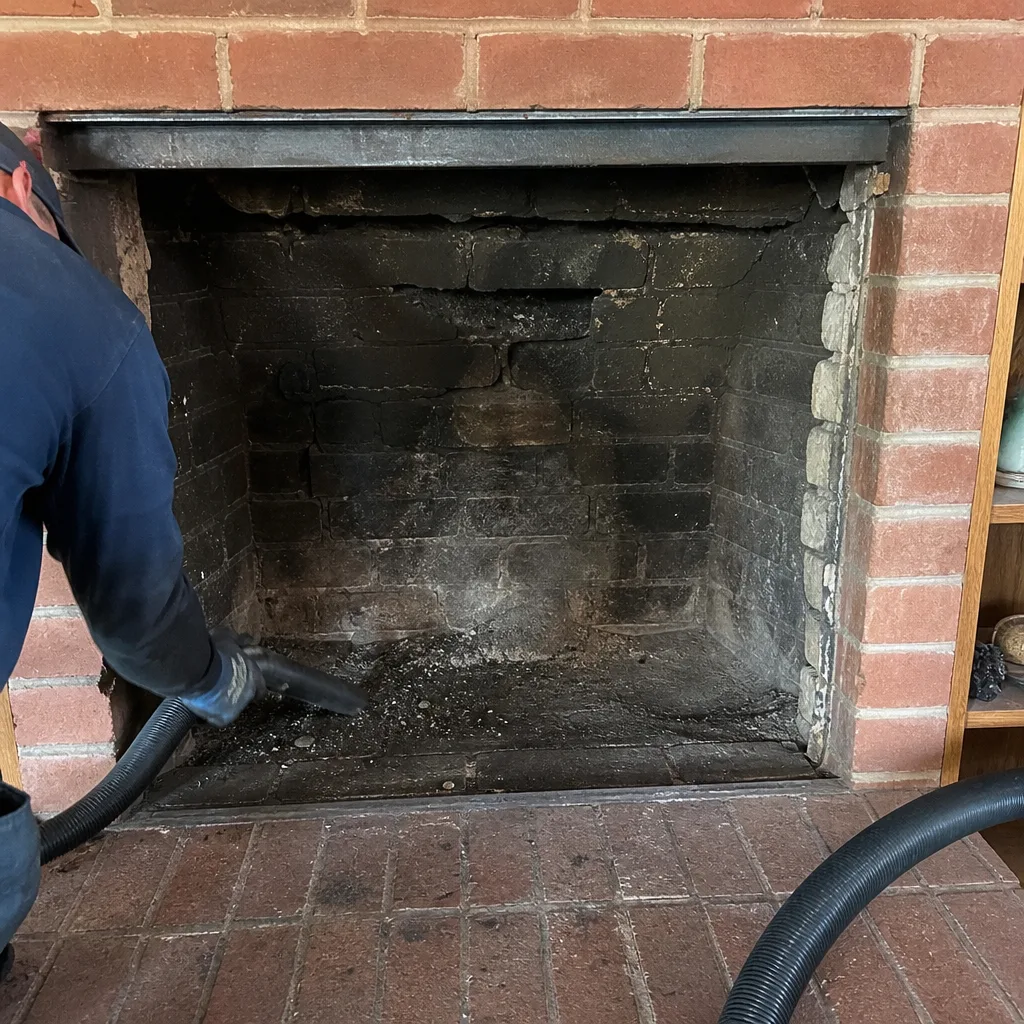 Before
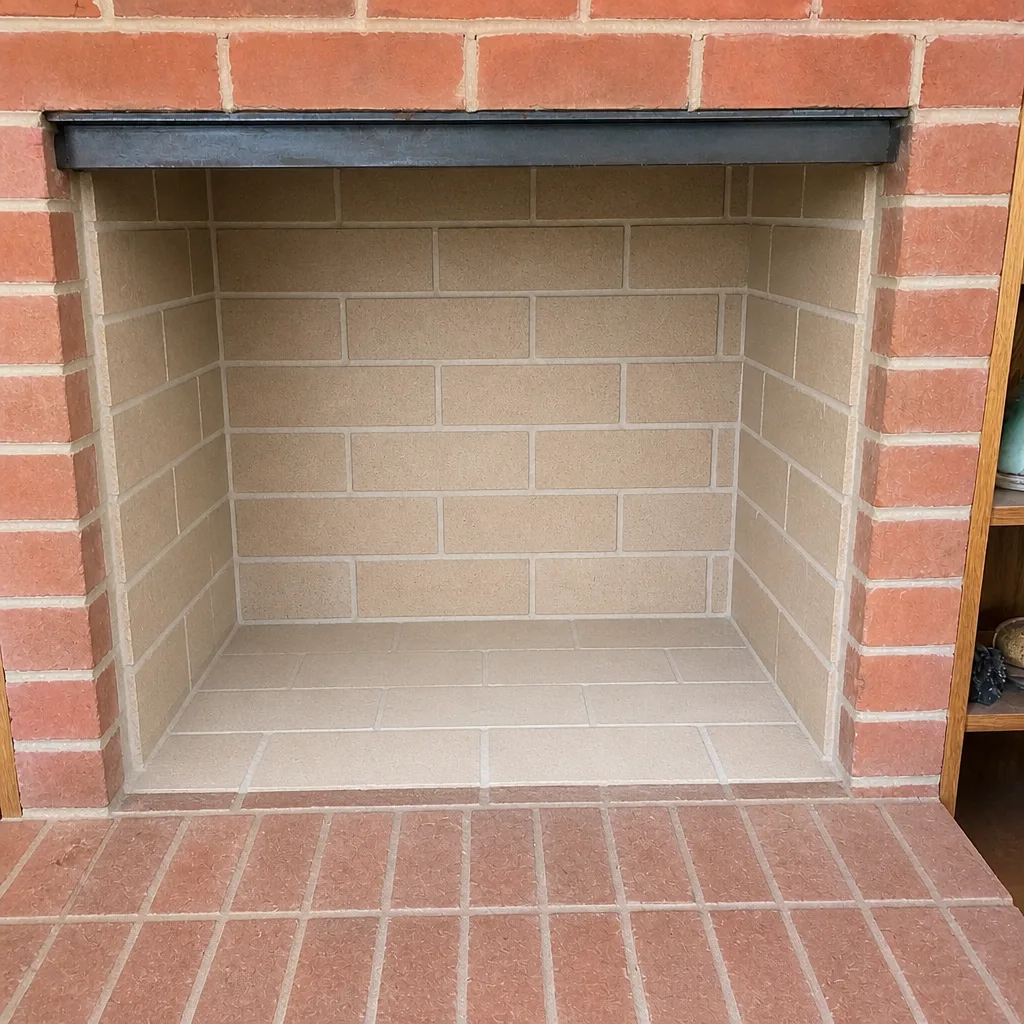 After
When to Call a Professional
Call a chimney specialist when you notice any of the following: draft problems or smoke backing into the room, a strong creosote smell in warm weather, visible cracks in the masonry or a crumbling crown, water stains on the ceiling near the chimney, soot falling into the firebox, or the sound of animals in the flue. Call before the first burn of the season if it’s been more than a year since the last sweep, and call immediately if you’ve had a chimney fire, even a small one, because the flue needs to be evaluated before it’s used again. If your insurance company is asking for documentation, a professional inspection that follows the NFPA 211 standard gives you the record you need. A gas appliance that has never been inspected is another reason to call. A qualified specialist can evaluate the appliance’s venting and confirm the flue is sized and constructed correctly for it.
Chimney Sweep Visalia offers free estimates in Visalia. Call (888) 861-2541. We answer 24/7, with fast dispatch from 7am to 7pm, Sunday through Friday. We don’t recommend liner or mortar work without camera evidence you can see yourself, and we’ll tell you plainly when a chimney can safely wait.
Frequently Asked Questions
There isn’t one best brand because cleaning, sealing, and repair each call for different products. Rutland is a widely recognized name for creosote removers and routine cleaning chemistry, HeatShield and Smoktite are professional-grade for smoke chamber and flue resurfacing, and Olympia Chimney or DuraFlex are common choices for UL 1777-listed stainless liner systems. The useful question is whether the products match the specific repairs your chimney needs. Call (888) 861-2541 if you want to talk through what applies to your chimney.
You need a liner only if the flue itself can’t safely vent the appliance, and the way to know that is a camera inspection. If the inspection shows cracked tile, deterioration through the flue wall, or a fuel-type mismatch that will corrode the existing chimney, a listed liner is the correct repair. If the flue is sound, resurfacing with HeatShield or a sweep and a cap may be all that’s needed. A specialist will show you the camera footage and let you decide. Call (888) 861-2541 for an inspection.
316 stainless has higher corrosion resistance than 304, and the difference matters because fuel type affects the moisture chemistry inside the flue. Wood-burning applications with proper sizing often use 304. Gas appliances, which produce more condensation, typically call for 316. Both alloys are available from UL 1777-listed manufacturers, and the right choice depends on what you burn and how the appliance vents. If a company can’t tell you which alloy they’re installing and why, that’s a reason to keep looking.
Ask for the manufacturer name, not just the product category. A specialist will name the liner manufacturer, the coating system, and the reasoning behind the choice, and can typically describe how the product is listed or specified. Vague answers like “we use the best” or “whatever’s on the truck” don’t carry the same weight. You can also ask whether the products have a manufacturer warranty, and how that warranty is preserved through the installation. Call (888) 861-2541 and we’ll walk through what we’d use on your chimney and why.
There’s no single answer because it depends on the repair, the fuel type, and the condition of the surrounding masonry, but the principle is consistent. A UL-listed liner installed correctly typically outlasts an unlisted liner of unknown alloy by years, and a properly applied crown coating holds far longer than a cosmetic sealant. The visible difference shows up at the next inspection. That’s part of why we recommend looking at the actual products on the quote, not just the bottom line. Call (888) 861-2541 for a free estimate.
We work with a curated set of professional suppliers, including DuraFlex, HeatShield, Gelco, Olympia Chimney, Famco, and Copperfield. Those names reflect access to professional-grade components rather than hardware-store substitutes, and they cover the full range of what a chimney system actually needs: liner systems, resurfacing materials, caps, covers, and venting components. The reason for curating this set is that every one of those repairs is only as good as the material behind it. Call (888) 861-2541 and we’ll tell you plainly which products apply to your chimney and which don’t.
The Bottom Line
The chimney cleaning brand question sounds like it’s about a product, but it’s really about how a company thinks. A specialist matches the material to the repair: Rutland-type products for cleaning, HeatShield or Smoktite for resurfacing, and a UL 1777-listed liner from a manufacturer like Olympia Chimney or DuraFlex for relining. A generalist improvises. For Visalia homeowners, the practical path is to ask three specific questions, get camera evidence before agreeing to any repair, and check the warranty path before you sign. That’s how you get a chimney that’s safe into next season, with the paperwork to prove it.
If you’re ready to talk to a chimney-only specialist, call (888) 861-2541. We answer 24/7, with fast dispatch from 7am to 7pm, Sunday through Friday. Estimates are free, and you’ll get a written quote that names the materials and the reason behind each recommendation. You can also review our chimney sweep and chimney repair options, and if you’re in Visalia, we’re glad to walk through your situation and give you a straight assessment of what your chimney actually needs.
Written by the team at Chimney Sweep Visalia.