
Last updated November 15, 2026
 Sweep & inspection
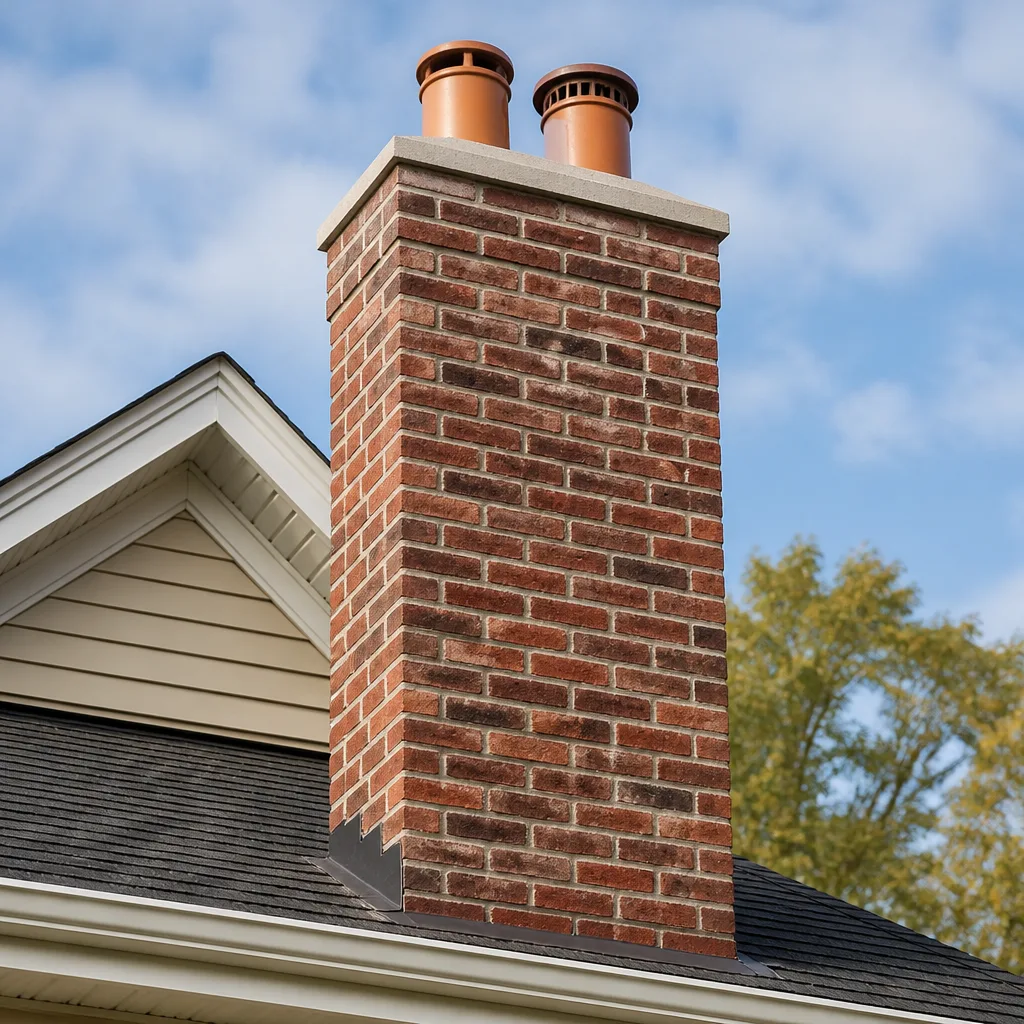
 Caps & crowns
 Flue relining
 Masonry repair
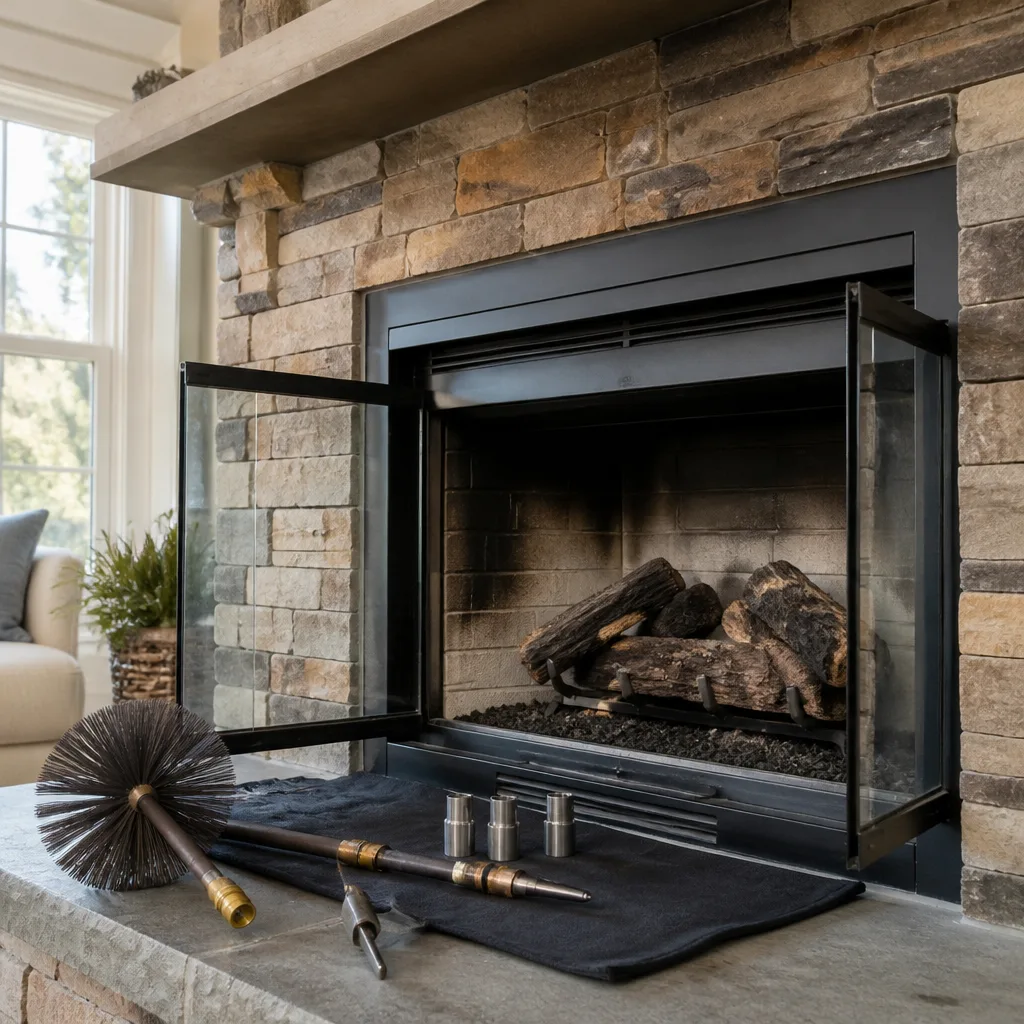 Gas fireplace service
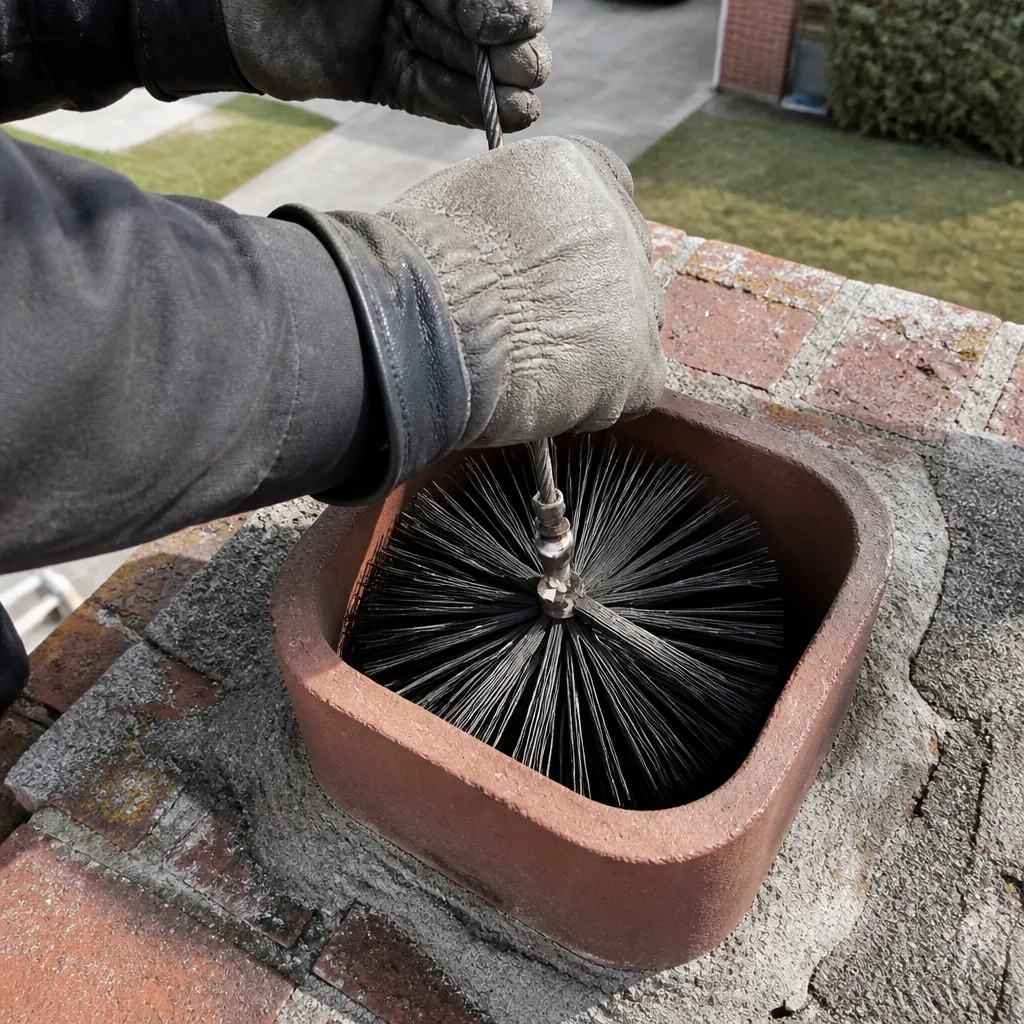
Level 1 sweep and inspection to the NFPA 211 annual standard - flue, crown, cap, and flashing checked and photographed
Chimney sweep logs do not sweep chimneys. They loosen some creosote - which then falls where a brush and vacuum still have to collect it.
Chimney Sweep Troubleshooting in Visalia: Common Problems and How to Fix Them
Smoke rolling back into your living room is the problem most Visalia homeowners call us about, and it’s also the one most often misdiagnosed. A dirty flue is only one of several possible causes. Draft failure, negative pressure inside a tightly sealed house, and a cold flue can all produce the same symptom, and sweeping the chimney won’t touch any of them. Before you book a sweep or assume the worst about your fireplace, it helps to know which symptom points to which failure. This guide walks through the common chimney problems we troubleshoot in Visalia, how to read the warning signs, and which fixes actually address the root cause. You’ll finish knowing what you can safely monitor yourself and what needs a trained eye.
Quick Answer
Most chimney problems in Visalia come down to one of three things: creosote or debris blocking the flue, a draft problem caused by pressure imbalance inside the home, or a structural failure like a cracked liner, damaged crown, or failed damper seal. Smoke rollback, white staining on exterior masonry, and unusual smells each point to a different category of failure, so the right fix depends on diagnosing the cause rather than assuming every issue needs a sweep.
Styles & brands we work with
- Sweep & inspection
- Caps & crowns
- Flue relining
- Masonry repair
- Gas fireplace service
Table of Contents
- Why Is Smoke Coming Into the House?
- Three Causes of Smoke Rollback (and Three Different Fixes)
- What Does White Staining on the Chimney Exterior Mean?
- Reading the Sound and Smell Signatures
- How San Joaquin Valley Conditions Affect Your Chimney
- What You Can Check Yourself vs. What Needs a Sweep
- A Step-by-Step Troubleshooting Walkthrough
- Repair Options and What They Involve
Why Is Smoke Coming Into the House?
Smoke entering the living room means the chimney isn’t pulling air up and out the way it should. That’s a drafting failure, not necessarily a cleanliness problem. The flue relies on warm air rising to create a pressure difference that draws smoke upward. When that pressure difference is weak or reversed, smoke finds the path of least resistance, which is back into your home.
In Visalia, we see smoke rollback reported most often in the cooler months when fireplaces come back into seasonal use. The fireplace has sat unused for months, the flue is cold, and the first fires struggle to establish a draft. Homeowners often assume the chimney is blocked and book a sweep. Sometimes it is blocked. Just as often, the flue is clear and the problem is pressure.
Three broad categories cover almost every rollback case:
- Physical blockage. Creosote accumulation, a bird nest, leaves, or a collapsed tile can narrow or close the flue.
- Pressure imbalance. A tightly sealed, well-insulated home can depressurize when exhaust fans run, pulling smoke back down the chimney.
- Cold flue syndrome. A cold flue has no upward draft until it warms, and a slow start lets smoke escape into the room.
Each has a different fix. Sweeping solves the first. The second needs air pressure adjustments or a draft remedy. The third is usually managed with proper pre-heating technique and, in stubborn cases, a draft-improving cap or liner upgrade. Getting the diagnosis right is the whole game.
Three Causes of Smoke Rollback (and Three Different Fixes)
Here’s where the troubleshooting pays off. The three causes above look similar from your couch but call for completely different responses.
1. Creosote Blockage
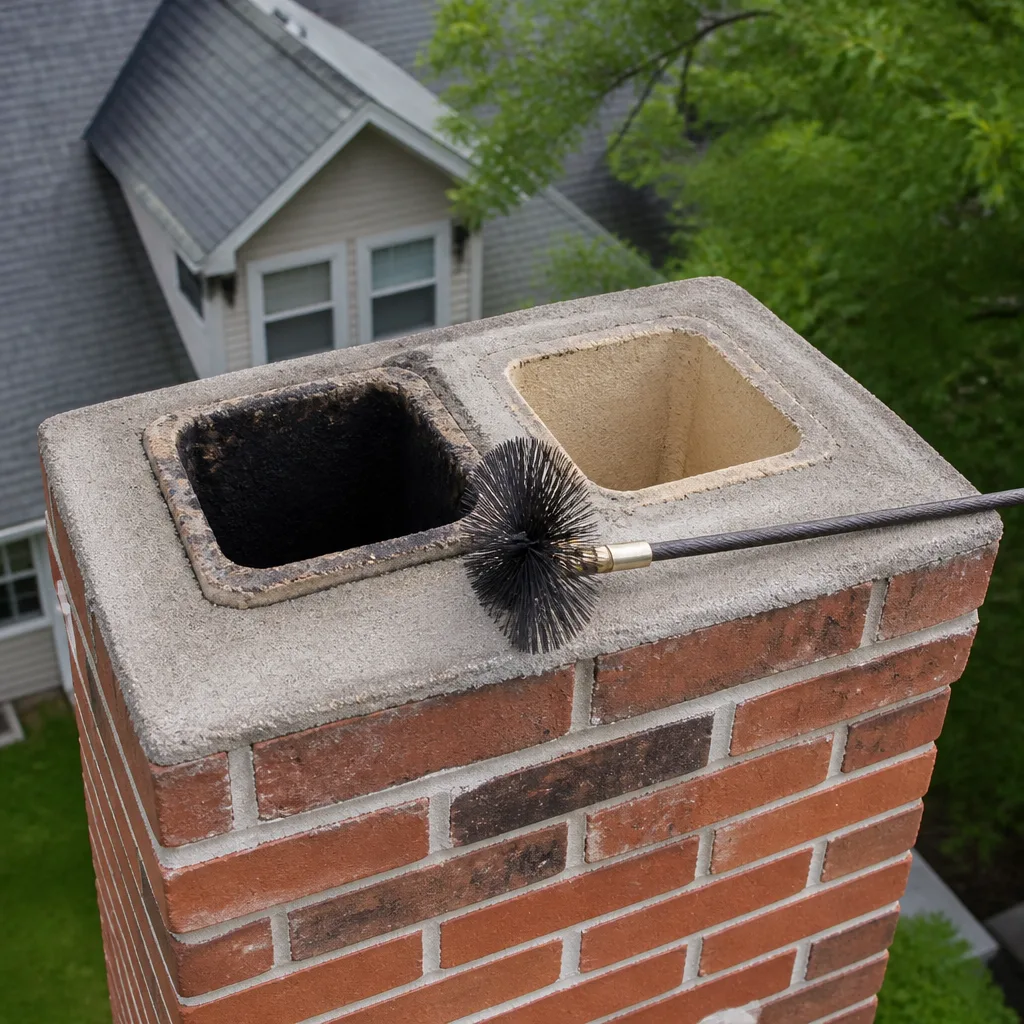
Creosote is the tar-like residue left when wood smoke cools on the flue walls. Over a season of burning, it builds up and narrows the flue. When the buildup gets thick enough, it restricts airflow and causes smoke to back up, and it’s also the fuel source for a chimney fire. The fix is a professional sweep, followed by an inspection to check the liner for damage the creosote may have masked. If you burn frequently and haven’t had the flue cleaned in a while, this is the first thing to rule out.
2. Negative Air Pressure
Modern homes are built tight. When a kitchen exhaust fan, a bathroom fan, or a clothes dryer runs, it pulls air out of the house. If the house is sealed well enough, replacement air gets pulled down the chimney, which reverses the draft. The symptom is smoke that appears when another appliance runs. The fix isn’t a sweep; it’s addressing the pressure balance, which might mean cracking a window near the fireplace, adding a make-up air source, or in some cases upgrading to a liner and cap setup that resists downdraft. We’ve seen this one confuse a lot of homeowners because the chimney itself is perfectly clean.
3. Cold Flue Syndrome
A cold masonry chimney takes time to warm up. Until it does, the draft is weak. If you light a fire in a cold flue, smoke can spill into the room before the flue warms and starts pulling. The fix is technique: pre-heating the flue with a rolled newspaper torch held near the damper before lighting the fire, and making sure the damper is fully open. If the problem persists even after pre-heating, the flue may need a draft-improving cap or a reline with a system like DuraFlex that maintains better draft characteristics.
What Does White Staining on the Chimney Exterior Mean?
White, chalky staining on the outside of a masonry chimney is called efflorescence, and it’s a waterproofing failure, not a cosmetic issue. Here’s what’s happening: water gets into the masonry, dissolves salts in the brick and mortar, and then migrates to the surface as it dries, leaving the salts behind as a white powder. The staining itself is harmless. The water getting in is not.
Efflorescence is a signal, and the signal matters for two reasons. First, water in masonry leads to spalling, which is where the brick face flakes and breaks off. Second, and more important, water that enters the masonry can reach the flue liner. A clay tile liner is not waterproof. Repeated wetting and drying in Visalia’s cool, damp winter air can crack tiles and open gaps where creosote and moisture reach the structure around the flue. That’s the path to a compromised liner, which is a fire and carbon monoxide concern.
What to check:
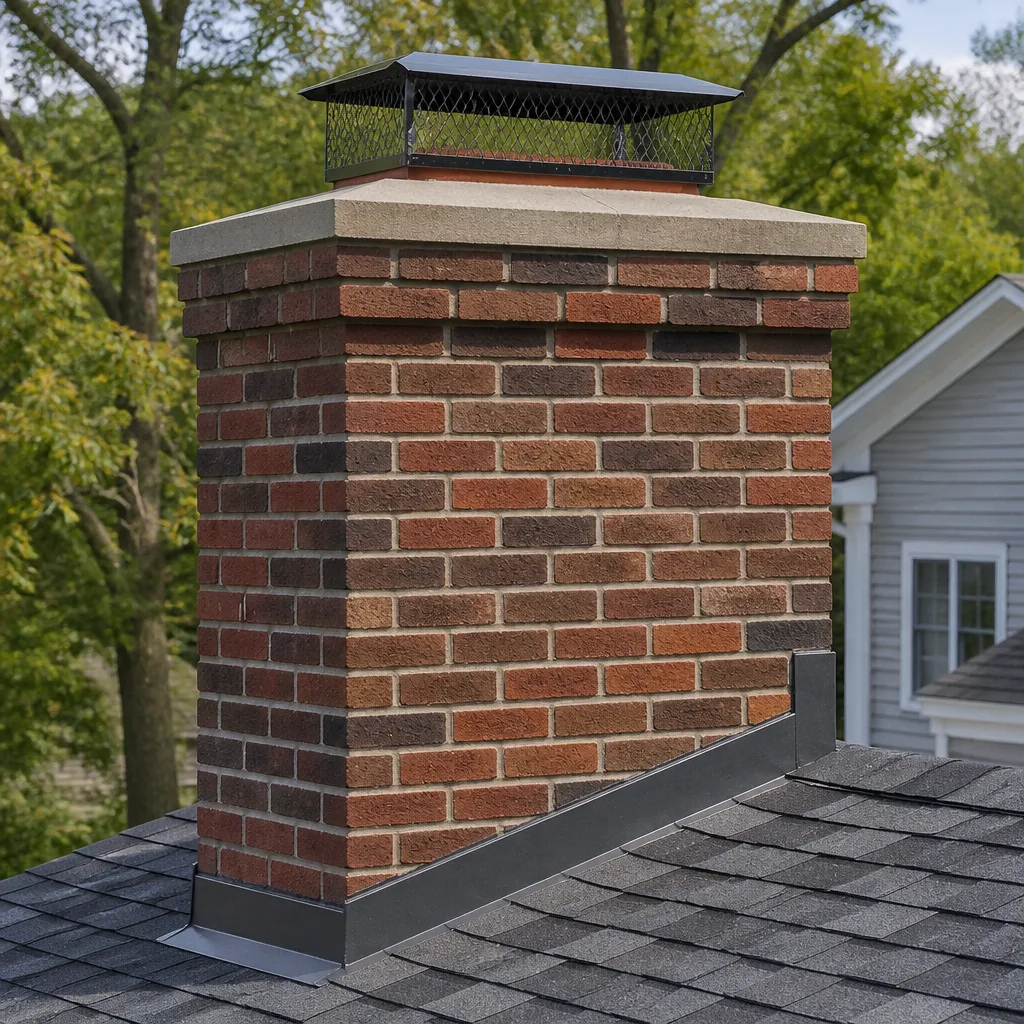
- Look at the chimney crown, the concrete cap at the top. Cracks in the crown let water straight into the masonry.
- Check for a missing or damaged rain cap. An open flue top takes in water every storm.
- Look for spalling brick or crumbling mortar joints, especially on the sunny south and west faces.
- Look for rust stains on the firebox or damper, which point to water coming from above.
If you see efflorescence, the right fix is waterproofing plus repairing whatever is letting water in, usually the crown or cap. Proper caps and covers from a supplier like Copperfield or Famco handle this well. Applying a sealer without fixing the source traps moisture inside, which makes things worse. This is a repair, not a cosmetic touch-up, and it’s worth treating as one.
Reading the Sound and Smell Signatures
Chimney problems talk. The sounds and smells your fireplace makes actually point to specific failures, and learning the signatures is one of the most useful troubleshooting skills a homeowner can develop.
Cracked Firebox
A cracked firebox often produces a dull thud or a faint rattle when the fire is burning, and you may hear a soft hiss as air moves through the crack. The smell is smoky, but in a way that’s constant rather than tied to the fire starting up. A crack in the firebox brickwork lets heat and combustion gases escape into the structure around it, which is a fire risk. Any crack in the firebox that you can catch a fingernail in needs professional evaluation before the next fire.
Deteriorating Clay Tile Liner
A failing clay tile liner often sounds like a soft crumbling or a faint ticking when the fire is hot and the metal components around the flue expand. The smell can be earthy or dusty, a musty odor that creeps into the room even when the fire isn’t burning, because the flue is no longer sealed and drafts pull air through the damaged liner. This is the signature that most often gets missed. A homeowner smells something odd, assumes it’s the wood, and keeps burning. A deteriorated liner lets creosote and gases reach framing, and that’s serious.
Failed Damper Seal
A failed damper seal has a signature of its own: a slow, persistent draft into the room even with the damper closed, and a whistling or whooshing sound when the fire is lit. The smell is usually the strongest when the fireplace is cold, because the closed-but-leaky damper lets cold outside air pour into the house. That’s also why a failed damper seal costs you on energy bills; the flue acts like an open window. Fixing or replacing the damper restores both the seal and the draft control.
How San Joaquin Valley Conditions Affect Your Chimney
Visalia sits in the San Joaquin Valley, and the valley’s air quality regulations shape how a lot of local fireplaces actually get used. Seasonal burn restrictions mean many Visalia fireplaces are used in concentrated blocks during the cooler months and then sit idle for long stretches. That pattern produces a specific creosote profile, and it’s different from what you’d see in a home where the fireplace runs a little every day.
Concentrated burning and long idle periods create creosote that builds fast and hardens between seasons. The glazed, third-degree creosote that forms when a fire burns hot and then the flue cools quickly is the stubborn kind that needs a proper sweep rather than a homeowner’s log or brush. If your fireplace sits unused for six or eight months and then runs hard for a season, your sweep interval should account for that rhythm, not just total burn time.
There’s another local factor. Tule fog settles into the valley in winter, and the dense, cold air it brings affects chimney draft. When thick fog creates a pressure inversion, a chimney that drafts fine on a clear day can struggle. We hear from Visalia homeowners who notice smoke issues specifically on foggy mornings. That’s not a coincidence; it’s physics. A warm, insulated liner is less vulnerable to these effects than a cold masonry flue, which is one reason liner upgrades are worth discussing with a specialist who understands the local pattern.
What You Can Check Yourself vs. What Needs a Sweep
Some chimney symptoms are safe to monitor on your own, and some demand a trained professional before the next fire. The line between them is clear, and it’s worth knowing where it sits.
Safe to check yourself
- The damper movement. Open and close it while the fireplace is cold. It should move smoothly and seal fully when closed.
- Visible creosote at the firebox. Look up into the firebox with a flashlight. Glossy, black, or flaky buildup visible near the top of the firebox is a sign of creosote and a prompt to book a sweep.
- Exterior condition. Look for white staining, cracked crown, missing cap, or spalling brick from ground level, with binoculars if needed. Never climb the roof.
- Smoke and draft behavior. Note when rollback happens and what else is running in the house. That pattern helps a technician diagnose it.
- Staining on the firebox walls. Rust stains or dark streaks inside the firebox should be noted, though the cause needs a professional to determine.
Needs a professional before next use
- Any crack in the firebox brickwork or mortar. Cracks can let heat reach framing.
- A strong, persistent odor that suggests a damaged liner. Don’t burn until it’s inspected.
- Smoke rollback that doesn’t stop after pre-heating. Draft failures have causes worth diagnosing properly.
- A flue that has never been swept, or that you can’t see through. A blocked flue is a carbon monoxide risk.
- Visible creosote glaze, or any chimney fire, even a small one. Chimney fires can damage a liner without being obvious.
- Any repair or liner work. This isn’t a homeowner job, and we say that plainly to protect you.
Wood and gas appliances both produce combustion byproducts that need a clear path out. If you’re ever unsure which category a symptom falls into, the safe move is to treat it as a professional call. Don’t guess with a system that carries fire and carbon monoxide risk. If you want the full breakdown of service options, you can visit our Visalia service page.
A Step-by-Step Troubleshooting Walkthrough
When something seems off with your fireplace, work through this sequence. It moves from the simplest checks to the ones that need a technician, and it keeps you out of the dangerous parts of the system.
- Check the damper. With the fireplace cold, confirm the damper opens fully and closes fully. A partially closed or broken damper is the most common simple cause of smoke problems.
- Look for visible creosote. Shine a flashlight up into the firebox. Glossy or flaky buildup means the flue needs a sweep before you burn again.
- Note the rollback pattern. Does smoke come in on startup, while burning, or when fans run? This distinguishes cold flue from pressure imbalance from blockage.
- Test the pressure theory. On a day when you notice rollback, try a fire with the kitchen and bathroom fans off and a window cracked near the fireplace. If the smoke stops, you’re likely dealing with negative pressure.
- Check the exterior from the ground. Look for a missing cap, a cracked crown, or white staining. Don’t climb onto the roof.
- Note any unusual smell. A musty or earthy odor that persists when the fireplace is cold points toward a liner problem.
- Book a professional sweep and inspection. Any symptom you can’t resolve with the checks above, or any sign of a crack or liner damage, needs a trained eye. Our sweeps include an inspection so the visit covers both cleaning and assessment.
A sweep is not just a cleaning. It’s the best chance to catch a problem while it’s still small, and it’s where we typically spot liner cracks, crown cracks, and cap damage that a homeowner can’t see from the living room. Inspections are aligned with NFPA 211 standard levels, covering safety, structure, and appliance compatibility, so the report tells you the condition of the whole system rather than just the flue.
Repair Options and What They Involve
When a sweep turns up a problem, the fix depends on what’s failing. These are the common repairs we handle, and the good news is that a lot of them are resolved in a single engagement rather than a chain of contractors.
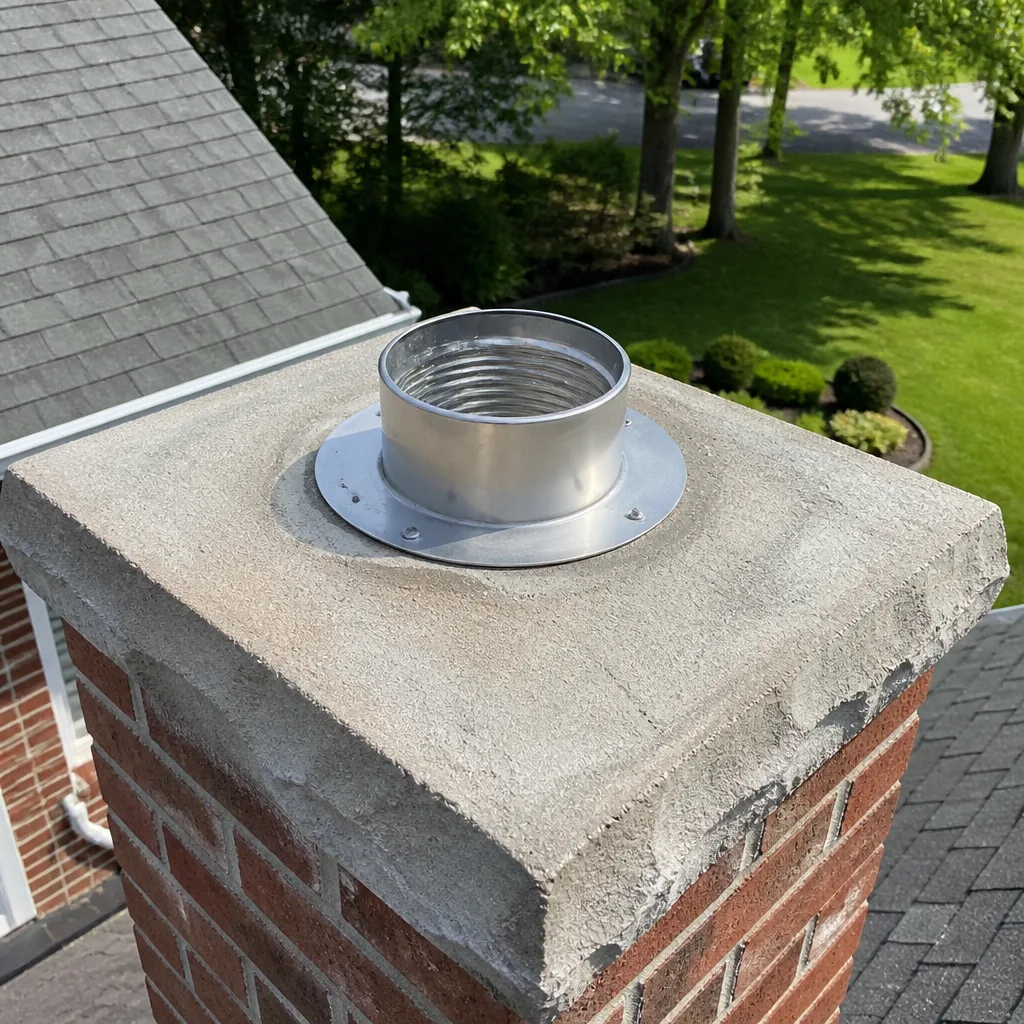
- Relining. A damaged clay tile liner or an unlined flue gets a new liner. We use DuraFlex flexible liner systems because they’re built for the job and maintain proper draft through the full run of the flue.
- Flue resurfacing. When the liner is cracked or spalling but still structurally sound, HeatShield resurfacing restores the interior without a full reline. It’s a professional-grade repair for a problem many companies prefer to skip, and it can save the disruption of tearing out old tile.
- Crown and cap repair. A cracked crown and a missing cap are water entry points. We repair or replace the crown and fit proper caps and venting components, sourced from suppliers like Olympia Chimney and Famco, that keep water and animals out of the flue.
- Mortar and firebox repair. Cracked firebox brickwork and crumbling mortar joints get rebuilt and re-pointed so the firebox holds up to heat and keeps gases where they belong.
- Damper repair or replacement. A failed damper seal gets fixed or the damper gets replaced, restoring draft control and stopping the energy loss from a flue that never fully closes.
The reason all of this lives in one place matters: going from sweep to inspection to code-compliant repair without switching contractors means the same set of eyes follows the problem from diagnosis to fix. If you’d like to see how that works end to end, the Chimney Sweep Visalia page lays out the three services. If a roof leak or interior water damage has set in behind the flue, that’s a broader repair category, best handled by a general contractor rather than a chimney specialist. Knowing the difference is part of doing this right.
Common Mistakes to Avoid
- Assuming smoke rollback means a dirty flue. It’s the most common cause, but negative pressure and cold flue produce identical symptoms. Booking a sweep without a diagnosis can leave the real problem untouched.
- Burning wet or unseasoned wood. Wet wood produces more creosote per cord. In Visalia, where fireplaces run in concentrated seasonal blocks, that buildup compounds fast. Stick with well-seasoned, dry wood.
- Sealing over efflorescence instead of fixing the source. A waterproofing sealer applied over a chimney that’s still taking in water traps moisture inside the masonry and accelerates spalling. Find and fix the water entry point first.
- Ignoring a persistent smell between burns. A musty or earthy odor that lingers after the fire is out can signal a damaged liner. Treat it as a reason to inspect, not something to air out.
- Skipping the annual inspection because you haven’t burned much. Creosote and liner cracks happen while a fireplace sits idle too. An inspection checks the system, not just the buildup, and a cold, unused chimney can still take water damage between seasons.
- Letting a damper stay broken because the fire still burns. A leaky damper isn’t just a smoke problem; it lets cold air and outside air into the house year-round and weakens the draft. Fixing it is a real energy and safety gain.
- Chalking up problems to “the fireplace acting up.” Every symptom on this page maps to a specific cause. Guessing costs money; diagnosis saves it.
See the difference
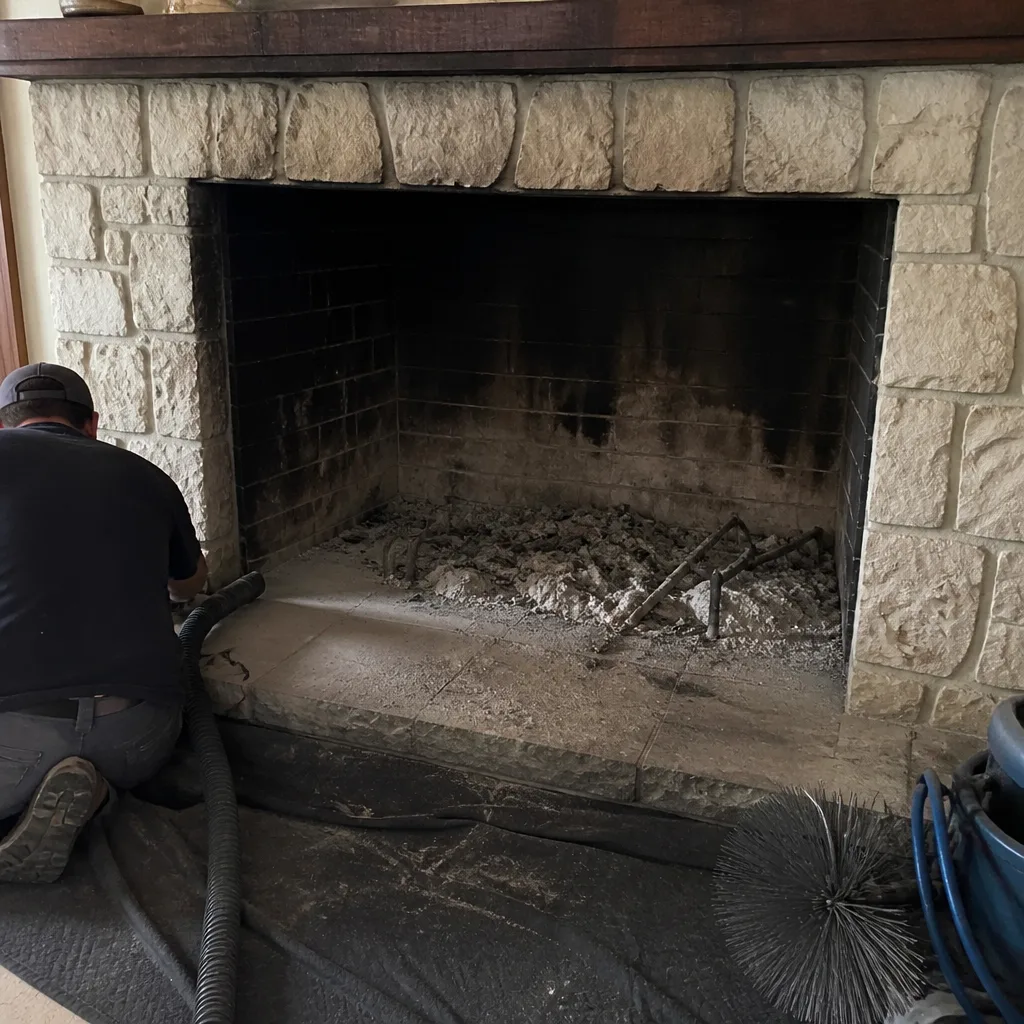 Before
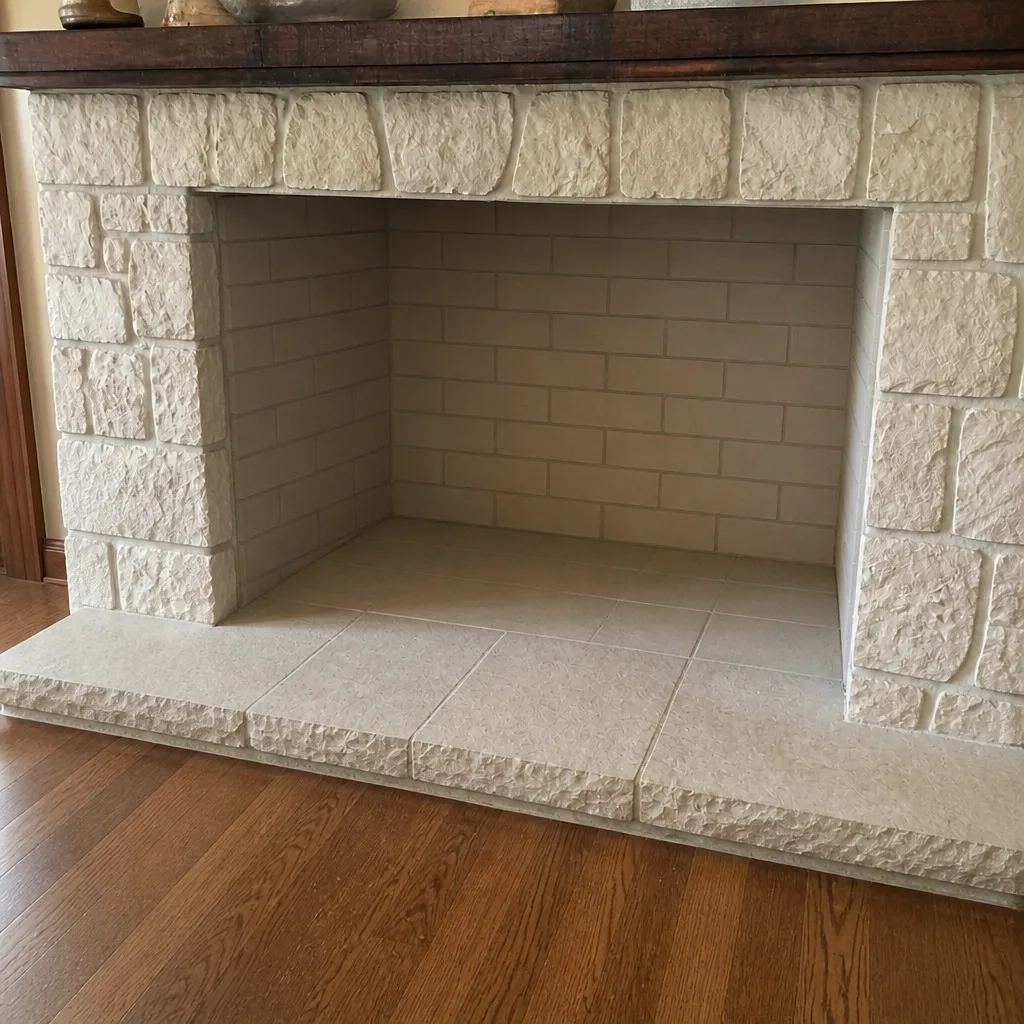 After
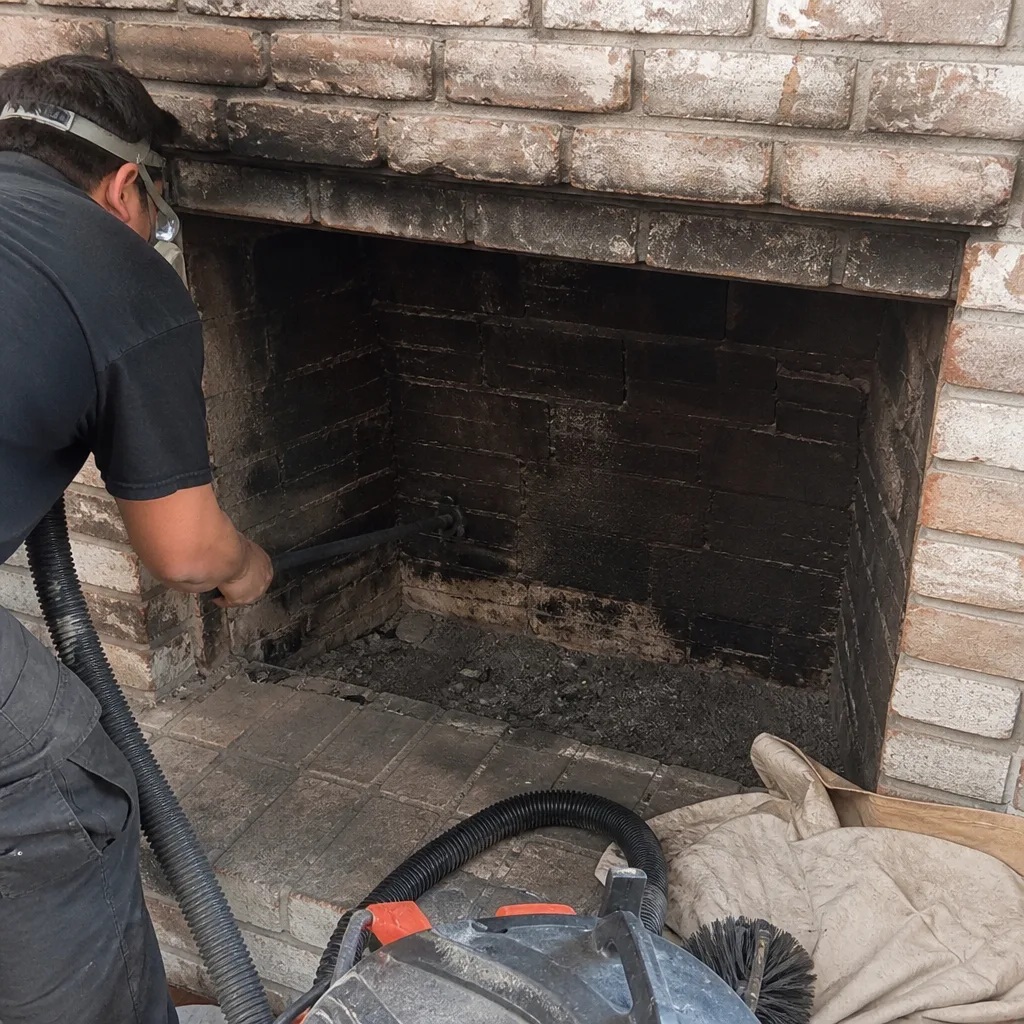 Before
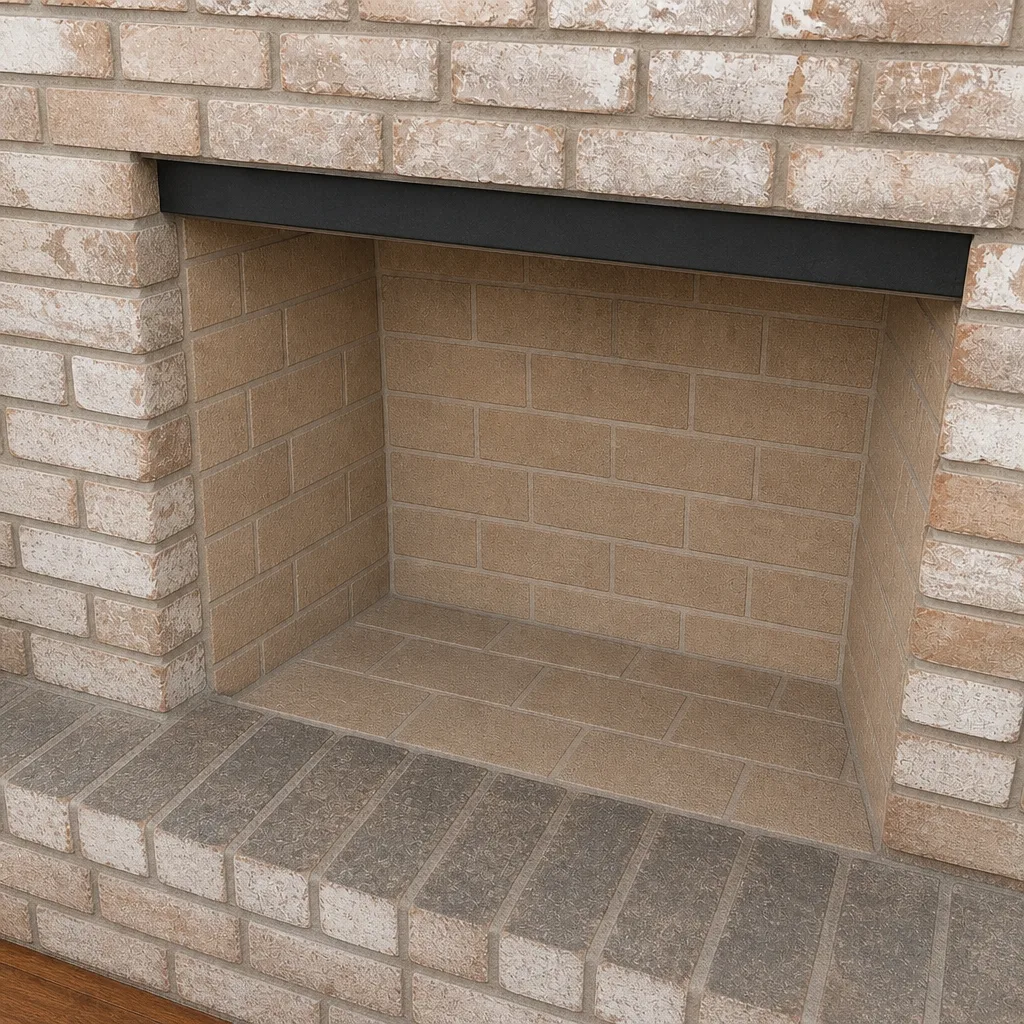 After
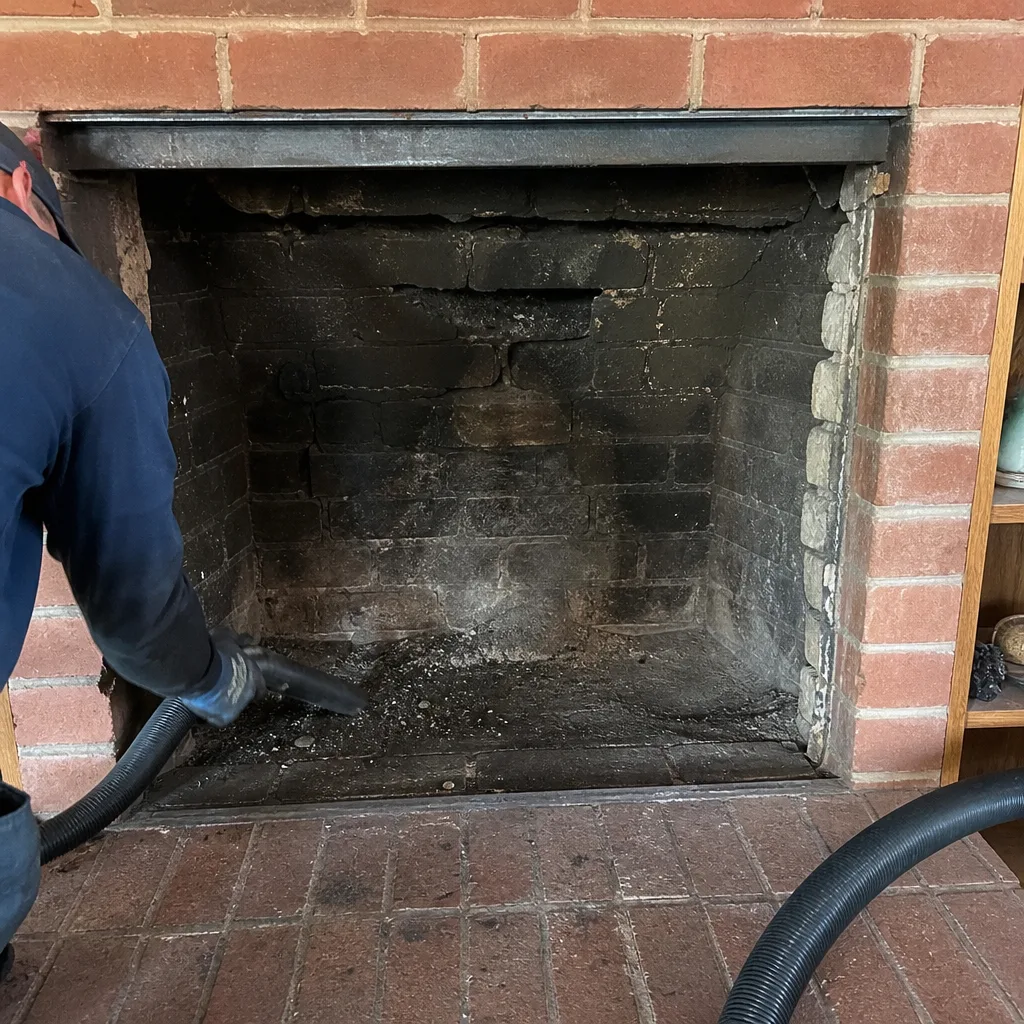 Before
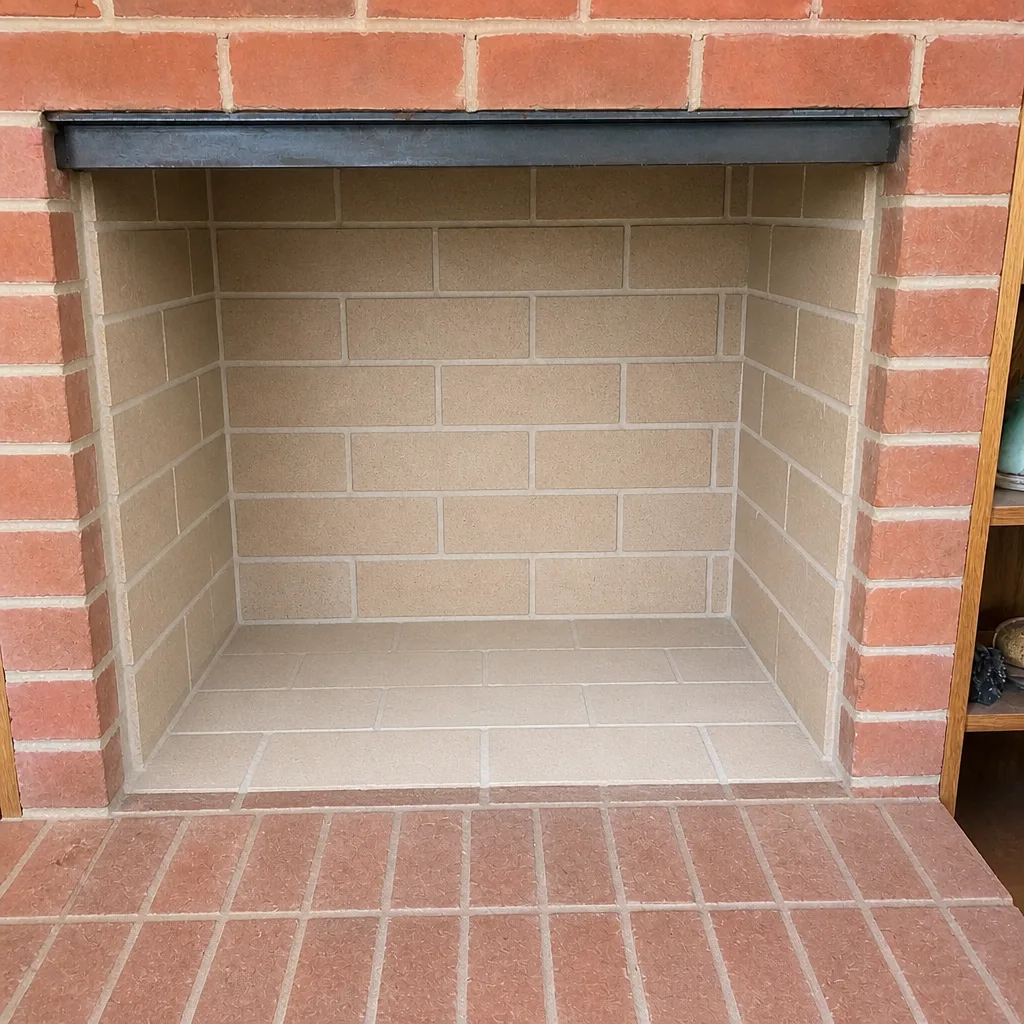 After
When to Call a Professional
Call a professional before your next fire if you see a crack in the firebox, smell a persistent odor between burns, notice smoke rollback that doesn’t stop after a pre-heat, or see visible creosote glaze or white staining on the exterior masonry. A chimney that has never been swept, or one you can’t see down clearly, is a carbon monoxide risk and should be checked before use. Any chimney fire, however small, justifies an inspection because a liner can be damaged without obvious signs. The stakes here are fire and carbon monoxide, and no symptom on this list is worth a guess.
Chimney Sweep Visalia offers free estimates in Visalia. Call (888) 861-2541 to book a sweep, an inspection, or a repair. We answer 24/7. Fast dispatch from 7am to 7pm, Sunday through Friday. Estimates are free, and the written estimate sets the final price.
Frequently Asked Questions
Smoke coming into the house means the chimney is failing to draft, and the cause is usually one of three things: a creosote or debris blockage, negative pressure from a tightly sealed home, or a cold flue that hasn’t warmed enough to pull smoke upward. The fix depends on which one it is. If rollback continues after pre-heating the flue with a newspaper torch and the damper is fully open, it’s time for a professional diagnosis. Call (888) 861-2541 for an exact diagnosis, and estimates are free.
White, chalky staining on masonry is efflorescence, and it means water is getting into the brickwork and pushing salts to the surface as it dries. It’s a waterproofing failure, not cosmetic, because water in the masonry can crack clay tiles and compromise the flue liner. The fix is finding and sealing the water entry point, usually a cracked crown or missing cap, then waterproofing the chimney. Sealing without fixing the source makes it worse. Call (888) 861-2541 to have it assessed, and estimates are free.
You can supervise some of the diagnosis, but a proper sweep and inspection is not a safe homeowner job. A chimney sweep needs to work the full length of the flue, not just the firebox, and the inspection that comes with it is what catches liner cracks and crown damage a homeowner can’t see. Improper cleaning can also damage the liner and make problems worse. Routine checks are fine to do yourself; the sweep itself should be done by a specialist. Call (888) 861-2541 for a free quote.
Most chimneys should be swept at least once a year, and Visalia chimneys that sit idle for months and then run hard through the cooler season should be treated with that seasonal pattern in mind. Creosote builds fast during concentrated burning and hardens between seasons, so annual inspection is the safe baseline. Any visible creosote glaze calls for a sweep before the next fire, no matter what the calendar says. Call (888) 861-2541 to book a sweep and get an exact quote, which is free.
A damaged flue liner often shows up as a persistent musty or earthy smell between burns, a smell that doesn’t go away after airing out the room. You may also notice a soft ticking or crumbling sound when the fire is hot, or a smoky smell that’s stronger than it should be for the amount of smoke visible. A failed damper seal, by contrast, tends to produce a whistling draft. The only way to confirm a liner problem is an inspection. Call (888) 861-2541 for a professional look, and estimates are free.
Seasonal burn restrictions in the San Joaquin Valley shape how often Visalia fireplaces actually get used, and that usage pattern affects creosote buildup. Many fireplaces now run in concentrated blocks during the cooler months rather than a little every day, which tends to produce harder, glazed creosote that needs a proper professional sweep. If your fireplace is used in seasonal bursts, plan your sweep around that pattern rather than total burn time. Call (888) 861-2541 to schedule, and the estimate is free.
The Bottom Line
Most chimney problems homeowners chalk up to “the fireplace acting up” have a specific, diagnosable cause. Smoke rollback can come from a blockage, negative pressure, or a cold flue, and each takes a different fix. White staining on the exterior means water is getting in and the liner beneath may be at risk. Sounds and smells point to specific failures, from a cracked firebox to a deteriorating liner to a failed damper seal. The whole point of troubleshooting is to stop guessing and treat the real problem. For anything involving liner damage, firebox cracks, or carbon monoxide risk, call (888) 861-2541. The estimate is free, and the written estimate sets the final price.
Written by the team at Chimney Sweep Visalia.